

M5 MacBook Air Price: Why The World's Most Popular Laptop Just Got $100 More Expensive
The MacBook Air's quiet power now comes with a louder price.
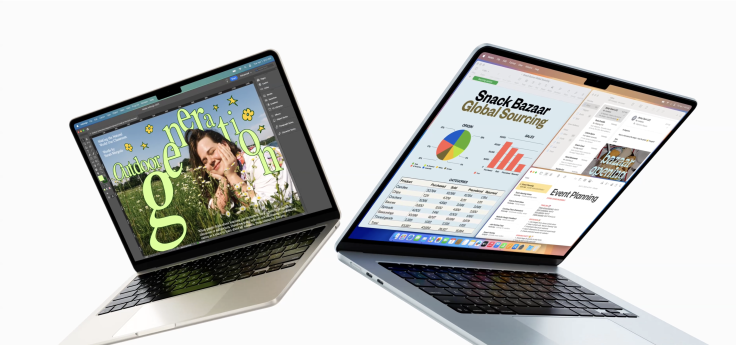
Apple has raised the M5 MacBook Air price to $1,099 in the United States, a $100 increase over last year's base model, after announcing on March 2 that both the 13.6‑inch and 15.3‑inch versions will now ship with the new M5 chip and have twice the storage and upgraded wireless capabilities. The move applies immediately, with pre‑orders opening on March 4 and deliveries scheduled for March 11.
The previous M4 MacBook Air entered the market at $999 with just 256GB of storage, a figure long criticised as outdated for a machine pitched at students, travellers and everyday users who rely increasingly on local processing. Apple is now positioning the M5 upgrade as a meaningful step forward. John Ternus, Apple's senior vice president of hardware engineering, said the refreshed Air brings 'incredible performance and even more capability to the world's most popular laptop,' adding that the M5 'powers through a wide range of tasks... and is even faster for AI.'
M5 MacBook Air Price Rise Brings More Than Marketing
Behind the $100 increase is a set of hardware changes that push the Air closer to the performance tier once reserved for the company's Pro models. The M5 chip pairs a 10‑core CPU with up to a 10‑core GPU, each supported by a Neural Accelerator Apple claims delivers up to four times the AI performance of the M4 Air and 9.5 times the capabilities of the M1 generation. Those figures, attributed directly to Apple, reflect the company's focus on on‑device AI and upcoming Apple Intelligence features that lean heavily on local inferencing.
Early benchmark data referenced in reviews shows tangible gains. Topaz Video AI reportedly runs 1.9 times faster on the M5 than on the M4, while Blender rendering speeds increase 1.5 times. These improvements stem partly from enhanced shader cores and a more advanced ray‑tracing engine. Memory bandwidth also jumps to 153GB per second, a 28% increase over the previous model. Apple maintains its unified memory architecture, with 16GB as the standard. Buyers can configure 24GB or 32GB at checkout.
Storage capacity receives a long‑requested correction. The base model shifts from 256GB to 512GB, addressing a persistent criticism of Apple's entry‑level laptops and improving SSD speeds in the process. Configurations now extend to 4TB, though that option comes with a cost that pushes the Air into MacBook Pro territory.
M5 MacBook Air vs older MacBook Airs pic.twitter.com/wM7DR4C65K
— Apple Hub (@theapplehub) March 3, 2026
Connectivity upgrades play their part in the price change. Apple's new N1 wireless chip adds Wi‑Fi 7 and Bluetooth 6 support, matching the higher‑end Pro lineup. These improvements are designed to boost performance in crowded networks and reduce latency in activities such as AirDrop transfers and high‑resolution streaming, features increasingly relevant for mobile workers.
The device's physical hardware remains familiar. The Liquid Retina display stays at 500 nits with support for one billion colours, a specification unchanged but still competitive. Battery life continues to top out at an estimated 18 hours. Apple keeps its fanless design — one of the Air's distinguishing features — while including two Thunderbolt 4 ports capable of running dual external displays, though Thunderbolt 5 remains exclusive to the Pro range.
Justifiable Upgrade or a Push Toward The Pro?
Where the conversation becomes more contested is the top end of the range. A fully loaded 15‑inch M5 Air with 32GB of memory and 4TB of storage approaches $3,000, a level where some buyers begin to question the value of a fanless machine compared to the actively cooled MacBook Pro. Colour options hold steady with Sky Blue, Starlight, Silver and Midnight, and buyers can choose between 35W or 70W USB‑C power adapters.
Say hello to the new MacBook Air! The world’s most popular laptop now features M4, Apple Intelligence capabilities, and a beautiful new color—sky blue. pic.twitter.com/CZzHpVvIhO
— Tim Cook (@tim_cook) March 5, 2025
The M5 MacBook Air price increase sits at the intersection of two realities. Doubling the base storage carries genuine manufacturing costs, and integrating Wi‑Fi 7 raises the component budget. Yet consumers will inevitably compare this $1,099 starting point to discounted M4 models still sitting on retail shelves. For students and freelance creators, the calculus becomes less about the headline improvements and more about whether the Air's quiet, thin‑and‑light identity justifies the rising entry price.
Apple argues it does. The 12‑megapixel Centre Stage camera and Spatial Audio speakers remain strong selling points in a world of constant video calls. The aluminium chassis retains its durability. And in raw performance, the M5 easily outpaces the early Apple Silicon generation while edging ahead of the M4 in targeted AI and graphics workloads.
The Air remains Apple's best‑selling laptop largely because it occupies a rare middle ground — power without noise, portability without compromise. The price change signals a subtle shift in that positioning, nudging the Air further into premium territory while maintaining its claim as the 'world's most popular laptop.'
© Copyright IBTimes 2026. All rights reserved.