

'Bring Back the Electric Chair': Marsha Blackburn's Vow After Christa Pike Survives Two Pentobarbital Doses
Tennessee Governor Bill Lee has paused executions for the rest of 2026 while an independent review examines why two doses of pentobarbital failed to kill Pike
US Senator Marsha Blackburn has demanded wider use of Tennessee's electric chair after convicted murderer Christa Pike, 50, survived two doses of pentobarbital during a failed execution, and was left in critical condition.
The attempted execution took place on Wednesday at Riverbend Maximum Security Institution in Nashville, where Pike was to be put to death for the 1995 murder of 19-year-old Colleen Slemmer, her attorneys said.
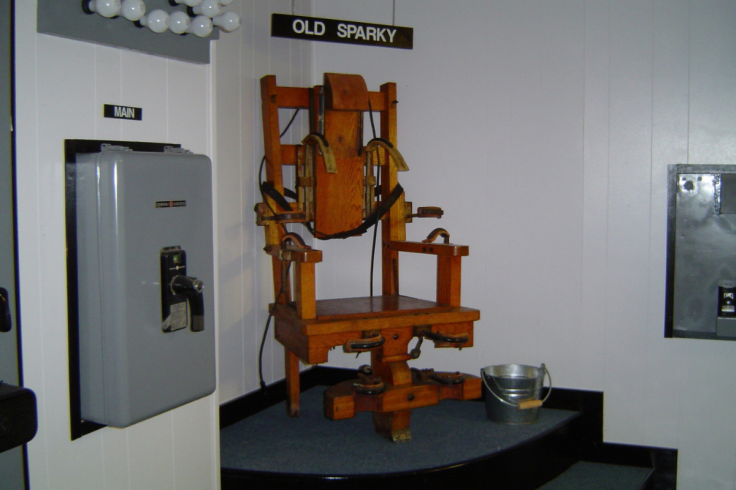
Blackburn wrote: 'Bring back the electric chair and deliver justice for these victims swiftly. As your governor, I will do just that.' Despite her wording, Tennessee has not abolished electrocution, which remains available in limited circumstances. Governor Bill Lee has ordered a third-party review and paused executions for the remainder of 2026.
Tennessee attempted to execute Pike on 30 September for the 1995 murder of 19-year-old Slemmer. Pike received two doses of pentobarbital but remained alive and was later taken to an off-site medical facility.
Blackburn Calls for Electric Chair After Failed Execution
This situation is tragic. Christa Pike should have been executed long ago. Now, this botched process is extending the pain for the family of Colleen Slemmer. While there should be a thorough review of what happened and why the process failed, the answer is simple: bring back the…
— Marsha Blackburn (@VoteMarsha) October 1, 2026
Blackburn tied her call for greater use of electrocution to the failed execution and its impact on Slemmer's family. She described the situation as 'tragic' and said the failed process was 'extending the pain for the family of Colleen Slemmer'. Her statement also supported an examination of what went wrong before calling for renewed use of the electric chair.
Blackburn is the Republican candidate for Tennessee governor and has made the execution method part of her campaign position.
The Tennessee Department of Correction has maintained that officials complied with the approved procedure. It said the department 'followed every step of the State's lawful, established execution protocol approved by the Attorney General's Office'.
The department also said the protocol did not permit additional procedures after those carried out that evening.
Lee subsequently ordered a comprehensive third-party review to determine why the execution failed. He also halted the state's remaining scheduled execution for 2026 while that investigation proceeds.
Tennessee Law Already Allows Electrocution
Blackburn's phrase 'bring back the electric chair' does not mean the method has disappeared from Tennessee law.
Lethal injection has been the state's primary execution method since legislation enacted in 2000. However, the Tennessee Department of Correction says offenders whose crimes were committed before 1 January 1999 may request electrocution.
That provision is relevant to Pike because Slemmer was killed in 1995. Tennessee has also carried out modern executions using the electric chair, including those of Edmund Zagorski and David Earl Miller in 2018. The supplied reporting says five prisoners chose electrocution during 2018 and 2019.
The distinction is important because Blackburn's statement did not explain what changes she would make to Tennessee's existing execution rules. It also did not specify whether she would seek to alter who can choose electrocution.
Failed Execution Enters Governor's Race
Pike's failed execution has also become an issue in Tennessee's gubernatorial campaign, with Blackburn and Democratic candidate Jerri Green taking different positions on capital punishment.
Green told WPLN's 'This Is Nashville' that she would extend Lee's moratorium on executions. She argued that the death penalty does not deter crime, carries significant costs and should be replaced by life imprisonment without parole.
Lee cannot seek another term because of Tennessee's gubernatorial term limits. His review is intended to establish what happened during Pike's execution, although the cause of the failure has not yet been determined.
The September attempt was Tennessee's second failed execution of 2026. In May, officials were unable to establish an IV line for Tony Carruthers, leading Lee to grant him a one-year reprieve.
Meanwhile, as of Friday, Pike remained in critical condition, according to her attorneys. The latest reporting did not establish a clear prognosis, and the state has not publicly identified what caused two doses of pentobarbital to fail to end her life.
The third-party review will now examine what occurred inside Riverbend while Tennessee's remaining executions for the year stay on hold.
Blackburn's call has added another question to that review's political aftermath, namely how the next administration may approach an execution method that, despite calls to 'bring back' the electric chair, never completely disappeared from Tennessee law.
© Copyright IBTimes 2026. All rights reserved.