China Launches State-Backed Science Journal Vita To Challenge Western Grip on Research Publishing
Vita, backed by Higher Education Press and Westlake University, is part of a wider drive to build internationally recognised Chinese-led journals and cut APC spending
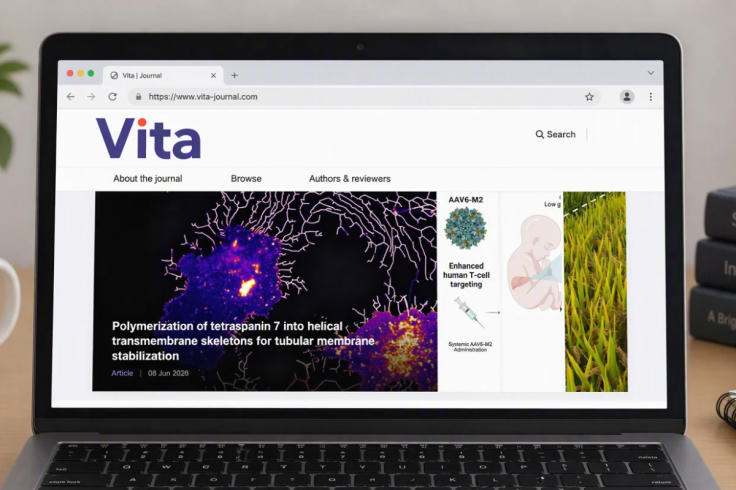
China has launched a state-backed science journal that does not charge article-processing fees. It is part of a broader effort to build Chinese scientific journals with greater international recognition and reduce reliance on overseas publishers.
The journal, Vita, covers life sciences and biomedicine. It is jointly funded by Higher Education Press, a subsidiary of China's Ministry of Education, and Westlake University.
Chen Fuyou, director of the Beijing-based journal evaluation site XinRui Journal Ranking, said the development could give China greater influence over how high-quality research is defined. 'This means China would get to define what is a high-quality paper and what is high-quality research, based on its own measures and selection processes,' he said.
A Journal Made in China
Vita marks a departure from the approach in which Chinese universities and research institutes have often partnered with international publishers to run English-language journals.
'What sets Vita apart is that it is a completely Chinese journal, launched by Chinese scientists and published by a Chinese publisher,' Ning Zhang, founder of the Maryland-based consultancy TopEdit, said.
Vita, a top-tier international journal in life sciences and biomedicine led by China, is set to launch in spring 2026, responding to a pressing need in China's scientific advancement.
— China Science (@ChinaScience) January 20, 2026
Derived from the Latin word for "life," the name Vita aptly reflects the journal's disciplinary… pic.twitter.com/aWGAPEsaxs
Westlake University president Shi Yigong has also called for China to develop internationally recognised journals. 'It has therefore become imperative to build world-class scientific journals that are led by China and widely recognized by the international academic community,' he said in January.
The journal is part of the government's Journal Excellence Action Plan, which began in 2019. Under the programme, 450 journals have been placed in different categories and receive varying levels of support.
For example, an English-language journal in the leading-journal category can receive up to 1.5 million yuan (about $223,000) a year. The programme also supports 13 Chinese academic publishers.
Zhang said the aim is for them to develop into major publishing groups comparable with Springer Nature. The programme also supports efforts to build stronger Chinese academic publishing groups.
China's Us$909M APC Spending
Money is also a factor. Chinese scholars spent US$909 million on article-processing charges (APCs) in 2024, with APCs being fees charged by many publishers for making research papers freely available to readers.
China has begun trying to reduce some of this spending. Since March, the Chinese Academy of Sciences has stopped funding APCs for 30 of the most expensive open-access journals.
Winning Over International Researchers
A key question for Vita will be whether it can attract researchers from outside China while building international recognition. James Butcher, a former publisher who runs the Journalology consultancy near Liverpool, said the fee-free model is 'clearly going to be appealing' to authors.
But he cautioned that sustaining such a model could be difficult because 'publishing is expensive'. He also questioned who would ultimately fund the journal if submissions from overseas researchers increased.
The first print edition of Chinese-led international academic journal Vita has been released, with the goal of building it into a premier publication in China's life sciences sector.
— China Science (@ChinaScience) August 17, 2026
Jointly established by member universities and institutions of the Alliance of Open Life… pic.twitter.com/r9sWJ4L1Md
The challenge is therefore not only financial. For a new journal seeking international recognition, attracting researchers and building confidence among potential authors and editors will also matter.
'Researchers submit their best papers to editors that they trust,' Butcher said. Gareth Dyke, a Reading-based consultant on China's scholarly publishing industry, expects 'a significant shift' over the next decade, away from a Western-dominated model and towards a more global system.
For international publishers that receive substantial APC payments from Chinese researchers, and for scientists deciding where to submit their work, Vita is an early test of how quickly that shift could arrive.
© Copyright IBTimes 2026. All rights reserved.
- Recommended For You