

Nate Silver Warns Senate Is No Longer 'Too Close To Call' as Nine Seats Shift to Democrats
Nate Silver says the US Senate is no longer 'too close to call' after nine races shifted toward Democrats days before the midterm elections
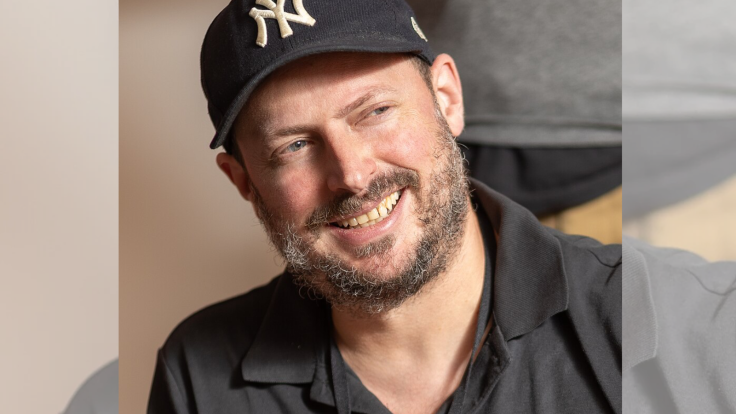
Election forecaster Nate Silver has warned the US Senate is no longer 'too close to call' after non-partisan outlet Inside Elections shifted nine Senate races towards Democrats just five days before the 3 November midterm elections. The move comes as fresh polling points to Democratic gains in states Republicans had expected to hold comfortably.
The reassessment follows a final stretch of campaigning in which President Donald Trump, Vice President JD Vance and Health and Human Services Secretary Robert F. Kennedy Jr have crisscrossed the country to shore up vulnerable Republican candidates.
Midterm elections are widely treated as a test of the party in power, and the president's party has historically lost seats.
'Very strong polls for Democrats in individual Senate races over the past couple of days,' Silver wrote on X. 'Polls can be wrong, that's what models/probabilities/markets are for, but I think we're past the point where you can honestly say "polls show the Senate is too close to call."'
Very strong polls for Democrats in individual Senate races over the past couple of days. Polls can be wrong, that's what models/probabilities/markets are for, but I think we're past the point where you can honestly say "polls show the Senate is too close to call".
— Nate Silver (@NateSilver538) October 29, 2026
Nate Silver's Senate Polling Warning
Silver's model currently gives Democrats a 77.7 per cent chance of regaining Senate control, according to his Silver Bulletin forecast. He has said that individual polls can be misleading but that simultaneous movement across several races is harder for either party to ignore.
He has also cautioned that Texas, Ohio, Alaska and Maine are 'all just a normal-sized polling error away from flipping', indicating that his projection is a probability estimate rather than a prediction of the final result.
Prediction markets show a similar pattern. Kalshi and Polymarket both currently give the Democratic Party a double-digit lead on which party will control the Senate after the midterms, though market prices are based on trader expectations rather than counted votes.
Republican leaders continue to commit resources to key states. Senate Majority Leader John Thune campaigned with Mike Collins in Georgia in September and said the Senate Leadership Fund would keep directing money to the state.
'It takes resources to compete in Georgia, no question about it,' Thune said at the time. 'We believe that Mike Collins can win here.'
Nine Senate Races Shift Toward Democrats
Inside Elections has moved nine Senate contests towards Democrats in its latest ratings update.
Georgia shifted from lean Democrat to likely Democrat, where incumbent Jon Ossoff faces Trump-backed Republican Mike Collins. Ossoff leads Collins in every poll in the latest RealClearPolling average, which puts Ossoff at 51 per cent and Collins at 43.2 per cent.
Federal Election Commission records show Ossoff's campaign raised $77.3 million (€65.7 million and £58.7 million) between the start of 2025 and 30 June, and ended June with $42.6 million (€36.2 million and £32.4 million) in cash on hand. Collins' principal Senate committee raised about $6.5 million (€5.5 million and £4.9 million) over the same period.
In Ohio, the rating moved from toss-up to tilt Democrat, with Republican incumbent Jon Husted facing former senator Sherrod Brown. Brown led by 3.3 points in RealClearPolitics' polling aggregate, while a Fox News poll gave him a five-point lead among likely voters.
Texas also shifted from toss-up to tilt Democrat. Republican Ken Paxton and Democrat James Talarico are in what recent polling describes as a virtual dead heat, in a state Trump has carried in all three of his presidential runs.
Iowa and Kansas both moved from tilt Republican to toss-up. In Iowa, Republican Ashley Hinson faces Democrat Josh Turek, with either candidate leading by one to three percentage points in recent surveys. In Kansas, Democrat Adam Hamilton is challenging incumbent Roger Marshall and leads in a majority of recent polling.
South Carolina shifted from lean Republican to tilt Republican, where Darline Graham, sister of the late Lindsey Graham, faces Democrat Annie Andrews. A poll released this week reported the race as tied. Nebraska moved from lean Republican to tilt Republican, with incumbent Pete Ricketts facing independent Dan Osborn.
Louisiana and Mississippi shifted from solid Republican to likely Republican. Democrat Jamie Davis faces Republican nominee Julia Letlow in Louisiana, while incumbent Cindy Hyde-Smith faces Democrat Scott Colom in Mississippi.
Ratings Split as Analysts Diverge on Key States
Cook Political Report continues to rate Ohio, Texas, Kansas and Iowa as toss-ups, South Carolina as lean Republican, and Nebraska and Mississippi as likely Republican. It rates Louisiana as solid Republican, a more cautious assessment than Inside Elections.
Democrats need to flip four Republican-held seats to gain control of a chamber Republicans currently hold 53–47. With five days remaining before the election, the outcome will depend on factors including turnout, campaign spending and the accuracy of late polling.
© Copyright IBTimes 2026. All rights reserved.