

Christa Pike Reportedly Asked for $20 Last Meal Money To Feed Homeless Before Failed Execution
Pike survived Tennessee's lethal-injection attempt despite receiving two doses of pentobarbital, while officials have not confirmed whether her request to provide pizza for homeless people was carried out
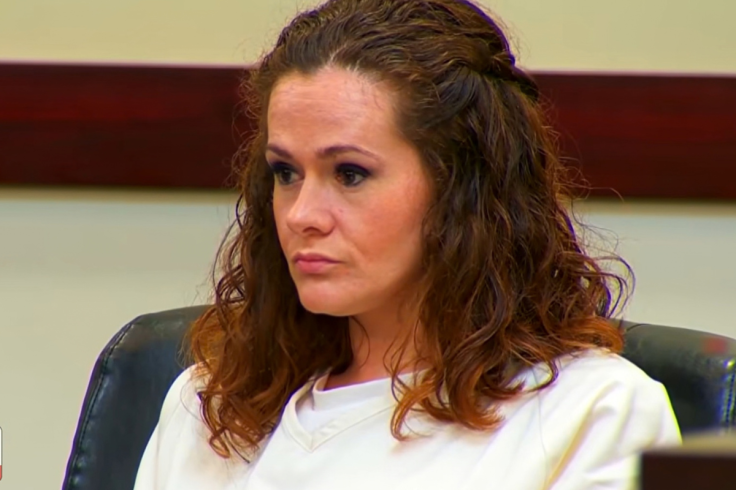
Reportedly asking that her $20 (£15.13) last meal allowance be spent on pizza for homeless people in downtown Nashville, convicted murderer Christa Pike then survived Tennessee's failed attempt to execute her on 30 September.
Pike, 50, was scheduled to die by lethal injection at Riverbend Maximum Security Institution in Nashville. According to reporting by the New York Times, she declined a final meal for herself and instead requested that the $20 (£15.13) allowance be used for food for homeless people.
At the time of publication, it remained unclear whether officials had purchased or distributed the pizza. Hours later, Pike survived after the state administered two doses of pentobarbital.
Pike was convicted of the 1995 torture and murder of 19-year-old Colleen Slemmer, a classmate at a job training centre in Knoxville. Pike was 18 at the time of the killing and was sentenced to death the following year.
Her planned execution would have been Tennessee's first execution of a woman in more than 200 years.
Christa Pike Last Meal Request Put $20 Towards Homeless People
Pike was offered the opportunity to select a final meal ahead of the scheduled execution. Instead, she reportedly asked for the $20 (£15.13) set aside for it to be used to buy pizza for homeless people in downtown Nashville.
The request was reported after the failed execution and added a further detail to the hours leading up to the procedure. Reports establish that Pike made the request, but they do not confirm that the money was ultimately spent or that food reached homeless people.
Pike had previously expressed remorse for Slemmer's killing after spending decades on death row. Her case had drawn renewed attention before the execution as her lawyers sought to stop the lethal injection.
Christa Pike Execution Fails Amid Medical Complications
Pike's execution had originally been scheduled for 10am on 30 September. A federal appeals court temporarily stopped the procedure before the US Supreme Court allowed the state to proceed later that day.
Tennessee ultimately administered both its initial and backup doses of pentobarbital, but Pike did not die. Her lawyers later said Pike suffered problems with the intravenous lines used to administer the drug. They alleged that her arms became swollen, burned and blistered after pentobarbital entered tissue rather than flowing properly through her bloodstream.
The Tennessee Department of Correction said after the attempt that it had followed every step of the state's established execution protocol. The department confirmed that Pike was transported to an off-site medical facility after the procedure.
State officials have not publicly established what caused the execution to fail. Pike's lawyers had previously raised concerns about establishing IV access because she had small veins and thrombocytosis, a blood disorder affecting platelet levels.
Their subsequent court filing blamed problems with the IV lines, but that remains the legal team's account rather than an independently established medical finding.
Christa Pike Remains Unconscious After Failed Execution
Pike was taken to hospital after the execution attempt and placed on a mechanical ventilator. Her lawyers said she was receiving life-saving treatment as medical staff worked to clear pentobarbital from her system.
On Sunday, 4 October, Assistant Federal Defender Stephen Ferrell said Pike had remained unconscious since the failed execution. Asked whether she had regained consciousness at any stage, Ferrell said, 'Not that I am aware of.' Her prognosis remained uncertain.
The failed execution has also triggered scrutiny of Tennessee's death penalty procedures. Governor Bill Lee halted further executions for the remainder of 2026 and ordered an independent review into what happened at Riverbend.
Frank Strada, commissioner of the Tennessee Department of Correction, subsequently announced that he would step down.
The review is expected to examine why two doses of pentobarbital failed to carry out the sentence despite the state saying its established protocol had been followed. Tennessee had already built a backup dose into the procedure, and both doses were used during Pike's execution attempt.
For now, Pike remains under medical care while the circumstances of the failed execution are examined. Her reported request to redirect her $20 (£15.13) last meal allowance has become one detail from the period immediately before the attempt, but whether that request was actually fulfilled has not been confirmed.
The larger questions now concern Pike's medical condition, what happened during the lethal injection and whether Tennessee will change its execution procedures before attempting another death sentence. Lee's independent review remains pending, leaving the precise cause of the failure unresolved.
© Copyright IBTimes 2026. All rights reserved.