

Why Conservative Commentator Erick Erickson Believes Elon Musk's X Is A 'Special Hell'
Erick Erickson says Elon Musk's X has become a breeding ground for misinformation, antisemitism and conspiracy theories.

Conservative commentator Erick Erickson has launched a blistering attack on Elon Musk's X platform, warning that it has become a 'special hell' of misinformation and antisemitism as Christians head into Holy Week.
In a new Substack essay, the right-leaning broadcaster argues that Musk's stewardship of the site has created a space where conspiracy theories flourish, war reporting is distorted and Christian rhetoric is used to launder hate.
Erickson has long been a prominent figure on the American right, a former Republican politician and past CNN contributor who once embraced Twitter as a central hub of political debate.
That enthusiasm has steadily curdled since Musk acquired the platform in 2022 and rebranded it as X, a move Erickson portrays as symbolic of a deeper unravelling in the quality of information online. His latest essay, published on Thursday 26 March, reads less like a casual gripe and more like a warning shot at his own political tribe.
Erick Erickson, Elon Musk And A 'Special Hell' On X
In his post, Erickson complains that Elon Musk 'took over Twitter, ridiculously changing its name to the single letter of the alphabet most associated with p----graphy.' He claims that while Musk shifted the algorithm away from what he calls 'the Left's preferences,' that shake-up has come at a steep price in trust and accuracy.
According to Erickson, X has 'opened the door to AI slop, ever-increasing misinformation, and raging antisemitism' and is now crowded with financially incentivised outrage.
Maybe being that concerned about Twitter ratios is not the sign of a healthy Christian witness. pic.twitter.com/pGnvhbkD7Z
— Erick Erickson (@EWErickson) March 26, 2026
The 50-year-old commentator links his critique of X directly to the current conflict involving the United States, Israel and Iran, insisting that the platform is warping public understanding of events. He paints a grim, exaggerated picture of Tel Aviv being 'levelled by Iran two dozen times in the past four weeks' as shorthand for the kind of sensational or misleading claims he believes are now routinely amplified.
In Erickson's telling, 'anything that offends the Left is a genocide,' a line that signals his irritation at how terms around mass violence are being deployed online, even as he argues that 'people who want to be informed are, instead, misled.'
Erickson further alleges that X 'has been exploited by monetized accounts seeking profit from outrage and by misinformation campaigns seeking to undermine a war effort against the world's leading sponsor of terrorism.' He does not offer specific examples in the essay, but the implication is clear enough, the site's revenue-sharing incentives and looser moderation have created fertile ground for both opportunists and hostile actors.
Musk has defended his approach to 'free speech' on multiple occasions in other forums, but in this particular piece Erickson does not quote or engage with any official response from X, and nothing in the article confirms whether the platform has addressed his claims directly, so his portrayal should be treated as commentary rather than established fact.
Erick Erickson, Elon Musk And Christian Witness
What gives Erickson's critique a sharper edge is that he is not talking about anonymous trolls. As a self-described 'Christian broadcaster,' he says he is particularly troubled that many of the accounts spreading what he sees as 'nonsense, the antisemitism, the conspiracies, and the lies' are people who loudly proclaim 'Christ is King.'
In his view, too many fellow believers stay quiet because those voices are perceived to be on the 'right' side politically.
Erickson argues that this silence corrodes what he calls the 'Christian witness.' 'Having influencers hold themselves out as Christians while advancing poisonous antisemitism, conspiracy theories, misinformation, and lies harms the Christian witness,' he writes, framing it as a theological as well as political problem.
‘Raging Antisemitism’ and ‘Pornography’: Conservative Radio Star Erick Erickson GOES OFF on Elon Musk’s ‘Special Hell’https://t.co/QvUY0JK901
— Mediaite (@Mediaite) March 26, 2026
He urges Christians who 'truly believe Christ has risen' to call out those who 'co-opt the faith for a political enterprise.' The message, essentially, is that Musk's X is not just a messy marketplace of ideas, but a stage on which religious identity is being weaponised.
Erickson singles out fellow conservative commentator Candace Owens for promoting conspiracy theories about the assassination of right-wing activist Charlie Kirk in September 2025, and he questions how anyone can take the Gospel seriously from someone who believes those claims.
He extends the criticism to the streamer Ethan Levins, described as an 'American Christian' known for covering US politics while spreading what Erickson calls 'disinformation online.' The article does not independently verify the specific content of those conspiracy theories or posts, and nothing in the source material confirms whether Owens or Levins have responded, so those accusations remain Erickson's alone and should be treated with caution.
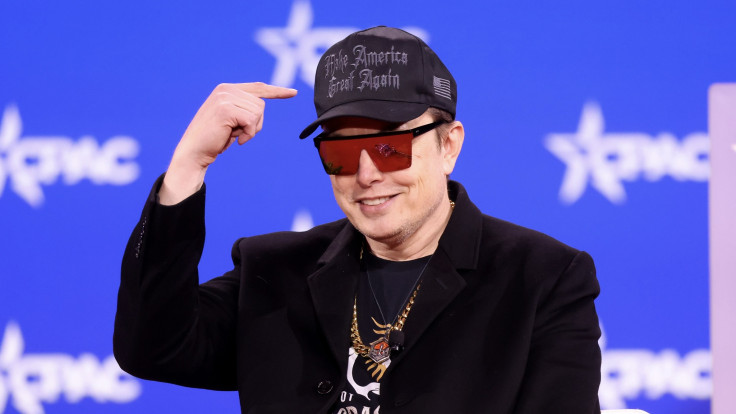
Towards the end of the piece, Erickson returns to Elon Musk's platform with a line that has already begun to circulate widely, 'Twitter is its own special h--- and those who pronounce 'Christ is King' while spreading conspiracy theories will, eventually, discover the real one.' It is a grim verdict, aimed as much at his own ideological allies as at the billionaire owner of X.
With no official comment from Musk or X included in the article, and no independent data here on the scale of misinformation or antisemitic content on the platform, nothing in Erickson's essay can be read as conclusive; it is a sharply worded warning from inside the conservative movement, and, as he presents it, a plea for discernment that readers would be wise to approach with a healthy grain of salt.
© Copyright IBTimes 2026. All rights reserved.