

Trump Warned Pregnant Women Over Tylenol, New Study Finds 40% Smaller Ovaries in Daughters
Research suggests prenatal paracetamol exposure may affect ovarian and uterine development, though causation remains unproven
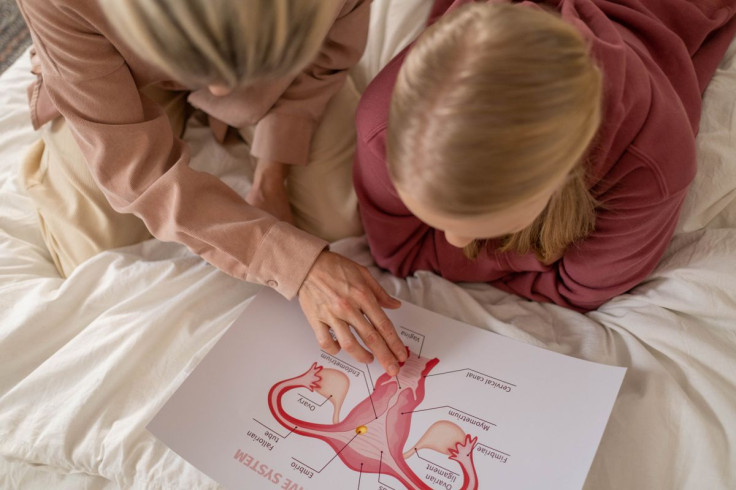
A Danish study has found that girls exposed to paracetamol during pregnancy had differences in reproductive development, with those exposed before 17 weeks having an average ovarian volume around 40 per cent smaller than girls whose mothers did not use the painkiller.
Published in Human Reproduction Open, the study examined 302 three-month-old girls whose mothers' paracetamol use had been tracked during pregnancy. Researchers also found about 23 per cent fewer ovarian follicles among girls exposed from 17 weeks onwards, although the observational research cannot establish that paracetamol caused the differences.
The findings come amid debate over paracetamol use during pregnancy following Donald Trump's warnings in 2025 that pregnant women should limit Tylenol over a claimed link with autism. However, the Danish study did not examine autism or other neurodevelopmental conditions and does not provide evidence for or against that separate claim.
Study Finds Differences In Ovarian Development
The study, led by Margit Bistrup Fischer of Rigshospitalet in Copenhagen, tracked mothers' paracetamol exposure during pregnancy before assessing reproductive development in their daughters.
Girls exposed before 17 weeks had an average 40 per cent smaller ovarian volume and 13 per cent smaller uterine volume than those whose mothers had not reported using paracetamol. Among girls exposed later in pregnancy, researchers found about 23 per cent fewer ovarian follicles.
A separate group of 1,210 girls was followed from infancy into adolescence. Prenatal exposure was associated with smaller uteruses at puberty and smaller ovaries during adolescence, although the researchers said further research was needed to determine whether such differences have lasting consequences.
BREAKING: Tylenol use during pregnancy may be linked to reduced reproductive development in daughters, new study warns.
— Polymarket (@Polymarket) September 9, 2026
The researchers stressed that the findings do not show that prenatal paracetamol exposure causes reduced fertility. They said longer-term studies would be needed to establish whether the differences persist into adulthood or affect reproductive health.
Experts Question Clinical Significance
The research was observational, meaning it cannot establish a direct cause-and-effect relationship. Mothers who took paracetamol may also have had medical conditions or other characteristics that influenced foetal development.
Professor Dimitrios Siassakos, an obstetrics and gynaecology specialist at University College London, questioned the clinical significance of the findings and said the study had not accounted for all possible confounding factors. He also noted that the number of statistical comparisons increased the possibility that some results could have occurred by chance.
The use of Tylenol by women during pregnancy was not associated with autism in their children, according to results of a nationwide study in Denmark. https://t.co/cxC9qgfMbw pic.twitter.com/F4gFGk24Nk
— CNN (@CNN) April 15, 2026
Dr Adam Brentnall, a biostatistician at Queen Mary University of London, said the study raised an important question but that the strength of its conclusions was not fully supported by the statistical evidence. He said it remained unclear whether the observed differences would affect ovarian function or reproductive lifespan.
The researchers said their findings were consistent with previous animal studies but called for further research before conclusions could be drawn about long-term reproductive effects.
UK Guidance On Paracetamol Remains Unchanged
UK NHS guidance states that paracetamol is usually the first-choice painkiller during pregnancy and advises taking it for the shortest possible time.
🚨 Wait what, even Tylenol tell their own customers not to use their products when Pregnant.
— Concerned Citizen (@BGatesIsaPyscho) September 24, 2025
This was 8 years ago - but when Trump & RFK Jnr say it, based on Studies & Scientific Evidence they’re now ‘Anti-Science’? pic.twitter.com/S8gDM8H8dk
Trump's earlier warnings concerned separate research into possible neurodevelopmental effects. In September 2025, the US Food and Drug Administration said studies had reported an association between prenatal acetaminophen exposure and conditions including autism and ADHD, but stressed that a causal relationship had not been established and that contrary studies existed.
BREAKING 🚨 Donald Trump just sent a message to EVERY Pregnant woman. Do not take Tylenol
— MAGA Voice (@MAGAVoice) January 5, 2026
I ABSOLUTELY AGREE 💯 pic.twitter.com/oAycwM7RYK
The Danish researchers have said women should not be alarmed by the findings. Further research will be needed to establish whether the reproductive differences observed in infancy have any lasting consequences.
© Copyright IBTimes 2026. All rights reserved.