'DNA Is Not An Exact Science': Sheriff Admits Labs are Prolonging Hunt for 'Missing' Nancy Guthrie
With multiple labs, genealogy testing and a million‑dollar reward in play, the case remains active but frustratingly unresolved.
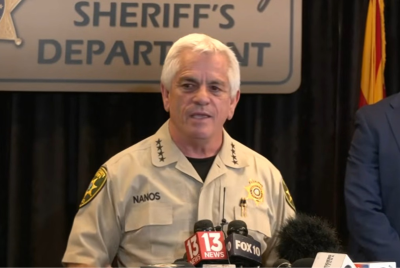
Pima County Sheriff Chris Nanos has admitted that DNA testing delays are prolonging the hunt for missing 84‑year‑old Nancy Guthrie in Tucson, Arizona, saying the investigation now hinges on 'difficult' and 'sensitive' forensic work that is largely out of his detectives' hands.
The sheriff said laboratories working on the Nancy Guthrie case are bound by strict scientific rules and protocols, and warned that DNA, despite its reputation, 'is not an exact science.'
Nancy Guthrie Case: Inside A 'Difficult' And 'Sensitive' Investigation
Speaking to local outlet 13 News, Sheriff Nanos tried to explain why, nearly five months on, there is still no named suspect in the Nancy Guthrie case despite an enormous investigative effort, federal support and mounting public pressure.
'Well, you know, these cases are difficult. And it's not just this case,' Nanos said. 'A number of our cases require a lot of work from other people. It's not just a detective who goes out, talks to somebody, and we can make an arrest. This is a very sensitive case, but what really makes it prolonged is that we rely on labs — labs for the digital part of this case, which is very critical, and labs for our DNA, which is also very critical.'
That reliance has proved costly in time. Three weeks after Guthrie vanished, the sheriff acknowledged to NBC News that a private laboratory in Florida was struggling with the DNA taken from her home.
The samples were 'mixed', he said — containing genetic material from multiple people — which makes it far harder to separate out, match and then run through national databases. Forensic specialists have warned such work can take months and may become a flashpoint if the case ever reaches court.
Nanos insists the delays are not about complacency but about guarding the integrity of the evidence.
'When you're looking at those labs and the work they do, you have a science there, and science has rules that it has to go by,' he told 13 News.
'Even though DNA is not an exact science, they'll tell you it's 99% plus, so it's pretty close. But you still have to follow rules and protocols, because you don't want to jeopardise not just the integrity of this case, but the integrity of DNA as a supplement to law enforcement work. And, to be honest, take it to the other side — the criminal justice process. We have rules we have to go by too,' he further added.
DNA Clues, False Leads And A Fractured Forensic Trail
Investigators have been following a trail of physical and digital evidence that has turned out to be more tangled than clear. Early on, the FBI said a black glove found near Guthrie's home appeared consistent with gloves worn by a masked person seen on doorbell footage from her front porch. That discovery briefly raised hopes of a breakthrough.
But the Pima County Sheriff's Department later clarified that the DNA profile recovered from gloves discovered roughly two miles away did not produce a match in the FBI's national database.
In a separate development, a glove sent for analysis was eventually linked to a restaurant worker who was unrelated to the case — a reminder of how easily everyday items can muddy an already complex scene.
The DNA that was submitted to CODIS was from the set of gloves found 2 miles away. It did not trigger a match in CODIS & did not match DNA found at the property. The DNA found at the property is being analyzed & further testing needs to be done as part of the investigation.
— Pima County Sheriff's Department (@PimaSheriff) February 17, 2026
The broader forensic picture is equally messy. Criminal defence lawyer Joshua G Schiffer told Newsweek that evidence in the Nancy Guthrie case has been processed by five separate laboratories, an arrangement he believes could be scrutinised in any future prosecution. 'Any delay or hiccup in evidence handling, collection, or analysis creates opportunities for anyone defending themselves,' he said.
Schiffer pointed in particular to the impact of mixed DNA profiles. 'A mixed DNA profile creates scientific complexity that jurors may struggle to interpret,' he noted, warning that unexplained or conflicting genetic evidence can undermine an otherwise strong-looking case.
Officials have also acknowledged that investigators are exploring genealogy tracing, a technique that can identify distant relatives of an unknown DNA contributor.
Schiffer cautioned that such leads are probabilistic and vulnerable to legal challenge, especially around privacy and consent, even when later supported by confirmatory testing.
Nothing about the emerging DNA picture has been definitively linked to an abductor, and authorities have not said whether any unidentified DNA recovered from the scene belongs to someone believed to be involved.
Nancy Guthrie Clues Point To The Early Hours
Investigators continue to build what they can from the slivers of hard data they do have. Surveillance footage places a man, estimated at between 5ft 9in and 5ft 10in tall, on Guthrie's front porch in the early hours before her disappearance.
Digital logs show her Nest doorbell camera dropping offline at 1:47 a.m., and her pacemaker app reportedly losing contact at 2:28 a.m. Detectives believe she was taken from her home during that narrow window.
No suspect matching that description has been publicly named.
Rewards Rise As The Nancy Guthrie Case Drags On
In the absence of a clear lead, authorities and family members have turned to money in the hope that someone, somewhere, might come forward. The FBI initially offered a $50,000 (£37,126) reward for information about Guthrie's whereabouts, later doubling it to $100,000 (£74,253) for tips leading directly to her or to an arrest and conviction.
Savannah Guthrie then announced that her family would add up to $1 million (£740,000) of their own funds to the pot, creating a combined reward in the hundreds of thousands of pounds equivalent. Separate local appeals have pushed that figure at various points to more than $200,000 (£148,507) in specific offers.
Despite the size of the reward and the global attention that comes with her daughter's profile, Nancy Guthrie remains missing. The Pima County Sheriff's Department and the FBI both insist the case is active, not cold.
'This remains an active and ongoing investigation,' a sheriff's representative told Newsweek. 'Forensic analysis remains underway of video and DNA evidence. We have no additional information to provide at this time.'
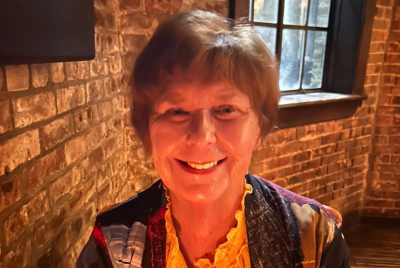
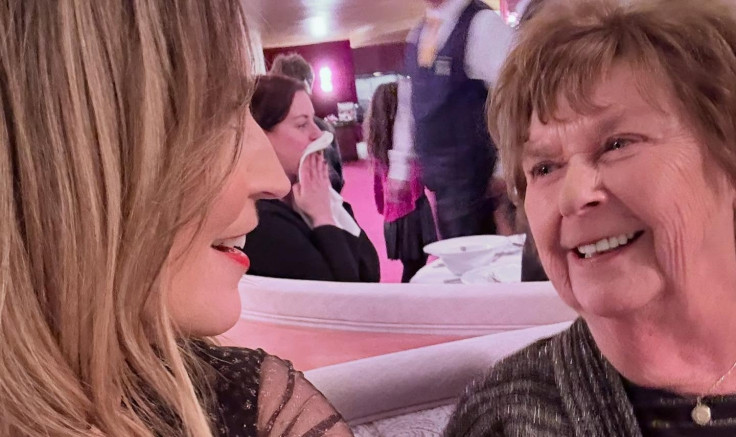
Nancy Guthrie, the mother of NBC journalist Savannah Guthrie, disappeared from her home in the Catalina Foothills area of Tucson after returning from a family dinner on 31 January 2026. She was reported missing on 1 February, when she failed to show up at church.
Within days, Pima County deputies and later the FBI concluded she had likely been abducted from her home overnight, after blood was found on the front porch and later confirmed through DNA testing to belong to Nancy.
© Copyright IBTimes 2026. All rights reserved.
- Recommended For You