PlayStation 6 Faces Shocking $899 Price Tag Due to Inflation, AI Chip Shortage
Sony's PlayStation 6 faces pricing pressures due to AI chip shortages and rising component costs.
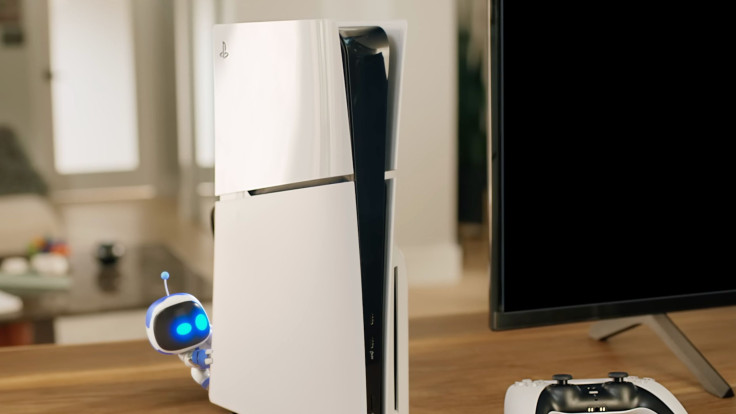
Sony's next-generation console, the PlayStation 6, could launch as early as late 2027 with a starting price of around $899, according to recent industry reports, with analysts pointing to an AI chip shortage and rising component costs as the main drivers behind what would be a steep jump for consumers.
The claims, which remain unconfirmed and should be treated with caution, suggest Sony is preparing a dual hardware strategy that includes both a traditional home console and a portable companion device. The headline figure, however, is the projected 'shocking $899 price,' a number that reflects broader pressures across the global tech supply chain rather than a simple pricing decision.
Price Pressures Tied to AI Chip Shortage
To recall, Sony has historically priced its consoles aggressively, often at or near production cost. The PlayStation 4 Pro launched at $399 in 2016, while the PlayStation 5 Digital Edition matched that figure in 2020. That pricing philosophy helped the company build a large user base quickly, with profits coming later through software and services.
That model now appears under strain. The PlayStation 5 Pro, released as a mid-generation upgrade, is already priced at $899. Against that backdrop, expectations that a more powerful PlayStation 6 would arrive at a lower price point are increasingly difficult to justify.
At the centre of the issue is what industry observers describe as the 'AI chip shortage.' Semiconductor manufacturers, particularly major foundries such as TSMC, are reportedly operating at capacity as demand for AI accelerators surges. These chips, often sold at significantly higher margins, are prioritised over components designed for consumer hardware like gaming consoles.
The economic logic is difficult to ignore. A silicon wafer allocated to AI production can generate far greater returns than one used for gaming hardware. As a result, companies like Sony may be forced to pay a premium simply to secure manufacturing capacity. That pressure flows directly into the final retail price.
One analyst cited in gamegpu noted that securing sufficient production volume for a console launch under these conditions would likely require 'above-market component pricing,' a shift that could permanently alter how consoles are priced.
Inflation and Hardware Costs Reshape PlayStation 6 Expectations
Beyond supply constraints, long-term inflation is quietly reshaping the economics of console production. Over the past decade, cumulative dollar inflation has reached approximately 38.75%, meaning that $399 in 2016 would equate to roughly $553.63 today. In practical terms, maintaining the illusion of stable pricing has already required significant cost absorption by manufacturers.
That buffer is now eroding. The modern console is no longer a bespoke system built from highly specialised parts. Instead, it closely mirrors PC architecture, relying on similar CPUs, GPUs and memory components. This convergence has tied console pricing more directly to the volatile PC hardware market.
A mid-range graphics card alone currently sells for between $500 and $700. Building a gaming PC capable of matching the expected performance of a PlayStation 6 would likely cost between $1500 and $2000. Against those figures, an $899 console begins to look less like an outlier and more like a compromise.
There are also indications that Sony may continue its recent hardware strategy by shipping the base PlayStation 6 without a built-in disc drive. Consumers who prefer physical media would need to purchase an external drive separately, adding an estimated $100 to $150 to the total cost.
That approach, while controversial among some players, allows Sony to streamline manufacturing and reduce baseline production complexity. It also shifts part of the cost burden onto consumers who want additional features.
According to gamegpu, a portable version of the PlayStation 6 ecosystem could launch alongside the main console, with a projected price between $599 and $699. The inclusion of hardware capable of running PlayStation 4 and PlayStation 5 titles natively in a handheld format would place it closer in cost to high-end smartphones than traditional gaming devices.
None of these figures have been officially confirmed by Sony, and the company has yet to comment publicly on pricing or release timelines. Still, the direction of travel is becoming harder to ignore. The era in which new consoles launched as relatively affordable entry points into gaming is under visible strain, shaped by forces far beyond the industry itself.
© Copyright IBTimes 2026. All rights reserved.
- Recommended For You