

Donald Trump Shows 'Post-Stroke Behaviour' and Dementia Signs in Surfacing Clips, Psychologist Claims
When every twitch and tangled word becomes evidence in the court of public opinion, the line between medical concern and political theatre gets very thin
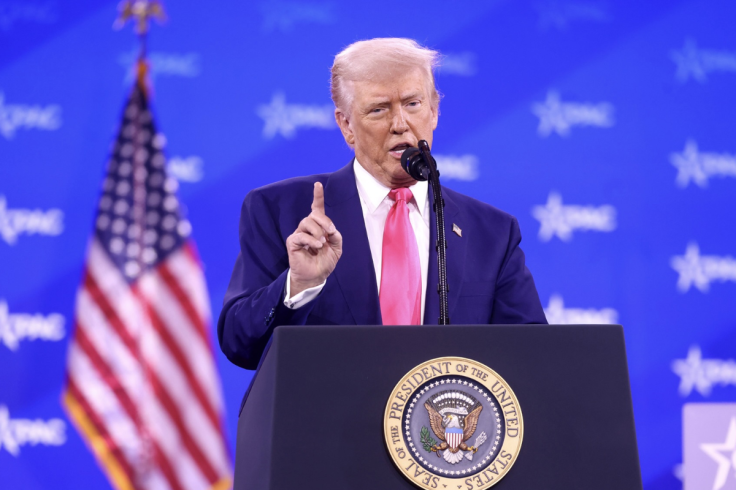
Donald Trump's onstage slips and physical tics in recent months show a pattern of 'post-stroke behaviour' and possible dementia signs, a clinical psychologist has claimed in a new video breaking down footage of the US President at rallies and public events.
Trump's health, fuelled by clips of him appearing to struggle to stay awake, visible bruising on his hands, and speculation over swelling around his ankles.
Trump, who is seeking to project vigour ahead of November's election, has repeatedly insisted there is nothing wrong with him physically or cognitively, while his presidential physician has issued a glowing assessment of his condition.
In a recent letter, Dr Sean Barbabella said Trump enjoys 'strong cardiac, pulmonary, neurological and overall physical function' and described the 78-year-old president as being in 'excellent health'. Trump has also boasted that he has 'aced' three separate cognitive tests, using those exams as a political talking point to swat away questions about his age and stamina.
Not everyone is buying it. Clinical and forensic psychologist Dr John Paul Garrison, who posts analysis videos on YouTube under the name Dr G, has argued that a growing library of Trump clips points to something more troubling.
In his latest upload, whose title bluntly warned that Trump's 'spasms and verbal glitches' are 'getting worse,' he laid out what he believes are classic neurological red flags.
Psychologist Dissects Donald Trump Rallies for 'Highly Concerning Behaviour'
Dr G slowed down a rally appearance in which Trump walked to the podium and tried to thank the audience. Instead of a clear 'thank you,' Trump appeared to say something closer to 'A-nank you' before correcting himself.
On its own, it is the kind of flub anyone could make. Dr G acknowledged as much, saying it is 'normal for people to trip over their words from time to time.'
His contention is that Trump does this sort of thing 'constantly' and that viewers can now hear a 'distinct change' in how he enunciates and forms words. 'He's having a hard time enunciating,' Dr G said in the video, arguing that this is 'concerning neurologically because it could be post-stroke behaviour.'
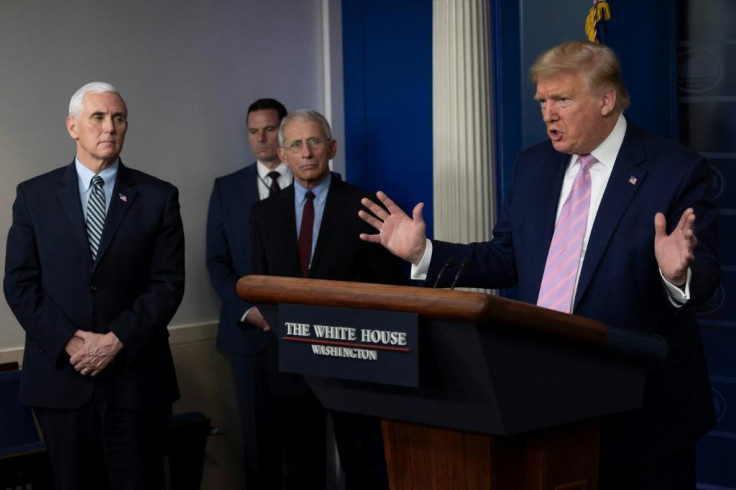
From there he went further, suggesting, again as opinion, that the pattern could be in line with 'some degree of dementia, Alzheimer's type dementia, Lewy body dementia.' He stressed that he was not diagnosing Trump, but said the compilation of moments showed 'all sorts of concerning behaviours' that matched 'a variety of neurological concerns.'
He then replayed the same rally clip and pointed to what he described as an arm twitch, visible as Trump gripped the lectern. According to Dr G, that movement is not a one-off. He claimed it happens 'constantly' in Trump's public appearances and should be viewed alongside the speech issues, not in isolation.
Donald Trump Clips Fuel Debate Over Health and 'Involuntary Spasms'
The video did not rely on a single event. Dr G stitched together several clips of Donald Trump over recent months, arguing that the concerns about his health are 'cumulative' and 'adding up.' He told viewers he was not even showing 'every single verbal issue he had through this rally,' but only examples he felt were most illustrative.
One section focused on Trump reading a poem aloud. In that footage, Trump appeared to stumble over the word 'instead.' Later, when mentioning Hillary Clinton, he seemed to hesitate before saying 'Clinton,' as though searching for the name.
For Dr G, that looked like a 'word-finding' problem, another potential dementia sign when it appears frequently and in tandem with other problems.
In a separate clip from the Freedom 250 event marking the United States' 250th birthday in July, Trump is seen leaning in close as he shakes someone's hand. To a casual viewer, it might look like a man trying to hear better in a noisy room.
Dr G pushed back on that friendly reading, saying he did not believe Trump was merely leaning in for audio reasons and arguing that the President seemed to be losing an increasing amount of physical control.
He described Trump as looking 'uncomfortable' and possibly 'overwhelmed' in a way he claimed had not been visible before. In his experience, he said, that kind of overwhelm can show up in people who are living with 'neurological deficits,' although he did not claim to have access to Trump's medical records.
Another extract showed Trump standing beside a podium while another person spoke. Trump's right arm appeared to twitch multiple times. Dr G interpreted these as 'involuntary spasms' and suggested they might be exacerbated by agitation, arguing that Trump dislikes 'having to sit and listen' to others talk.
'When he's agitated, he's more likely to have these type of spasms,' Dr G said, adding that in some people 'more intensely emotional' states can lead to 'more loss of control like this.' He said that in his view the movements 'seem to correlate' with moments when Trump is not the one speaking.
The White House has not responded in detail to this specific video, and the president's team has long dismissed such online breakdowns as armchair diagnosis or partisan hit jobs. Barbabella's letter is still the only formal medical statement on record.
Yet the footage continues to circulate, shared by both critics who see it as proof of decline and supporters who insist the whole thing is wildly overblown. In an election year where every cough, stumble and stray syllable becomes content, Trump's body and brain are on display like never before. That scrutiny is not going away.
© Copyright IBTimes 2026. All rights reserved.