Is This The Last Chance To Buy Dubai Property Before Prices Surge Again?
Dubai's booming real estate market faces a new challenge as Middle East tensions shake investor confidence

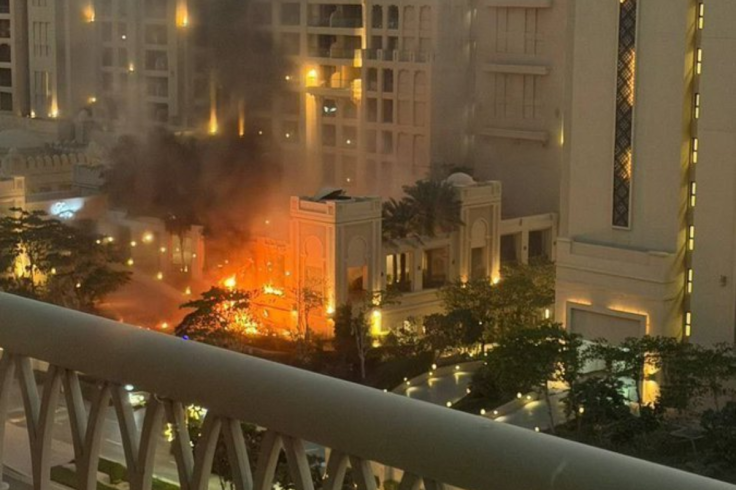
Dubai's property market has delivered one of the world's strongest real estate booms in recent years, attracting global investors with rising prices, tax advantages and strong rental yields. But the pace of buying may now face a new test as geopolitical tensions in the Middle East prompt some investors to reconsider their timing.
After a record-breaking year in 2025, when about $250bn in real estate transactions took place, analysts say the market is entering a more cautious phase. While prices have surged across many neighbourhoods since the pandemic, the next stage of the cycle may depend on how investors react to regional uncertainty and whether the emirate's strong fundamentals continue to outweigh short-term geopolitical risks.
Dubai Records Historic Property Boom
Dubai's real estate market reached unprecedented levels of activity in 2025. Research by property consultancy ANAROCK Group found the emirate recorded around AED917bn, or roughly $250bn, in property transactions during the year. More than 270,000 deals were completed.
Residential real estate drove much of the activity. Approximately 200,000 housing transactions worth about AED538bn were recorded, showing how strongly investors have returned to the market since the pandemic.
Property prices have also climbed rapidly. Across many districts, residential values have increased between 60% and 75% since 2021. Analysts say the surge reflects a combination of strong global demand and policy decisions aimed at attracting international investors.
Government initiatives such as long-term residency visas and investment-friendly regulations helped draw entrepreneurs, professionals and high-net-worth buyers to the city.
Faisal Durrani, partner and head of Middle East research at Knight Frank, said Dubai's appeal extends beyond financial returns.
'Safety, rule of law, strong infrastructure and education all contribute to the city's appeal as a place to live and invest,' he said.
Geopolitical Tensions Prompt Investor Caution
Despite strong fundamentals, recent regional tensions have introduced a new layer of uncertainty. Reports of missile and drone activity across parts of the Middle East have raised concerns among some international buyers, particularly those unfamiliar with the region's geopolitical dynamics.
For some residents, the psychological impact is immediate.
'When you see missiles flying, all other factors go out of the window. You want to rush to safety,' said Dan Hayes, a resident who has lived in Dubai for two years.
Analysts say geopolitical shocks often affect market sentiment before they affect prices.
Prashant Thakur, executive director and head of research at ANAROCK, said investors may temporarily delay purchases while monitoring the situation.
'When markets are already experiencing strong expansion, geopolitical shocks often slow deal-making rather than trigger an immediate price correction,' he said.
Some buyers are adopting a wait-and-watch strategy, while others are renegotiating prices or seeking incentives from developers.
Mid-Market Homes Could Feel Pressure First
Market analysts believe the mid-market housing segment may be the first to show signs of caution.
Properties priced between roughly $330,000 and $880,000, popular with international investors seeking rental income, may face tougher negotiations as buyers become more selective.
Amit Goenka, chairman of investment firm Nisus Finance, said investor caution could lead to more price discussions. 'In the mid-market segment, negotiations are likely to intensify as investors become more cautious,' he said.
Luxury properties could also see a short-term slowdown as wealthy buyers postpone large purchases until geopolitical risks become clearer.
Tourism And Rental Demand Remain Key Factors
Dubai's property market is closely linked to the region's tourism industry, which supports demand for short-term rentals and hospitality assets.
The Middle East tourism sector contributes an estimated $367bn annually to regional economies.
Some forecasts suggest prolonged instability could reduce visitor numbers by 23 million to 38 million travellers and cut tourism revenues by $34bn to $56bn. If that occurs, short-term rental markets could feel the impact first. However, analysts note that Dubai's property market is not solely dependent on tourism.
The emirate's large expatriate workforce continues to generate steady demand for long-term housing.
A Market Familiar With Cycles
Dubai's property sector has experienced major swings before. During the 2008 global financial crisis, property values in the emirate dropped by as much as 50% to 60%.
Another downturn occurred between 2014 and 2019 when prices declined roughly 25% to 30%.
More recently, the COVID-19 pandemic briefly slowed activity, which rebounded within about a year. These cycles illustrate a defining feature of Dubai's real estate sector. While downturns can be sharp, recoveries have often been relatively swift.
For investors watching today's market, the key question is whether the current slowdown represents a temporary pause or the start of the next cycle in one of the world's most closely watched property markets.
© Copyright IBTimes 2025. All rights reserved.
- Recommended For You