

Iran War Update: Ceasefire Call Sparks Oil Crash, Stock Market Surge in Minutes
Markets rallied and oil prices fell after Donald Trump signalled a pause in Iran conflict, though no confirmed ceasefire exists
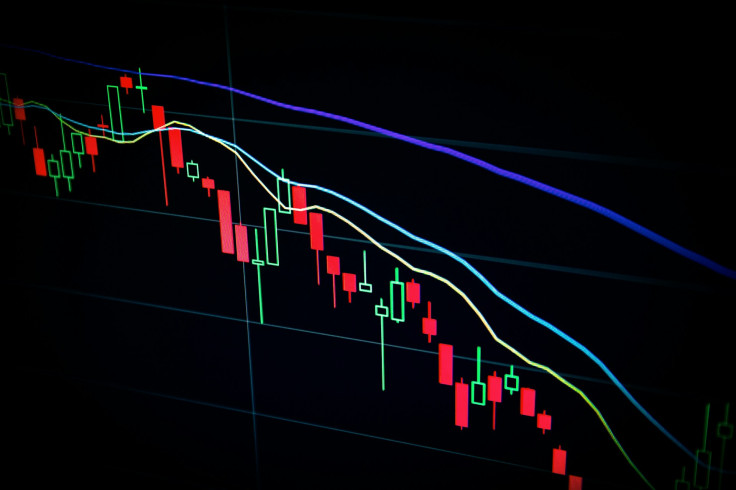
Global financial markets moved sharply after Donald Trump signalled a potential pause in military action involving Iran, though uncertainty remains over whether a formal ceasefire has been agreed.
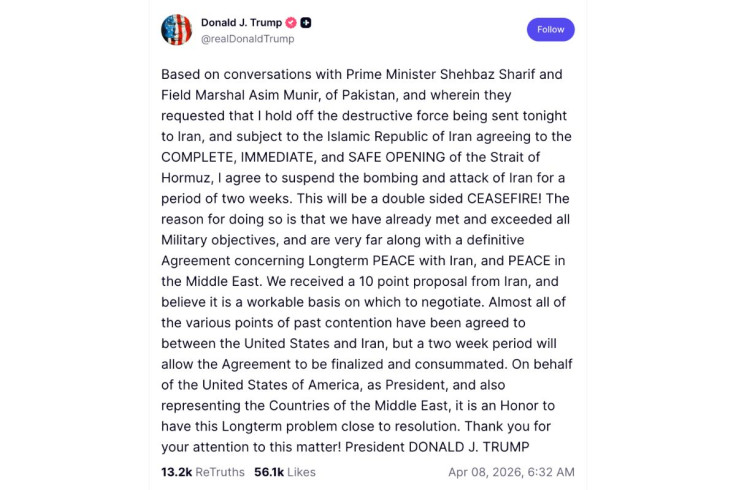
In a post on Truth Social early on 8 April, Trump said he would suspend planned strikes on Iran for two weeks, describing the move as a 'double sided CEASEFIRE' dependent on the reopening of the Strait of Hormuz. The waterway is a critical route for global oil shipments, carrying around 20 per cent of supply.
Oil prices fell and stock markets rose within hours of the announcement, reflecting reduced immediate concern over disruption to energy flows. Trading data showed movements accelerating in early market activity as investors reacted to the prospect of eased tensions. However, subsequent statements from both Trump and Iranian officials have raised questions about the scope and accuracy of initial reports.
Oil Prices Fall as Markets Respond
Energy markets reacted quickly to the prospect of reduced tensions. Data reported by Associated Press showed US crude futures falling sharply to around $92 per barrel, with Brent crude also declining.
Prices had risen in previous sessions due to concerns over restricted shipping through the Strait of Hormuz. The possibility of resumed transit contributed to the downward movement, although oil remains above levels seen before the conflict escalated in February.
The scale of the decline reflects how closely oil markets are tied to developments in the Gulf, where supply routes are highly concentrated and sensitive to disruption.
Stocks Rise Amid Short-Term Relief
Equity markets also moved higher following the announcement. According to CNN, US stock futures rose by around 2 per cent, with gains also recorded across major Asian indices.
The increase reflects a shift in investor sentiment after several days of volatility linked to uncertainty over the conflict. Sectors sensitive to energy costs, including transport, logistics and manufacturing, were among those to benefit from lower oil prices.
Market movements were concentrated in early trading, indicating a rapid adjustment in expectations following the latest developments.
Conflicting Accounts Over Ceasefire
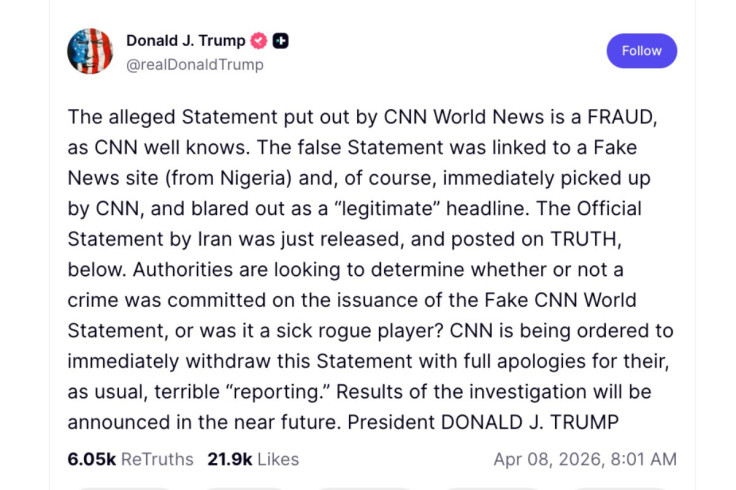
Despite the market reaction, details of any agreement remain unclear. In a later post, Trump criticised CNN's reporting of an Iranian statement, describing it as 'fake' and calling for its withdrawal.
An official statement attributed to Iran's foreign ministry indicated a conditional position. It said Iranian forces would cease operations if attacks stopped, and that safe passage through the Strait of Hormuz could be allowed for a limited period under coordination with its military.
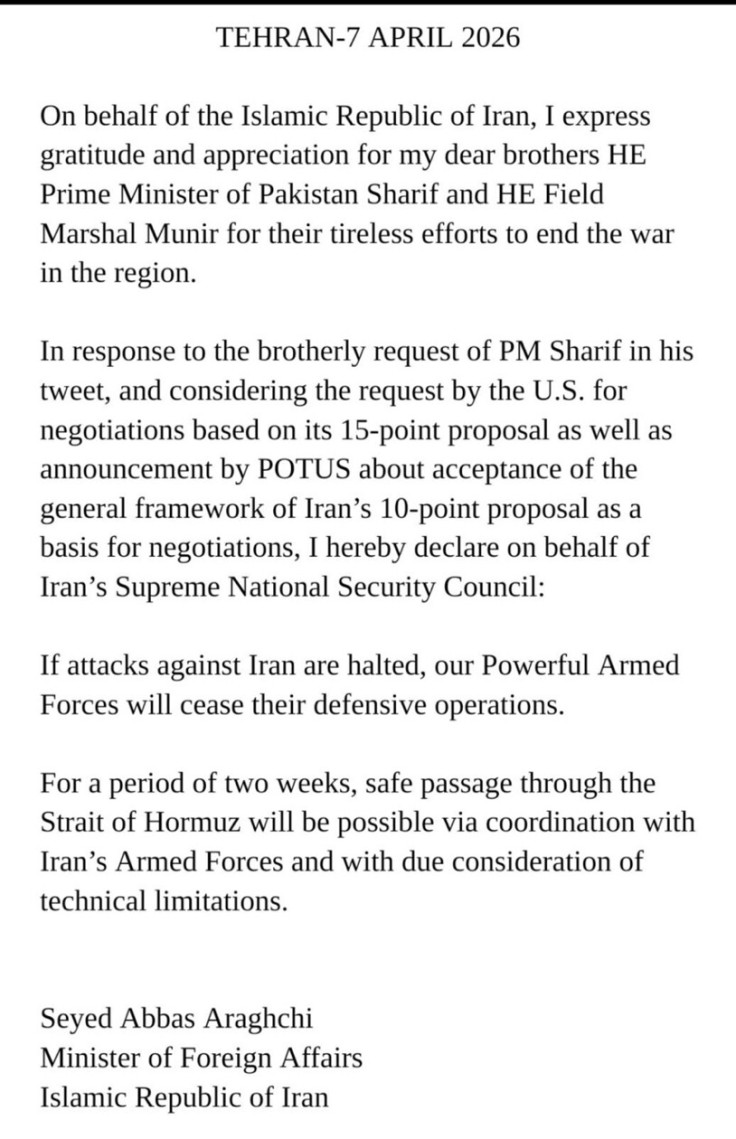
The language suggests a temporary and conditional de-escalation, not a confirmed ceasefire, with both sides indicating that further negotiations are needed.
Trump stated that discussions were based on a proposed framework for negotiations, including a reported 10-point proposal from Iran. Iranian officials, however, indicated that broader issues remain unresolved and that the situation remains fluid.
Markets Remain Sensitive to Developments
Financial markets continue to respond rapidly to developments linked to the conflict. Recent movements in oil and equities reflect how closely investor sentiment is tied to expectations around supply stability and geopolitical risk.
While the announcement of a pause in military action has provided short-term relief, uncertainty over the terms of any agreement means volatility is likely to continue in the near term.
© Copyright IBTimes 2026. All rights reserved.
- Recommended For You


