US Inflation Soars To Highest Level Since 2024 Amid Donald Trump's War With Iran
Economists warn the conflict-linked price surge is already eroding household pay packets ahead of the US midterm elections.

US inflation surged in March to its highest level since May 2024, with the latest figures tying the spike to Donald Trump's escalating conflict with Iran, according to new government data released in Washington on Wednesday. The Consumer Price Index rose 0.9 per cent from February and is now 3.3 per cent higher than a year ago, an annual jump that officials and economists alike are linking to the shockwaves from the Iran war.
The news came after weeks of mounting concern that the stand-off in the Gulf would spill over into everyday prices. The conflict began on 28 February, when the US and Israel launched joint strikes on Iran. Since then, traders have watched oil markets with a kind of nervous fascination as benchmark prices repeatedly punched through the $100-a-barrel mark. That surge, highly visible on petrol station forecourts, is now working its way through the rest of the US economy.

Donald Trump's Iran Offensive Ripples Through Oil And Energy Markets
For context, the Consumer Price Index is the main yardstick for tracking how much more Americans are paying for a typical basket of goods and services. A 3.3 per cent rise year-on-year is not unprecedented by historical standards, but it is the sharpest annual increase since May 2024, wiping out part of recent wage gains and complicating the political story the White House wants to tell heading into November's midterm elections.
At the heart of the problem is energy. The Iran war has effectively jammed one of the world's narrowest economic choke points. Iran's de facto blockade of the Strait of Hormuz, through which about a fifth of global oil supplies normally pass, has forced tankers to reroute or delay, choking supply and fuelling a price spike that no central banker can easily ignore.
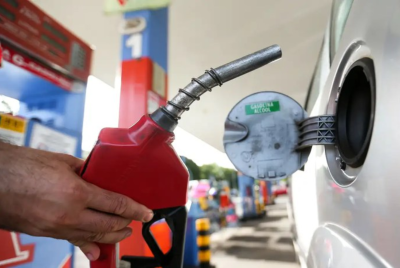
Average US petrol prices have now climbed above $4 a gallon, almost $1 more than a year ago. For a country built around long commutes and cheap fuel, that is not a marginal shift. Hauliers pay more to move goods, airlines face higher jet fuel bills and supermarkets have to absorb steeper transport costs before deciding how much to pass on to shoppers.
Economists had warned early on that this was precisely how the conflict would bite: not in grand geopolitical set-pieces, but in the quiet grind of higher bills. 'We'll definitely see elevated prices eating away at people's paychecks,' Elise Gould, a senior economist at the Economic Policy Institute, told CNN, arguing that without offsetting wage rises, many households will feel poorer even if headline employment remains strong.
Donald Trump Faces Inflation Backlash As Voters Feel The Pinch
None of this is happening in a vacuum. Donald Trump had already been sharpening his message on the cost of living before the first missiles were launched. In a post on Truth Social last month, he warned that if Democrats 'seize power, they will spend every minute trying to 'turn back the clock' to Record Inflation', seeking to cast himself as a bulwark against the price surges that defined the early 2020s.
The reality is less tidy. The CPI figures now landing on voters' screens show that Trump's own foreign policy choices are entwined with the latest bout of inflation. By green-lighting joint US–Israeli strikes on Iran, the administration knowingly courted disruption in a region that still anchors the global energy system. Officials would argue they had strategic reasons for doing so. What is harder to argue with is the arithmetic at the pump.
Energy costs are the most visible part of the story, but not the only one. As fuel prices lurch upwards, airlines raise fares, logistics firms reprice contracts and food producers pass on the higher cost of fertiliser and transport. That is why the 0.9 per cent monthly rise in CPI matters. It indicates that inflation is no longer confined to a few volatile categories, but is seeping into the broader basket of goods and services American consumers rely on.
So far, there has been little in the way of a detailed public response from the Trump administration to the new data. Officials have instead leaned on familiar talking points: that inflation is still below the worst peaks of earlier years and that a robust economy can absorb temporary shocks. Those claims are technically true, as far as the numbers go, but they sit uneasily beside the lived experience of drivers staring at $4-plus fuel and families noticing weekly food shops creeping higher.
© Copyright IBTimes 2026. All rights reserved.
- Recommended For You