

Oil Prices Could Hit $200 as Experts Warn Hormuz Closure Past Mid-April Triggers Full-Blown Global Fuel Crisis
Markets are betting on a quick end to the war, but emergency reserves will run dry within weeks and supply losses could double
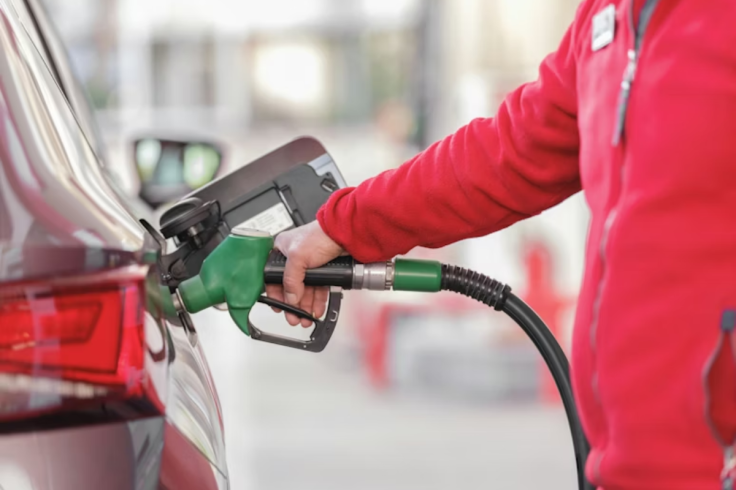
Oil prices are on track for their largest monthly surge on record as analysts warn the global fuel crisis triggered by the Strait of Hormuz closure will get dramatically worse if the waterway isn't reopened within weeks.
Brent crude has soared nearly 60% in March, closing at $112.78 (£85.43) a barrel on Monday and surging past $115 (£87.11) in early Tuesday trading after an Iranian drone struck a fully loaded Kuwaiti oil tanker at Dubai Port.
The attack on the Al Salmi, a very large crude carrier holding 2 million barrels of oil, caused a fire and raised fears of a spill, the Kuwait Petroleum Corporation confirmed.
Five weeks into the US-Israeli war on Iran, the strait that normally carries 20% of the world's oil supply remains effectively shut. But markets haven't fully priced in what's coming.
The Mid-April Supply Cliff
Marko Papic, chief geopolitical strategist at BCA Research, estimates the war has so far removed 4.5 to 5 million barrels per day from global supply, roughly 5% of the world's total. That shortfall, he wrote in a research note this week, 'will double by mid-April, becoming the largest loss of crude supply' in history.
The reason it doubles comes down to timing. Three temporary buffers have been keeping prices from spiralling even higher. The International Energy Agency (IEA) coordinated the release of 400 million barrels from strategic reserves, the largest such action in the agency's history.
Washington temporarily lifted sanctions on some Russian and Iranian oil already at sea. And President Donald Trump has repeatedly suggested the war could end soon, keeping futures traders from pricing in worst-case outcomes.
All three cushions are expiring. Papic's analysis points to roughly 19 April as the moment when reserve releases and sanction waivers run dry. After that, the world has no fallback. Wood Mackenzie analysts warned last week that '$200 a barrel is not outside the realms of possibility in 2026.'
Petrol Prices Already Climbing Fast
The pain is already showing up at the pump. The US national average for a gallon of regular petrol hit $3.98 (£3.01) last week, up a full dollar from a month earlier, according to the American Automobile Association. In California, drivers are paying an average of $5.84 a gallon (£4.42), with some stations charging above $7 (£5.30).
The physical oil market tells an even more alarming story than futures. The Dubai benchmark, which tracks actual crude deliveries from the Gulf, has surged 76% since the war began to roughly $126 (£95.44) a barrel, more than double the gain in Brent paper futures.
A Global Scramble to Cut Fuel Use
Governments are already taking drastic steps. The Philippines declared a national energy emergency on 24 March and moved government offices to a four-day working week. In Australia, Victoria and Tasmania scrapped public transport fares entirely, while the federal government halved fuel excise for three months. South Korea introduced fuel price caps for the first time in three decades.
Group of Seven (G7) finance ministers and central bankers met on Monday with the IEA, the International Monetary Fund, and the World Bank. In a joint statement, the G7 pledged to 'take all necessary measures' to stabilise the energy market, including further releases of reserves.
What Happens If the Strait Stays Shut
Goldman Sachs now expects Brent to average $85 (£64.39) a barrel across 2026, up from $77 (£58.33) in its pre-war forecast, and has raised its US recession probability to 25%. In a more severe scenario, the bank warned prices could exceed the 2008 all-time high of $147 (£111.35).
The Federal Reserve Bank of Dallas modelled a full-quarter closure and projected it would raise West Texas Intermediate crude to $98 (£74.23) a barrel while cutting global GDP growth by 2.9 percentage points.
Trump extended his deadline for Iran to reopen the strait to 6 April. Tehran has only hardened its position. Iran's Islamic Revolutionary Guard Corps declared it won't allow 'a litre of oil' through the waterway and warned crude will reach $200 (£151.50) a barrel.
Tuesday's tanker attack at Dubai Port is proof that the threat is growing, not shrinking.
For consumers from Manchester to Manila, every day the strait stays closed is another day prices climb higher, and reserves fall lower.
© Copyright IBTimes 2026. All rights reserved.
- MOST POPULAR IN Commodities


