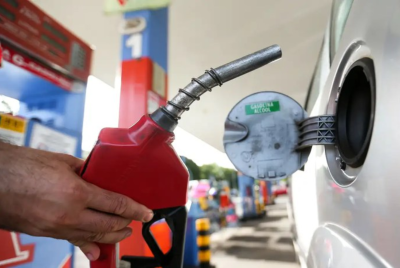
'If Gas Prices Rise, Then Let It Rise': Trump Says Rising Gas Prices Does Not Concern Him
Markets react as oil spikes and fuel prices climb, while Trump says higher gas costs are not a concern

US President Donald Trump admitted on Sunday that gas prices may continue to rise in the coming months, though he has previously signalled that the rising fuel costs are not a major concern for his administration.
Trump downplaying rising gas prices isn't new information. In March, the US President had told Reuters in an interview, 'I don't have any concern about it. They'll drop very rapidly when this is over, and if they rise, they rise, but this is far more important than having gasoline prices go up a little bit,' suggesting that the military objective outweighed short-term economic pressures.
Trump also added that fuel costs could stabilise once the situation amid the United States's ongoing conflict with Iran improves. Trump told Maria Bartiromo during an interview, 'Well, it's eventually going to be lower. No, it might not happen initially, but it's gonna go down when this is all over.'
He also signalled hope towards the fuel costs going down in fall, telling the host, 'I hope so. I mean, I think so. It could be. Or the same. Or maybe a little bit higher. But it should be around the same. I think this won't be that much longer.'
Blockade Fears Push Oil Prices Higher
Markets have already reacted sharply to the geopolitical developments. Oil prices have surged past $100 (approximately £75) per barrel on Monday following the recent collapse of US-Iran talks and the announcement of a US Navy Strait of Hormuz blockade, per Reuters.
The proposed naval action has raised concerns about supply disruptions, as roughly a fifth of the world's oil flows through Hormuz. Analysts warn that any sustained restrictions could tighten global supply and drive fuel costs to go even higher, with ripple effects across inflation to follow, according to The New York Post.
On Monday, the Dow Jones Industrial Average fell by 168 points (0.4%), while the S&P 500 and Nasdaq posted small gains of 0.1% and 0.3% each. In energy markets, oil prices climbed sharply, with Brent crude rising 5.6% to $100.54 (£75) a barrel and West Texas Intermediate increasing 5.2% to $94.19 (£70). AAA reported an average price for gasoline at $4.13 (£3.07) per gallon.
🇺🇸 PRESIDENT TRUMP: "If gas prices rise, then let it rise. It doesn't concern me." pic.twitter.com/Gw3sA1dhN3
— Coinvo (@Coinvo) April 12, 2026
Political and Economic Risks Grow
Despite Trump's dismissal of the rising fuel prices, experts say that sustained increases at the pump could have domestic consequences. Higher fuel costs have historically influenced voter sentiment, particularly during election cycles, and could complicate the administration's economic messaging ahead of upcoming political contests, according to Reuters.
The increase in gasoline prices adds pressure on households dealing with cost-of-living concerns. The situation has also contributed to market volatility, with stocks falling and investors reacting cautiously to the growing uncertainty.
According to Bellwether Wealth President and Chief Investment Officer Clark Bellin, 'It's clear that there will be more saber-rattling over this waterway between the US and Iran this week, and that could rattle markets and extend this stock market correction.'
He stated further, 'The big question for stocks going forward is if this upcoming earnings season can be enough of a catalyst to dismantle the close link between stocks and oil, as corporate earnings are what traditionally drive stock prices.'
© Copyright IBTimes 2026. All rights reserved.
- Recommended For You