

Dubai No Longer Safe? Iran Missiles Shake the $Trillion Safe-Haven Dream
Recent strikes in the Gulf region challenge Dubai's image as a safe haven, with potential global economic implications

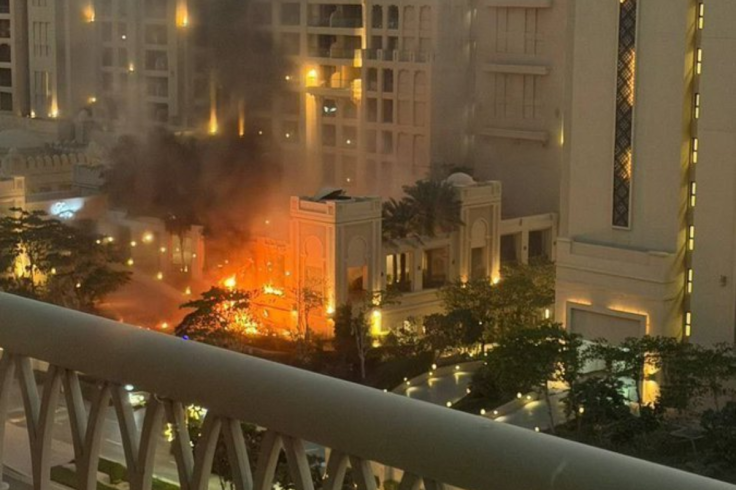
For decades, Dubai sold the world on a single and simple idea: park your money here, build your life here, and nothing will touch you. Investors bought it. Entrepreneurs flew in from Lagos, London, Mumbai. Expats — and there are rather a lot of them — built lives around the promise that this glittering strip of coastline was, somehow, untouchable.
Then came the missiles.
Iranian strikes across Gulf targets, tied to the wider US–Israel–Iran standoff, did not flatten Dubai. What they did was punch a hole in something more fragile than concrete: the city's aura. Images circulating on social media — smoke drifting near Palm Jumeirah, a fire at a luxury hotel, haze hanging over the Burj Khalifa skyline after what appeared to be a drone interception — spread faster than any official statement could contain them.
The Optics Did the Damage
Here is where it gets uncomfortable for Dubai's boosters. The physical damage, by most accounts, was limited. A hotel fire on the Palm. Smoke near the Burj. Debris from intercepted projectiles. Nobody is talking about a crater where the Mall of the Emirates used to be.
But that almost doesn't matter.
One finance professional — anonymous, obviously — posted what half the expat community was already thinking: 'Moved here to avoid taxes, now hiding from missiles.' It became a meme within hours. Whether he expected the line to go viral is anyone's guess, but it captured something real; a shift in the internal calculus that hundreds of thousands of foreign residents run every morning when they decide this city is still worth the trade-offs.
Dubai's economic model does not run on oil. It runs on confidence. Tourism, finance, aviation, logistics, real estate — strip away the skyscrapers and what you have is a confidence machine, and confidence is binary. You either trust it or you don't.
Jebel Ali and the 36% Problem
Look. The symbolic damage would have been enough on its own. But then DP World suspended operations at Jebel Ali Port — or rather, reports indicated a suspension after a fire caused by falling debris from intercepted projectiles, though the company has not confirmed the timeline precisely, which is the kind of detail that matters when you're trying to reassure global shipping clients.
Jebel Ali is not a minor facility. It is the Middle East's largest container hub. The port and its surrounding free zone account for roughly 36% of Dubai's GDP. Thirty-six per cent. Let that number sit for a moment; even a 48-hour disruption sends shockwaves through supply chains that stretch from Shenzhen to Rotterdam.
Maritime anxiety spread quickly across the Strait of Hormuz — the narrow throat through which a fifth of the world's oil passes on any given day. Some vessels paused movement. Insurers started recalculating risk premiums. Airspace disruptions compounded the mess, grounding or rerouting flights through a region that functions as a global aviation crossroads connecting Asia, Europe, and Africa.
Not a Financial Crisis, Something Worse
Analysts keep reaching for the 2009 comparison, and it's not wrong exactly, but it misses the point. Dubai weathered the 2009–2010 property crash. Prices fell, developers went quiet, a few headline projects stalled. It was painful. It was also legible — a financial shock with financial remedies. Restructure the debt, wait for sentiment to turn, cut some ribbon on a new mega-project. Done.
This is different. You cannot restructure a missile.
Former JPMorgan strategist Marko Kolanovic warned the fallout could be severe, pointing to the UAE's heavy exposure to exactly the sectors most sensitive to physical security concerns: tourism, aviation, shipping, finance. These are industries staffed overwhelmingly by expatriates who, mind you, make up the vast majority of the population. They chose to be here. They can choose to leave.
Signs of that calculation shifting were already visible. Reports described panic buying at supermarkets. Queues at the airport. Social media posts from residents booking one-way flights to London, Singapore, Nairobi — not in panic, necessarily, but with the quiet urgency of people who had suddenly remembered that their presence in this country was always, at bottom, a choice.
Strategic Pressure, Not Destruction
Some regional analysts believe the strikes were never about levelling Dubai. The objective — and this is speculative, though the logic tracks — was strategic pressure: raise the cost of being a US ally in the Gulf, demonstrate reach, test the air defences, and let the economic model do the rest. If confidence wobbles, money moves. If money moves, leverage shifts. The frustration among Gulf leaders at being drawn deeper into a conflict they did not seek must have been considerable.
The ripple effects extend well beyond the Gulf. Dubai has spent two decades positioning itself as the neutral node connecting capital between Asia, Europe, and emerging markets. Billions flow through the DIFC. Emirates and Etihad link 260-odd destinations. The logistics corridor running through Jebel Ali feeds manufacturing hubs across the Indian Ocean rim.
Cinzia Bianco of the European Council on Foreign Relations did not mince words. She called it Dubai's 'ultimate nightmare' — a direct challenge to the foundation on which the entire safe-haven identity was built.
The Question That Matters
Everything comes back to one thing: behaviour. Will the expats leave? And if they leave, will they come back?
Dubai can rebuild a hotel. It can reopen a port. Airspace restrictions lift; insurance premiums recalibrate. What it cannot do — what no amount of PR spending or discounted business-class fares can achieve overnight — is restore the psychological contract that brought eight million foreign residents to a city in the desert in the first place.
That promise of untouchability, the one Dubai sold for thirty years? Smoke was drifting past it on Tuesday afternoon.
© Copyright IBTimes 2026. All rights reserved.