

EU Says Mladić Funeral Shows Serbia Has Failed To Confront Its Dark Past
Serbia's actions at Mladić's funeral spark EU criticism and diplomatic tensions
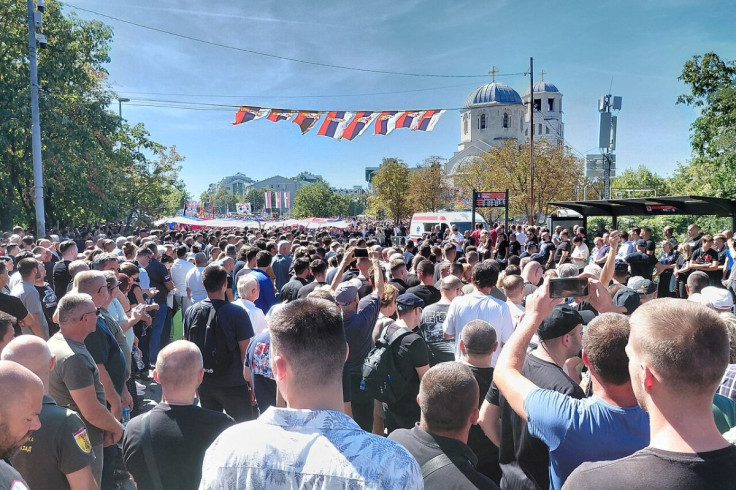
Top European Union officials have condemned the public funeral of convicted war criminal Ratko Mladić in Belgrade, saying the ceremony showed Serbia had failed to confront its wartime past.
European Commission President Ursula von der Leyen and European Council President António Costa issued statements describing images from the funeral as 'shocking'.
The support for the ceremony, combined with the presence of senior Serbian officials, was described as 'a failure to confront a dark chapter in Europe's recent history'. Commentators said the events contradicted the values underpinning Serbia's path towards EU membership. Mladić was buried in Belgrade on Monday, 7 September 2026.
Official Support Evident Despite Denial of State Funeral
Belgrade said it had not organised a state funeral for Mladić, who died while serving a life sentence in The Hague after being convicted of genocide, war crimes and crimes against humanity.
However, the funeral included several forms of official support. His coffin was flown from the Netherlands to Belgrade on a Serbian government aircraft, accompanied by Justice Minister Nenad Vujić.
Soldiers from the Serbian Armed Forces then carried the flag‑draped coffin from the aircraft to the Military Medical Academy.
At Topčider Cemetery, an honorary army unit escorted the coffin and soldiers fired three volleys. A military orchestra also performed.
A military commemoration took place beforehand at an official army facility, while state police closed roads to manage the crowds.
Vujić said authorities had helped maintain order so the funeral could take place in a 'dignified' manner.
Ministers Paid Respects at Church Service
The main funeral service was held at the Church of St Luke in Belgrade and led by Patriarch Porfirije, head of the Serbian Orthodox Church. Several Serbian government ministers attended and offered condolences to Mladić's family.
They included Defence Minister Bratislav Gašić, Justice Minister Nenad Vujić, Culture Minister Nikola Selaković, Public Investments Minister Darko Glišić and Minister without portfolio Nenad Popović.
Serbian President Aleksandar Vučić did not attend the service but sent his son, Danilo Vučić. Bosnian Serb nationalist leader Milorad Dodik and Russia's ambassador to Serbia were also present.
Brussels Cancels Visit, Reviews Accession Talks
EU Enlargement Commissioner Marta Kos cancelled a planned visit to Serbia in protest at the events surrounding Mladić's funeral. She said the 'glorification' following his death was 'incompatible with the values on which the EU path is built'. Kos had previously said Serbia's handling of the funeral would test its willingness to break with its wartime past.
Commission spokesman Guillaume Mercier said the European Commission had recommended opening Cluster 3 accession chapters with Serbia in July. However, EU member states would now have to discuss whether to proceed in light of the latest political developments.
EU foreign policy chief Kaja Kallas said reconciliation could not be based on 'revisionism, the denial of genocide or the honouring of perpetrators'. Serbia's EU accession process was already facing difficulties. Kos had warned that Belgrade could lose about €1.5 billion in EU funding over irregularities surrounding municipal elections.
Green members of the European Parliament also called on the European People's Party to stop protecting a government they accused of openly celebrating convicted war criminals.
Bosnia Severs Diplomatic Ties in Protest
Bosnia and Herzegovina responded by expelling two Serbian embassy officials from Sarajevo: military attaché Milan Dulanović and intelligence adviser Danko Maksimović. Foreign Minister Elmedin Konaković gave both men 48 hours to leave.
Bosnia also withdrew almost all staff from its embassy in Belgrade, leaving only the ambassador. Consular services were moved to Zagreb and Podgorica. The government said it would not sign a planned Western Balkans memorandum on good neighbourly relations at a meeting in Montenegro on 1 October.
Konaković said Serbia had 'crossed all red lines', adding that Bosnia would not sign agreements on good neighbourly relations with the country in its current position.
The Mothers of Srebrenica also criticised the funeral, warning on social media that it risked becoming a major gathering in support of Mladić and accusing those involved of glorifying genocide.
UK Summons Envoy Over Commemorations
The UK Foreign Office summoned Serbia's charge d'affaires in London through Dame Karen Pierce, the UK Special Envoy for the Western Balkans. The Foreign Office said Mladić's crimes were among the worst committed in Europe since the Second World War and said attempts to whitewash them were an affront to international law.
Minister for Europe Lord Wood of Anfield said the glorification of Mladić undermined trust and reconciliation. The UK also noted that the International Criminal Tribunal for the former Yugoslavia was established by the UN Security Council, and said Serbia was therefore obliged to respect its rulings.
© Copyright IBTimes 2026. All rights reserved.