

'First Jewish President'? Trump Sparks Outrage and Mockery After MAGA Suddenly Ditches His 'Catholic' Label
Viral claim over Trump's religious identity ignites debate amid 2025 election cycle
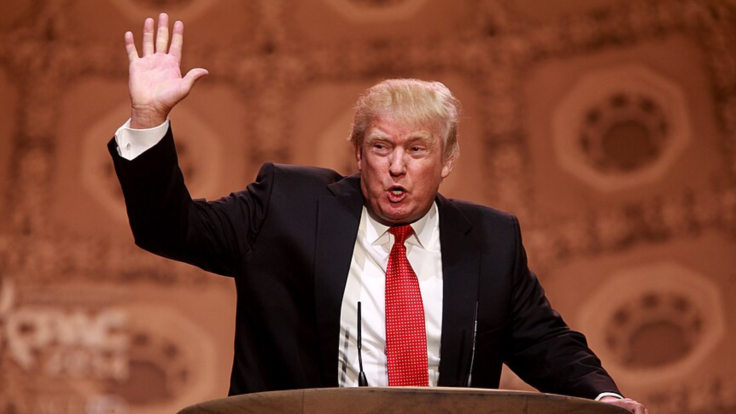
Donald Trump has ignited a new storm of controversy over his religious identity after supporters circulated a startling claim that he is the 'first Jewish president,' a label that appears to have emerged from social-media speculation rather than any statement from Trump or his campaign.
Donald Trump's purported shift in religious identification has baffled scholars, religious leaders, and legal experts because it lacks any basis in his own public statements or legal record.
The claim first gained traction on TikTok and other platforms, where clips and posts suggest MAGA supporters abandoned an earlier belief that Trump was Catholic in favour of a narrative casting him as 'Jewish'. Independent analysts and fact-checkers note that the 'first Jewish president' characterisation does not appear in any official campaign material or verified interview with Trump himself.
The phenomenon highlights the intersection of religion, identity politics, and misinformation in the 2025 US election cycle.
Maga-Era Religious Labeling And Online Virality
Social-media posts circulating on platforms such as TikTok, X, and Instagram have asserted that Trump is now being described by some MAGA communities as the 'first Jewish president' of the United States.
Right-wing commentator Mark Levin posted a video on Instagram in which he said, 'Donald Trump is our first Jewish President,' a statement that quickly spread across a range of social feeds and was reposted by pro-Trump pages.
These posts often cite Trump's political support among some Jewish voters or reference his daughter Ivanka's conversion to Judaism in 2009; none of these elements confer Jewish identity upon Trump himself under religious or legal definitions.
There is no record in official Federal Election Commission filings, campaign speeches, or interviews with Trump in which he identifies as Jewish, nor any indication that he has converted. Legal scholars note that religious identity for political candidates is a matter of self-identification and personal disclosure; absent such a statement from Trump, social-media narratives remain unverified.
Digital culture analysts say such memes serve political functions by energising fringe bases and creating polarising narratives that attract engagement. Experts on misinformation warn that appealing content can spread widely even when not grounded in fact.
JUST IN: 🇺🇸 🇮🇱 Trump admits he's the first Jewish President of the United States
— ADAM (@AdameMedia) December 17, 2025
Mark Levin: Six years ago I said this is our first Jewish President.
Trump: It's true.
His favourite child, Ivanka, converted in 2009.
pic.twitter.com/7AdKZQFG4Z
Trump's Past Religious Identification And Public Record
Historically, Donald Trump has described his faith in shifting terms. During the 2016 and 2020 campaigns, Trump identified as a Presbyterian and, more recently, as a 'non-denominational Christian.' Public record from multiple debates, campaign speeches, and interviews confirms Trump has never publicly claimed Jewish faith.
Legal filings for Trump's presidential campaigns do not include religious affiliation as a required detail; however, biographies and his official campaign website have consistently referred to him in a Christian context.
Trump's own statements about religion have at times been ambiguous. A Reddit thread cited by users notes a claim that in one recorded instance, Trump said, 'I'm not Protestant, and I'm not Catholic,' though the context of that statement is disputed and not corroborated by direct source material.
Independent fact-checkers emphasise that Gospel identity or religious heritage cannot be conferred by third parties or commentators. The controversy underscores the ease with which social media can blur factual reporting with viral content.
Reactions From Religious Communities And Scholars
Religious leaders and scholars have responded with alarm to the confusion over Trump's religious identity. Catholic commentators warn that conflating political figures with religious labels undermines the doctrine of both faith and civic discourse.
Events such as Trump sharing AI-generated images of himself as a pope earlier in 2025 triggered backlash from Catholics who saw the imagery as disrespectful and misleading. Critics on social media described the posts as 'disrespectful and insulting' to Catholic tradition, while some MAGA supporters disavowed the images as crossing a line even for the movement.
Christian theologians have expressed concern about the broader trend of politicised religion. One pastor observed that efforts to equate political loyalty with religious identity create deep fractures within faith communities.
Scholars of religion and politics note that Trump's appeal among certain evangelical and conservative Catholic voters does not translate into religious authenticity; rather, it reflects political strategy and cultural alignment.
Jewish leaders have emphasised that Jewish identity, traditionally defined by matrilineal descent or formal conversion, cannot be bestowed by political narrative or social-media meme. No major Jewish organisation has recognised Trump as Jewish, nor has Trump himself made such a claim.
Misinformation, Politics, And Public Perception
The 'first Jewish president' claim fits within a broader ecosystem of political misinformation and identity politics that has characterised recent election cycles. Digital misinformation researchers highlight that sensational narratives, especially those tied to religion, spread rapidly because they provoke strong emotional reactions, regardless of factual accuracy.
Fact-check organisations advise readers to seek direct quotes from primary sources and official statements rather than rely on social-media summaries or viral clips. Some pro-Trump social feeds labelled as 'Independent' have circulated clips without sourcing them to verifiable interviews, contributing to confusion.
Experts say that political actors and influencers often exploit ambiguities in public persona for tactical advantage; in this case, reframing Trump's identity may be intended to appeal to specific voter blocs or provoke opponents.
Religious identity remains a sensitive and deeply personal aspect of political life; when exploited for political gain or viral attention, it can erode trust in public discourse and fuel social division.
The claim that Donald Trump is the 'first Jewish president' is a social-media phenomenon without grounding in Trump's own statements or official records.
© Copyright IBTimes 2026. All rights reserved.