

What is Trump Derangement Syndrome? POTUS' Shocking Claim That Caused Rob Reiner's Death
Trump Derangement Syndrome is a political term for 'irrational' anti-Trump hatred.
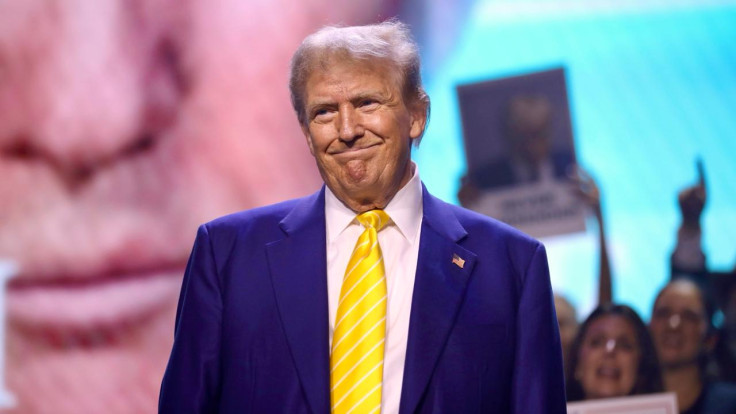
The phrase 'Trump Derangement Syndrome' (TDS) is a term used against those who strongly disagree with US President Donald Trump. It is often used as an insult against his critics, as if not aligning with his political views is a mental illness.
The term has resurfaced after the POTUS, himself, used it in a recent post on social media, in response to Rob Reiner's murder. Trump claimed that the American director, producer, and political activist died from the 'crippling disease,' he called TDS.
What Is 'Trump Derangement Syndrome'
Trump Derangement Syndrome is a political term used by the president's supporters against his critics who hate him intensely without reason. For them, individuals with TDS abandon logic and reason to hate the POTUS, so it became a convenient, highly politicised term to dismiss the anti-Trump.
The concept of 'presidential derangement syndrome' began even before Trump's presidency. Conservative political columnist Charles Krauthammer, a psychiatrist before he pursued his career in journalism, was the first to coin the phrase 'Bush Derangement Syndrome' in 2003 during George W. Bush's presidency.
Krauthammer defined it as 'the acute onset of paranoia in otherwise normal people in reaction to the policies, the presidency—nay—the very existence of George W. Bush.'
The first use of the term 'Trump Derangement Syndrome' was reportedly in August 2015 by Esther Goldberg in a 2015 op-ed for The American Spectator. At the time, she used it to refer to Republicans who dismissed Trump's presidential candidacy.
Two years later, Krauthammer clarified why 'Trump Derangement Syndrome' differed from the 'Bush Derangement Syndrome'.
'What distinguishes Trump Derangement Syndrome is not just general hysteria about the subject, but additionally the inability to distinguish between legitimate policy differences on the one hand and signs of psychic pathology on the other,' he wrote for the Burlington Free Press in 2017.
TDS as a Rhetorical Weapon
The widespread adoption of the term by President Donald Trump and his allies transformed it into a powerful rhetorical weapon. Trump and his supporters use the term to label opponents as 'deranged,' shifting the debate from policy to the critic's perceived mental state.
Trump, himself, used the term on Truth Social following the deaths of Rob Reiner and his wife, Michelle. In his post, which has since drawn criticism, Trump called Reiner, a vocal critic, as a 'tortured and struggling, but once very talented movie director and comedy star.'
The President claimed that he died 'due to the anger he caused others through his massive, unyielding, and incurable affliction with a mind crippling disease known as TRUMP DERANGEMENT SYNDROME, sometimes referred to as TDS.' Trump added that Reiner's 'raging obsession' with him had 'driven people CRAZY.' Despite the criticism, Trump ended the post with, 'May Rob and Michele rest in peace!'
The use of TDS is considered by many to be a political strategy to discredit those who criticise the current administration.
TDS Is 'Not Real'
Dr. Zachary Rubin, a double board-certified paediatrician and allergist-immunologist, who is known as @rubin_allergy on TikTok, reminded the public that TDS is 'not real.'
'This is a friendly reminder that Trump Derangement Syndrome does not exist,' Rubin said on TikTok. He stressed that the condition is not a 'recognised medical entity of DSM-5' and is not found in any medical textbook.
The medical professional added that someone who disagrees or criticises another person doesn't mean it's pathological, while stressing that 'words matter' and 'truth matters.'
'No matter how many times you say this is a form of propaganda, it doesn't turn it into a diagnosis,' he added.
@rubin_allergy Trump Derangement Syndrome is not real. #trump #tiktokdoc #learnontiktok
♬ original sound - Dr. Rubin, MD
© Copyright IBTimes 2026. All rights reserved.