

Gazan Christians Describe Abductions and Pressure Under Hamas as Population Falls From 5,000 to Under 400
A shrinking community confronts allegations of religious intolerance, the devastation of war and an uncertain future
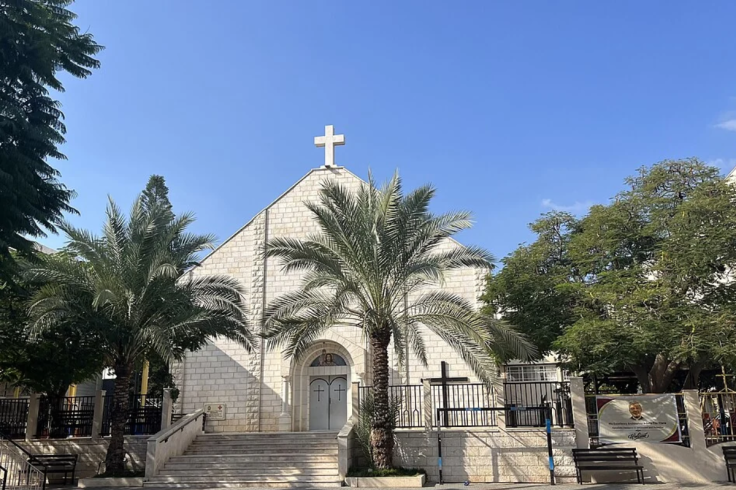
A Gaza Christian who left the territory has alleged that Christians faced abductions and pressure to convert after Hamas seized control in 2007. Identified as Naji, he made the claims in a Christian Broadcasting Network (CBN) interview published on 9 November 2026. The specific incidents have not been independently corroborated.
His account emerged as conflicting estimates highlighted the decline of Gaza's Christian community. CBN cited unspecified reports suggesting 300 to 400 Christians remained, while a Christian ministry leader estimated 500 to 550 in October. Neither figure represents a verified census.
Gaza Christian Recounts Alleged Abductions and Religious Pressure
Naji claimed Hamas's takeover changed how some residents regarded their Christian neighbours. He alleged that sermons, mosque teachings and organised religious groups encouraged attitudes that left Christians feeling increasingly excluded.
'They completely restructured how everyday Gazans thought,' he told CBN, describing what he believed was a shift in religious teaching.
He said some residents viewed Christians as dhimmi, a historical designation for certain non-Muslims under Islamic rule. The classification traditionally involved protection alongside unequal legal status. His testimony did not establish that Hamas formally imposed such a designation in Gaza.
Naji also claimed some residents associated Christians with the Crusades or misunderstood their religious practices. 'They didn't grasp that we were Gazans just like them or fellow citizens of Gaza City,' he said.
His most serious allegation concerned a Christian man allegedly forced to convert to Islam during a live television appearance. Naji said the man later fled to Cyprus.
'There have been cases when Christians were abducted,' he claimed.
CBN did not identify the alleged victim or provide independent documentation of the incident. The interview also did not establish who was responsible for the reported abductions or demonstrate Hamas's direct involvement.
How Many Gaza Christians Remain Amid War?
A December 2024 report by the Jerusalem Center for Security and Foreign Affairs estimated that roughly 5,000 Christians lived in Gaza before Hamas took power. It put the community at about 1,000 in October 2023. Research published by the University of Notre Dame instead cited approximately 3,000 Christians before 2007.
Researchers have cited emigration, economic hardship, restrictions on movement and security concerns, alongside allegations of religious discrimination. No single cause accounts for the community's losses.
In October 2026, Hanna Massad, founder of Christian Mission to Gaza, estimated that 500 to 550 Christians remained. His assessment, reported by Baptist Press, was higher than CBN's subsequent estimate of 300 to 400. CBN did not identify its counting method or explain the discrepancy.
The war has also brought deaths, displacement and damaged places of worship. In an 11 November statement to Aid to the Church in Need, Father Gabriel Romanelli warned that winter was worsening conditions for displaced families. The priest leads Holy Family, Gaza's only Catholic parish.
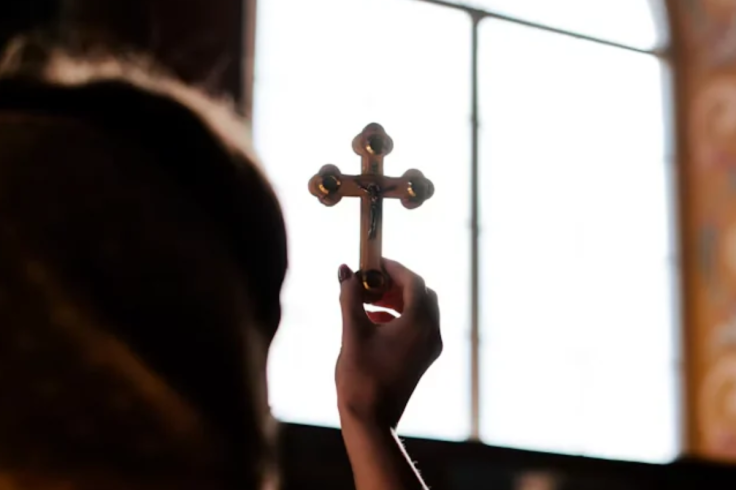
Romanelli described limited electricity and shelters exposed to severe weather. His parish has continued providing food and water to vulnerable neighbours, most of whom are Muslim.
CBN separately interviewed Ahad, a Christian raised in Syria. He described bullying and stones being thrown at churches during worship, speaking about experiences across the Middle East. His testimony was not independent confirmation of an attack in Gaza.
Ahad said Christians in parts of the region faced pressure to accept a subordinate status. Addressing Christians in Western countries, he urged them to remember communities whose history in the Middle East stretches back centuries.
'Listen to us,' he said. 'You cannot forget about us.'
© Copyright IBTimes 2026. All rights reserved.