

Elon Musk, Worth $868.5b, Claims Saving Money Is 'Pointless' in AI Future — But Money Experts Disagree
The Tesla and SpaceX chief argues artificial intelligence, robotics and energy could end scarcity, while specialists question whether technological gains will benefit households equally
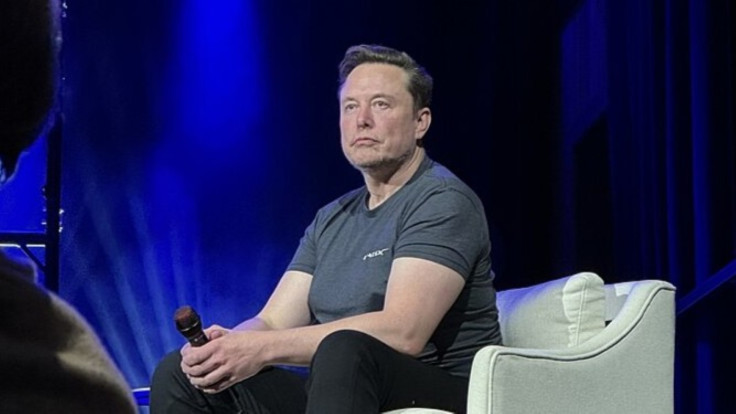
Tesla and SpaceX chief executive Elon Musk has renewed his prediction that artificial intelligence could make retirement savings unnecessary. However, seven financial and technology experts have warned against abandoning long-term saving.
Their disagreement resurfaced in a report published on 1 November 2026, months after the specialists challenged his vision of an economy transformed by AI.
For context, Musk argued during a January appearance on Moonshots with Peter Diamandis that advances in artificial intelligence, robotics and energy could dramatically increase global productivity.
He predicted that essential goods and services would eventually become so abundant that conventional retirement planning could lose its importance.
The billionaire returned to that argument on X, responding to a user who questioned whether their 'questionable financial decisions' would matter in a technologically advanced future.
'Saving money for the distant future is pointless with the advent of super intelligent abundance,' Musk wrote, according to Business Insider.
The prediction carries considerable implications for workers who depend on decades of savings to finance their retirement. Yet experts argue that Musk's optimistic outlook offers no guarantee of financial security.
Elon Musk Retirement Savings Prediction Draws Warnings From Experts
During his January podcast appearance, Musk suggested that people should stop worrying about accumulating retirement savings over the next 10 to 20 years.
'It won't matter,' he said, arguing that technological breakthroughs could make goods and services widely accessible.
Musk envisaged a future where people could obtain virtually anything they needed, supported by increasingly capable robots and artificial intelligence systems. He also predicted improvements in healthcare and education that could make essential services more widely available.
His vision includes a world with 'no scarcity of goods and services', fundamentally changing how people earn, spend and save money.
But seven specialists interviewed by Business Insider in January rejected the suggestion that workers should abandon their retirement plans.
Geoffrey Sanzenbacher, a research fellow at Boston College's Center for Retirement Research, warned that Musk's prediction could mislead Americans already facing uncertainty over their financial futures.
He questioned the proposed timeline and highlighted concerns about the long-term funding of Social Security, which millions of Americans depend on after leaving work.
Alicia Munnell, a senior adviser and former director of the same research centre, also criticised Musk's recommendation. She argued that retirement benefits and personal savings remain essential to maintaining living standards.
Olivia Mitchell, director of the Boettner Center on Pensions and Retirement Research at the University of Pennsylvania's Wharton School, offered a more qualified assessment.
Mitchell acknowledged that artificial intelligence could increase productivity and reduce costs. However, she warned that retirement security would still depend heavily on individual savings.
The disagreement centres on a fundamental uncertainty. Greater productivity does not necessarily mean that everyone will benefit equally from the wealth generated by new technologies.
Private wealth manager Kristin Pugh similarly questioned whether advances in artificial intelligence would automatically translate into greater financial security for ordinary households.
She noted that previous technological breakthroughs increased productivity without necessarily reducing working hours or distributing economic gains evenly.
Why Elon Musk Retirement Savings Advice Depends on an Uncertain AI Future
Beyond the question of retirement, Musk has predicted that artificial intelligence could transform employment and eventually diminish the importance of conventional money.
He has also suggested government payments for everyone as a possible response to widespread job displacement caused by automation.
However, such payments remain proposals rather than established financial protections. Their introduction would depend on government decisions and the economic consequences of technological change.
Ekaterina Abramova, a professor specialising in machine learning at London Business School, argued that widespread prosperity would require governments to redistribute the benefits of artificial intelligence.
That distinction matters because a highly productive economy would not necessarily guarantee sufficient income for everyone.
Microsoft co-founder Bill Gates has also predicted sweeping changes as robots become capable of performing tasks traditionally carried out by humans.
He has discussed machines that could 'build houses, grow food, do surgery', raising questions about the future of employment across numerous industries.
Although Gates has expressed optimism about technological progress, he has also warned that the transition could be deeply disruptive.
He described the next two decades as potentially being 'as tumultuous a period as there has been in human history'.
For workers considering whether to change their financial plans, such uncertainty remains central to the debate.
Musk's prediction depends not only on advances in artificial intelligence but also on whether their economic benefits become widely accessible.
For now, the seven experts' message remains consistent. People should continue saving for retirement rather than assume that future technological advances will eliminate the need for financial security.
© Copyright IBTimes 2026. All rights reserved.