Trump Asks 7 Countries to Send Warships in Strait of Hormuz—No Commitments Yet as Tensions Escalate
With oil prices soaring and Iran threatening energy infrastructure, the President demands allies 'protect their own interests' as global powers weigh the risk of all-out war
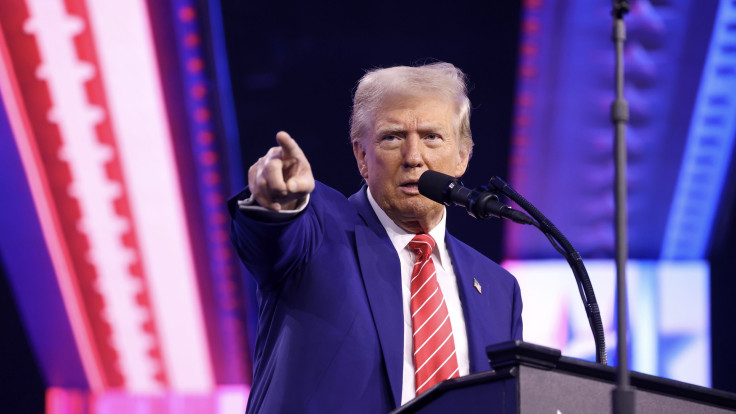
President Donald Trump has called on seven nations to dispatch warships to the Strait of Hormuz to secure the vital shipping route, but has yet to receive formal commitments as the region teeters on the brink of total war.
In a series of Truth Social posts over the weekend, Trump urged China, France, Japan, South Korea, and the UK to join a US-led coalition to keep the waterway 'open and safe' following a week of catastrophic disruptions.
The demand follows a synchronised US and Israeli military campaign, dubbed Operation Epic Fury, which began on 28 February 2026 and resulted in the death of Iran's Supreme Leader.
'Many Countries, especially those that are affected by Iran's attempted closure of the Hormuz Strait, will be sending warships, in conjunction with the United States of America, to keep the Strait open and safe,' Trump posted on Truth Social.
The president also went ot claim that the US has already destroyed 100% of Iran's military capability, yet stressed that the country is 'easy for them to send a drone or two, drop a mine, or deliver a close-range missile somewhere along, or in, this Waterway, no matter how badly defeated they are.'
'Hopefully, China, France, Japan, South Korea, the UK, and others, that are affected by this artificial constraint, will send Ships to the area so that the Hormuz Strait will no longer be a threat by a Nation that has been totally decapitated,' he added.
'In the meantime, the United States will be bombing the hell out of the shoreline, and continually shooting Iranian Boats and Ships out of the water. One way or the other, we will soon get the Hormuz Strait OPEN, SAFE, and FREE!'
Trump's Call For A Coalition
On Sunday, Trump posted a message asking about seven nations to dispatch warships to patrol the Strait of Hormuz. This is to ensure the critical shipping route remains open amid mounting tensions. Trump is insisting that he is demanding that these countries protect their interests.
The US, which has the least dependence on Middle Eastern oil, is not keen to take the lead on its own. He pointed out that China relies heavily on the strait, with approximately 90% of its oil passing through, but would not answer whether Beijing would join the coalition.
'The United States of America has beaten and completely decimated Iran, both militarily, economically, and in every other way, but the Countries of the World that receive Oil through the Hormuz Strait must take care of that passage, and we will help — a lot!' he said.
'The US will also coordinate with those Countries so that everything goes quickly, smoothly, and well. This should have always been a team effort, and now it will be — It will bring the World together toward Harmony, Security, and Everlasting Peace!'
However, his plea has not yet attracted any concrete promises. Countries are cautious.
UK Prime Minister Keir Starmer met with Trump to discuss the significance of opening up the strait and noted that global shipping needed to be reestablished to its usual state of stability. Mark Carney, the Prime Minister of Canada, has also been engaged in discussions. However, none of the countries officially deployed troops or warships.
'Whether we get support or not, but I can say this, and I said to them: We will remember,' Trump said.
Where Is The Support
The South Korean foreign ministry said it would thoroughly consider the situation. France is collaborating with allies in Europe, India, and Asia on the potential operation to escort ships, but emphasises that it will act in line with the situation.
Germany's foreign minister, Johann Wadephul, dismissed the thought of them being directly engaged in any conflict in the near future.
'Will we soon be an active part of this conflict? No,' Wadephul told ARD News.
The European Union is also on alert and is de-escalating.
Chinese officials have requested that 'all parties have the responsibility to ensure stable and unimpeded energy supply' and communication should be sustained to avoid further chaos. The Embassy of China cautioned that they should collaborate to ensure safe passage.
According to the International Energy Agency, emergency oil reserves are being discharged to stabilise international markets. About 12 million barrels of oil are being drained from the strategic reserves in Asia, Europe, and the Americas. The action is meant to offset skyrocketing prices resulting from fears of disruptions to the Strait of Hormuz, a strategic route in global oil trade.
Trump indicated that they might sell off oil futures to curb prices, but did not specify. The world is still facing rising oil prices, which pose a threat to global economic stability. The risk of war in the area adds to the uncertainty, increases fuel prices, and jeopardises supply chains.
Iran's Firm Stance
Iran remains defiant. Foreign Minister Abbas Araghchi said that a number of countries have come to Tehran and requested safe passage for the vessels. However, he clarified that it was up to the Iranian military. The Iranian government demands that the Strait remain open to all ships, not just those of the US and its allies.
Iran also indicated it has no plans to retrieve enriched uranium that is kept in debris following US and Israeli attacks last year. Meanwhile, Iran has launched hundreds of missiles and drones against countries of the Gulf, damaging them and resulting in civilian casualties. At least a dozen civilians (primarily migrant workers) have been killed by Iranian strikes. Iranian leaders threaten to retaliate by targeting energy infrastructures in case their own is attacked.
For now, the world remains in a state of 'defensive denial', waiting to see if the proposed naval coalition will materialise before the global economy sustains permanent damage.
© Copyright IBTimes 2026. All rights reserved.
- MOST POPULAR IN World