

'Fake & Gay!': ICE Uses Official Government Account to Mock Man Featured in '60 Minutes' Deportation Report
Diawara's 2009 asylum file cited both his sexuality and his Christian faith
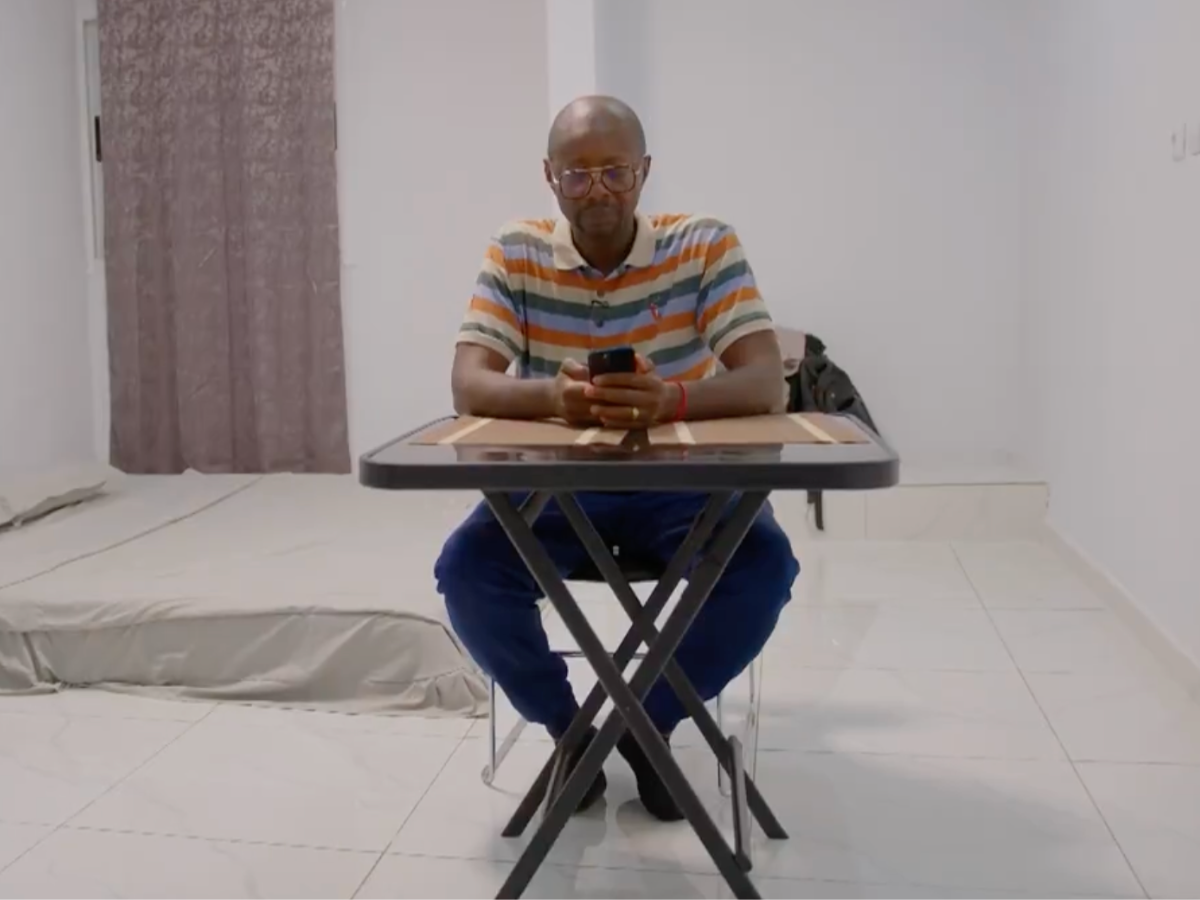
US Immigration and Customs Enforcement (ICE) used its official government account on X on Monday, 26 October, to target Moussa Diawara, a deported Texas father featured on 60 Minutes, posting 'Fake & Gay!' above his name a day after the CBS programme told his story.
The @ICEgov post said Diawara, 57, 'now faces allegations of immigration FRAUD' after his asylum application surfaced showing he had claimed to be gay and feared persecution in Mali. It called the report 'shockingly poorly researched'. By Tuesday, the post had about 3 million views.
ICE was quoting Fox News correspondent Brooke Taylor, who shared pages of what the network called Diawara's 2009 asylum application.
Fake & Gay!Moussa Diawara, the Malian national featured in this shockingly poorly researched @60Minutes report, now faces allegations of immigration FRAUD after his asylum application surfaced, revealing that he claimed to be a HOMOSEXUAL man who feared persecution in Mali.Read more ⬇️
— U.S. Immigration and Customs Enforcement (@ICEgov) October 26, 2026
How the Row Unfolded Over Two Days
The segment, broadcast on Sunday, 25 October, featured his wife, Barbara, a registered nurse, and their US-citizen children, Corey, 16, and Chloe, 12. 'It feels really empty without him,' Corey said.
That night, ICE posted that Diawara 'claimed he was a HOMOSEXUAL in order to try and dodge deportation to Mali.' The Department of Homeland Security (DHS) called the claim odd for a man 'married to a woman he shares 2 children with.'
DHS general counsel James Percival, who was interviewed for the segment, wrote on X that he had 'pulled his file' and that Diawara's claimed reason for fearing Mali was being gay, 'just in case you're wondering how bad the immigration fraud problem is.'
This illegal alien is @60Minutes poster child for what it claims are wrongful deportations. I pulled his file. His claimed reason for fearing Mali was that he is “gay,” just in case you’re wondering how bad the immigration fraud problem is.
— James Percival (@DHSGenCounsel) October 26, 2026
What the 2009 Filing Says
In a statement attached to his Form I-589, Diawara described having 'female behaviors and feelings' as a child and a preference for intimacy with boys as a teenager.
'Since I came to the USA I had the possibilities to express my feelings to men without any embarrassment no reserve,' he wrote.
The filing also cites religion, the basis 60 Minutes gave for his fear of returning. Diawara wrote that his 'situation worsened when I changed my religion to become Christian recently eight months ago' and that he had been threatened with death if he set foot in Mali. The form lists his religion as Christian and his marital status as single. The pages released do not show when he married.
Mali, where same-sex conduct was not illegal when he filed, criminalised homosexuality in October 2024, Human Rights Watch reported.
Federal regulations generally bar disclosing asylum applications without the applicant's written consent, subject to exceptions.
The Deportation 60 Minutes Investigated
Diawara arrived on a visitor visa in January 2001, aged 32, and overstayed. In 2012, an immigration judge ordered him removed but barred the government from sending him to Mali, a protection known as withholding of removal. He received a work permit, drove for Uber, and has no criminal record.
ICE arrested him at his home near Houston on 11 July. After three weeks in Texas detention without access to his lawyer or a judge, he said, he was flown to Ghana on 31 July. Ghanaian officials then held him under armed guard and forced him onto a flight to Mali, he said.
'I cannot call my wife, I can't contact my lawyer. I can't talk to no one,' he told CBS News.
Left homeless in Mali without money or identification, he later escaped to another country with truckers' help. Diawara said the US had the right to deport him, but not to Mali.
A medical form and bag tags issued for the flight listed Mali as his destination. DHS called the form a 'clerical error', blamed contractors for the tags, and said Ghana had given 'diplomatic assurances' for his safety.
Of the 19 deportees from his flight whom 60 Minutes reached, 17 said Ghana sent them, against their will, to countries US judges had barred. Percival said he was not aware of any such cases. The report noted that DHS questioned Diawara's credibility.
What Happens Next
Percival has accused the programme of having 'selectively edited the video' of his interview. A CBS spokesperson declined to comment to the media.
Diawara's attorney, Reuben S. Kerben, has asked a federal judge in Washington, DC, to order his return. ICE has deported 25,000 people to third countries and the Supreme Court will hear a challenge to the policy in December.
Diawara and Kerben had not publicly addressed the asylum claims at the time of writing.
© Copyright IBTimes 2026. All rights reserved.