Iowa Can Ban Certain Books and Restrict LGBTQ Education in K-6 Schools, Court Decides
A federal appeals court reactivates a controversial 2023 law as the Trump administration simultaneously strips transgender student protections nationwide

Schools across Iowa are preparing for the immediate return of controversial library bans and classroom restrictions after a federal appeals court gave the state a legal green light.
In a pivotal decision on Monday, 6 April 2026, a three-judge panel of the US Eighth Circuit Court of Appeals lifted earlier blocks that had stalled the 2023 legislation. The ruling reactivates limits on LGBTQ+ topics in early education and revives a contested ban on certain books, sharpening a legal fight that has stretched across three years.
The court decision arrived on the same day the Trump administration announced it would terminate federal protections for transgender students, signalling a coordinated shift in the American educational landscape.
Judges Reopen Path For Contested Law
A three-judge panel lifted earlier blocks imposed by a lower court, allowing the 2023 law to take effect while litigation continues. The decision resets the balance in a dispute that has moved back and forth between courts since the measure was signed by Republican Governor Kim Reynolds.
State leaders framed the legislation as a safeguard for what they call 'age-appropriate learning.' That framing remains central to the state's legal defence.
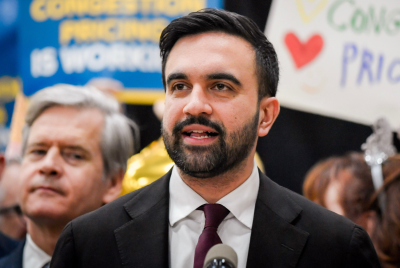
Iowa Attorney General Brenna Bird welcomed the ruling in blunt terms, calling it 'a huge win for Iowa parents' and arguing that schools should not expose children to 'inappropriate sexual materials and philosophies'.
The court's intervention does not end the case. It changes the immediate reality in classrooms. For now, schools must comply with provisions that had been partially frozen, even as broader constitutional questions remain unresolved at the district level.
What The Law Allows And Restricts
At its core, the statute draws a hard line around both content and instruction. It bars school libraries and classrooms from carrying materials that depict or describe six specified sex acts. The language is explicit, a point the state has leaned on to argue that the restriction is neither vague nor arbitrary.
Opponents have taken the opposite view. Teachers' unions, major publishing houses, and bestselling authors contend the law sweeps far beyond obscenity, capturing books that include any reference to sexual activity regardless of context or literary value. Their legal filings argue that school libraries are spaces for voluntary inquiry, not simply extensions of the formal curriculum.
The appeals court was not persuaded. In its reasoning, judges accepted the state's position that library collections can be treated as part of the educational programme. That conclusion carries weight. It undermines the claim that removing certain books constitutes a straightforward violation of First Amendment rights.
One line from the ruling stands out for its clarity and its consequence. 'The First Amendment does not guarantee students the right to access books of their choosing at taxpayer expense.'
Dispute Over LGBTQ+ Classroom Limits
The same law also restricts how gender identity and sexual orientation can be addressed in schools, particularly for younger pupils. It prohibits 'any program, curriculum, test, survey, questionnaire, promotion, or instruction' relating to those topics from kindergarten through sixth grade.
State attorneys insist it applies to mandatory curriculum, not to every incidental reference or student-led activity. Critics argue the phrasing is so broad that it risks silencing even informal discussion or support structures within schools.
A federal district judge previously attempted to draw a line, allowing limits on formal instruction while blocking enforcement tied to 'program' and 'promotion'. He explicitly said younger students should still be able to join Gender Sexuality Alliances and that schools must be free to advertise such groups.
The appeals court rejected that narrower reading. It found that focusing on two terms distorted the statute's overall meaning and concluded that the state's interpretation could not be dismissed at this stage. Because the challenge was brought against the law on its face, rather than through specific examples of harm, judges signalled that the plaintiffs face an uphill battle as the case proceeds.
The ruling also clears the way for another contentious provision requiring school staff to notify parents if a student adopts a different name or pronoun at school as part of a social transition.
A Wider Political And Legal Current
What makes the decision difficult to separate from its context is the broader legislative wave in which it sits. Since 2023, Republican-led states have advanced similar measures aimed at restricting LGBTQ+ content in schools and tightening control over library materials. Many have faced immediate legal challenges, resulting in a patchwork of rulings that vary by jurisdiction.
On the same day as the ruling, the Trump administration announced it had terminated agreements from previous administrations that supported protections for transgender students.
For those challenging Iowa's law, the setback is clear but not decisive. Nathan Maxwell, a senior attorney at Lambda Legal representing Iowa Safe Schools, described the statute as 'a cruel and unconstitutional law that silences LGBTQ+ children, erases their existence from classrooms, and forces educators to expose vulnerable students to potential harm at home.' He said the legal fight would continue.
The appeals court has not delivered a final verdict on the law's constitutionality. It has, however, allowed its most disputed elements to shape school environments in the meantime. For students and teachers already navigating the rules, the impact is immediate.
© Copyright IBTimes 2026. All rights reserved.
- Recommended For You