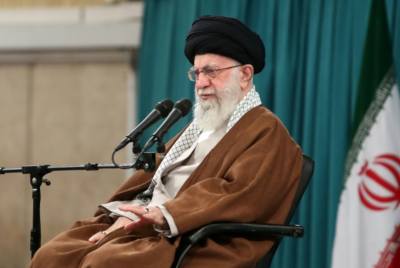
Is Iran's Supreme Leader Mojtaba Khamenei Dead, Disabled, or Hiding? His Month-Long Absence Fuels Speculations
No speech, no video, no public sighting in a month as IRGC commanders appear to fill the power void

Iran's new Supreme Leader has not been seen or heard in public since taking power nearly a month ago, and the question of who is actually running the Islamic Republic now shapes the trajectory of the ongoing war.
Mojtaba Khamenei was named Iran's third Supreme Leader on 8 March 2026, eight days after US-Israeli airstrikes killed his father, Ayatollah Ali Khamenei, at the Beit-e Rahbari residence in Tehran. But he has not appeared at any funeral for senior commanders killed in the strikes, issued no video messages, and released no photographs showing him since his appointment.
His first statement as the nation's highest authority was read by a television news anchor over a still image. He has not spoken on camera or released any audio recording.
The Injuries Iran Won't Confirm
A hospital source told The Media Line that Mojtaba Khamenei remains in a medical intensive care unit at an underground location. According to that source, one arm is completely incapacitated, at least one leg is paralysed and could not be saved during surgery, and he has suffered spinal cord lesions, a dislocated jaw, brain injuries, and extensive trauma to his head and face.
A billboard recently installed in central Tehran depicts Mojtaba with one arm missing and his legs obscured.

Iran's state media, through Fars News Agency, which is affiliated with the Islamic Revolutionary Guard Corps, referred to him as a 'janbaz', a term reserved for disabled war veterans and one that signifies amputation or permanent disability of major body parts.
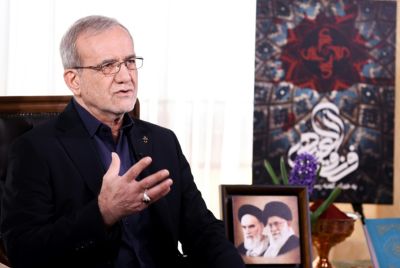
Iranian MP Mohsen Zanganeh insisted the injuries were minor and that Mojtaba 'leads the country's affairs.' But no official in the Islamic Republic has claimed to have met with him or been in contact with him in the past month, according to The Media Line.
Legitimacy Under Challenge
Beyond the physical uncertainties, Mojtaba faces a serious legitimacy crisis. Several grand ayatollahs have officially refused to confirm his status as an ayatollah, let alone as a qualified Supreme Leader.
Grand Ayatollah Ali al-Sistani, the Iraqi-based cleric who commands an estimated 40 to 50 million followers, has not recognised the succession. Ayatollahs Vahid Khorasani and Mousa Shubairi Zanjani in Qom also believe Mojtaba lacks the religious qualifications for the role of Velayat-e Faqih, the guardianship of the Islamic jurist that underpins Iran's system of clerical rule.
Reports have also emerged citing a letter from Ali Khamenei himself addressed to the Assembly of Experts, the body responsible for electing the leader.
In it, according to Telegram channels belonging to various regime factions, Mojtaba was not named as a successor, and 'hereditary leadership' was explicitly denied.
Who Is Actually Running Iran?
If the Supreme Leader is incapacitated or unable to govern, the IRGC appears to have filled the vacuum.
Former Iranian parliamentarian Ali Akbar Mousavi Khoeini told NBC News bluntly that 'Vahidi is in charge of the country' and that 'the power is in the hands of the Revolutionary Guard and the most radical faction of the Revolutionary Guard.'
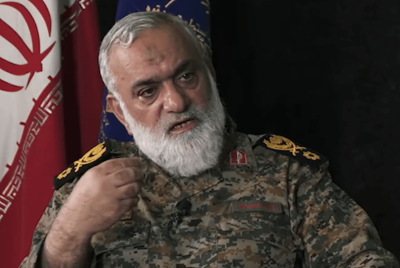
Ahmad Vahidi, the IRGC's newly appointed commander, reportedly blocked President Masoud Pezeshkian's attempt to name an intelligence minister, insisting that wartime conditions required IRGC control over all sensitive appointments.
Parliament Speaker Mohammad Bagher Ghalibaf, an IRGC veteran with deep ties to Mojtaba's inner circle, has emerged as the public face of defiance, telling state news agency IRNA that Iran's strategy now rests on 'missiles, the streets, and the Strait.'
What This Means for the War
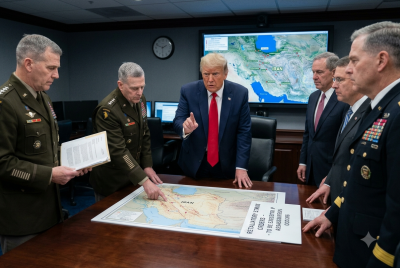
If Iran's Supreme Leader cannot communicate, cannot appear, and cannot meet with senior officials, the question is whether any meaningful ceasefire negotiation is even possible.
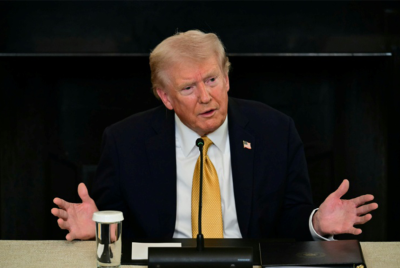
President Donald Trump said he believes Mojtaba is 'damaged' but 'probably alive in some form.'
Israeli Defence Minister Israel Katz has vowed that any successor to Ali Khamenei would be 'an unequivocal target for elimination.'
For global energy markets, the uncertainty adds another layer of risk. Iran has signalled it intends to use control of the Strait of Hormuz as long-term leverage. But who would make that decision, and who would walk it back, remains unclear.
The Islamic Republic has entered what Foreign Minister Abbas Araghchi called a 'mosaic command' mode, where predetermined successors step into critical posts if any key official is killed. But legally, appointments still require the Supreme Leader's decree.
If that decree can't come, the system built around a single supreme authority may have no one truly at the top.
© Copyright IBTimes 2026. All rights reserved.
- Recommended For You