

What Is the Stonewall National Monument? LGBTQIA+ Community Cry 'Historical Erasure' Over Pride Flag Removal
The Stonewall monument had flown an inclusive Pride flag since 2022
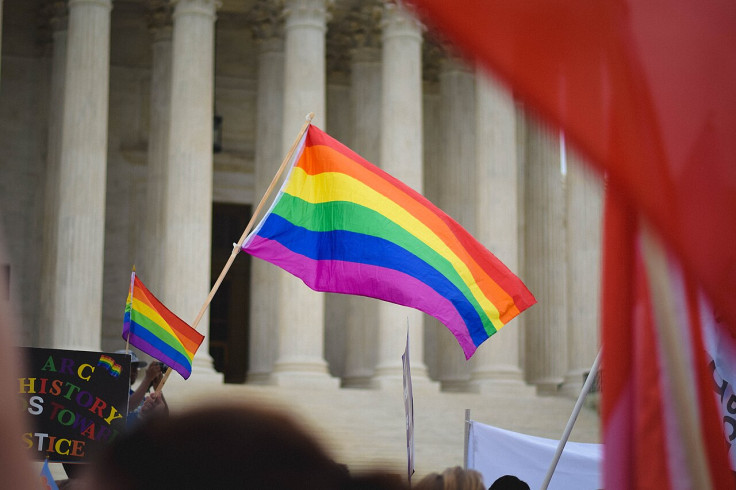
The removal of a rainbow Pride flag from the flagpole at Stonewall National Monument has triggered protests, political condemnation and a wave of online backlash, with LGBTQIA+ groups accusing federal authorities of attempting to dilute or rewrite the site's history.
The flag was taken down earlier this week following a 21 January, directive from the US Department of the Interior, which limits flags on federal land to the US flag, department banners and the POW/MIA flag. The policy applies across hundreds of National Park Service sites.
The Stonewall monument, in Greenwich Village, had flown an inclusive Pride flag since 2022, featuring black and brown stripes and trans colours. Smaller Pride flags remain attached to fencing around the park, but the main pole is now restricted under the new guidance.
Local leaders, activists and residents have since gathered outside the Stonewall Inn and Christopher Park, chanting for the flag's return and accusing the federal government of 'historical erasure.'
Why Stonewall Matters
Stonewall is widely regarded as the birthplace of the modern LGBTQ+ rights movement. The monument covers the Stonewall Inn, Christopher Park and surrounding streets, where police raids in June 1969 sparked days of protests and unrest.
According to the National Park Service, the uprising provided momentum for a nationwide civil rights movement that led to the creation of dozens of advocacy organisations. Encyclopaedia Britannica describes the riots as a catalyst for international gay rights activism. History records that during the early hours of 28 June 1969, police entered the Stonewall Inn, arrested employees and patrons, and attempted to clear the bar. Instead, crowds gathered, objects were thrown, and clashes continued for several nights.
In 2016, then-President Barack Obama designated the area as a national monument, making it the first US landmark dedicated to LGBTQ+ history.
What Changed Under the New Policy
The National Park Service said the flag was removed to comply with Interior Department guidance requiring uniformity across federal sites.
A spokesperson said Stonewall's legacy would continue to be preserved through exhibits, programming and visitor education.
The memo, issued after President Donald Trump's second inauguration, limits most NPS flagpoles to official government flags, with only narrow exceptions. Pride banners are no longer permitted under that framework.
Some conservative commentators welcomed the change, arguing federal property should prioritise the American flag. Others online described the move as overdue enforcement of existing rules.
Political Backlash and Public Protests
New York officials moved quickly to criticise the removal.
As Mayor Zohran Mamdani wrote on X:
'I am outraged by the removal of the Rainbow Pride Flag from Stonewall National Monument'
I am outraged by the removal of the Rainbow Pride Flag from Stonewall National Monument. New York is the birthplace of the modern LGBTQ+ rights movement, and no act of erasure will ever change, or silence, that history.
— Mayor Zohran Kwame Mamdani (@NYCMayor) February 10, 2026
Our city has a duty not just to honor this legacy, but to…
Together with Mamdani's sentiments, other members of the government, including Senate Majority Leader Chuck Schumer, Governor Kathy Hochul and Attorney General Letitia James issued similar statements, calling the move an attempt to erase LGBTQ+ history.
Protests followed on 10 February, with more than 100 activists rallying outside the Stonewall Inn, according to multiple local reports. Some community groups announced plans to raise Pride flags on nearby city-owned land.
On Reddit, users reacted angrily, with posts reading: 'How do you remove the queer from the queer monument?' and 'They're showing us what they're working on erasing.'
A Pattern After Website Changes
For many activists, the flag controversy follows earlier disputes over how Stonewall is presented by federal agencies.
In 2025, the National Park Service removed references to transgender people from its Stonewall website and replaced 'LGBTQ+' with 'LGB' in several sections
At the time, the Stonewall Inn and advocacy groups said the edits marginalised key figures such as Marsha P. Johnson and Sylvia Rivera, who played major roles in the 1969 uprising.
Although some of those changes were later partially revised, critics say the current flag policy fits into a broader pattern of narrowing how LGBTQ+ history is officially represented.
Online Reaction and Ongoing Debate
The removal has also fuelled intense debate on social media. Alongside official statements, comment sections and trending threads have been filled with political attacks, conspiracy theories and personal insults aimed at public figures who supported the flag.
Groups such as the Congressional Equality Caucus called the move 'erasure, plain and simple,' while others defended it as neutral enforcement of policy.
The Trump Admin just removed the Pride flag that flew above the Stonewall National Monument.
— Congressional Equality Caucus (@EqualityCaucus) February 10, 2026
This is erasure, plain and simple.
They can take down our flag, but they'll never stop us from fighting for equal rights for EVERY person. pic.twitter.com/5LVhRXCRzL
Meanwhile, the National Park Service maintains that Stonewall's significance remains intact through its visitor centre, exhibits and educational materials.
The Stonewall visitor centre, which opened in 2024, continues to operate at Christopher Park, offering historical displays on the riots and the wider LGBTQ+ movement.
As protests continue and political pressure grows, local officials say they will continue pushing for the Pride flag's return, while federal authorities have given no indication that the directive will be reversed.
© Copyright IBTimes 2026. All rights reserved.
- MOST POPULAR IN Politics


