Trump 'Probably Back in Panic Mode'–Former Security Advisor Says on Iran's Downing of US Jets
Bolton says Trump response signals panic and weak leadership perception

John Bolton, former security adviser, once at the centre of decision-making, has offered a stark reality, saying President Donald Trump is 'probably back in a panic mode' after Iran downed two US warplanes.
The loss of an F-15E Strike Eagle inside Iranian airspace marks a turning point that is difficult to downplay. Tehran's claim that it also struck an A-10 Warthog.
The president's absence from cameras in the immediate aftermath, Bolton argued in an interview with CNN's Kaitlan Collins, 'absolutely degrades White House credibility.' In modern conflict, hesitation can read as weakness as quickly as any military loss.
Bolton: 'Trump Back in Panic Mode'
The former national security adviser did not soften his language.
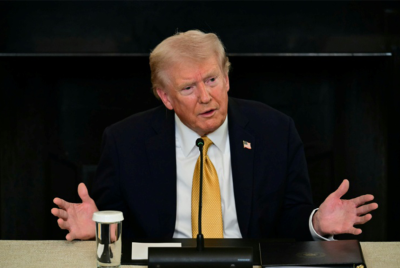
'No, it sounds to me like he's probably back in a panic mode,' Bolton said, suggesting Trump is looking for a way to 'declare victory and get out of this war'. The remark lands with particular force given Bolton's previous proximity to the administration.
Bolton continued to say that 'regardless of whether or not he opens the Strait of Hormuz before he does it. I think that's a mistake, too.'
'I think that this, if there had been an effective decision-making process before the war started, and these concerns were raised and they bothered the President, he had the option then not to initiate the attack. But apparently, he was satisfied,' he added.
Missing Pilots And Mounting Pressure
Operationally, the situation remains unsettled. Both pilots ejected from their aircraft. One has been recovered by US forces, while efforts continue to locate the other.
The prospect of a captured American service member, even if Bolton insists it would amount primarily to a 'propaganda victory for Iran', introduces a volatile variable.
Search-and-rescue operations have already come under strain. Iran reportedly struck a US Air Force UH-60 Black Hawk helicopter and a second rescue aircraft. Both escaped, according to a source familiar with the matter, though the incident underscores how contested the airspace has become.
Bolton said if the White House appears 'shaky' in response to these developments, he argued, it suggests the administration 'had not thoroughly thought through what it meant to launch these attacks'.
Trump's War Narrative Under Strain
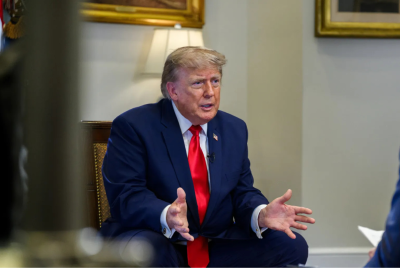
The president has maintained a confident public posture. Only days earlier, he warned Iranian leaders to strike a peace deal, insisting the US 'hasn't even started destroying what's left in Iran'. He pointed to a strike that levelled what he described as the country's 'biggest bridge', presenting it as evidence of overwhelming capability.
At the same time, Trump has framed the broader campaign, labelled 'Operation Epic Fury', as nearing completion. In an address to the nation, he emphasised degraded Iranian air defences and reduced naval and missile strength.
Bolton suggested that if the build-up to the conflict was 'upsetting' the president, then 'that is a problem for him, and therefore it's a problem for the country'.
There is also the question of what comes next. Bolton warned against any rushed attempt to exit the conflict on convenient terms, particularly if it involves unresolved flashpoints such as the Strait of Hormuz. His assessment is that such a move would be 'a mistake'.
What cannot be ignored is how quickly the narrative has shifted. Only days ago, the administration was emphasising momentum and nearing closure. Now, the conversation is about lost aircraft, missing personnel and the president's response under pressure. Bolton's critique, pointed and unsparing, suggests that belief is beginning to fray at the highest level.
© Copyright IBTimes 2026. All rights reserved.
- Recommended For You