'The First Amendment Stands as a Shield' — Gorsuch Leads 8-1 Ruling Against Colorado's Conversion Therapy Ban
Near-unanimous court sides with Christian therapist in landmark free speech case
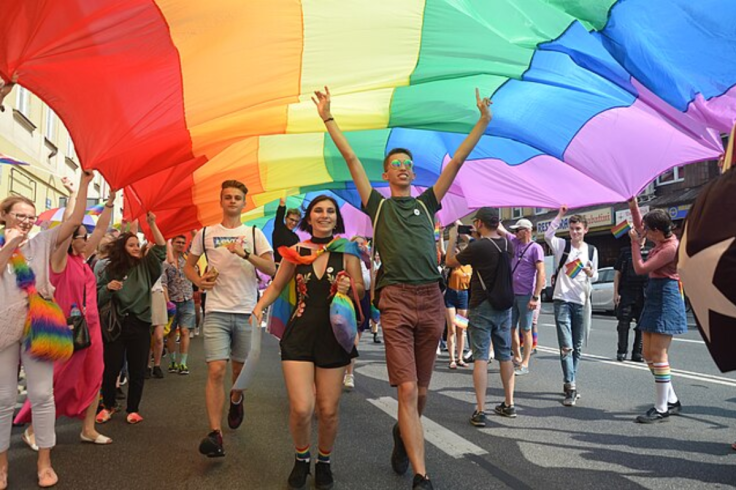
The US Supreme Court has ruled 8-1 that Colorado's ban on conversion therapy for minors violates the First Amendment, delivering a landmark victory to a Christian counsellor who argued the state had effectively silenced her inside her own practice. The decision in Chiles v Salazar, handed down on Tuesday, reversed a ruling by the US Court of Appeals for the Tenth Circuit, which had previously found the 2019 Colorado law to be a constitutional regulation of professional conduct.
Writing for the majority, Justice Neil Gorsuch held that the state law violated the free speech rights of talk therapy counsellor Kaley Chiles by favouring one viewpoint over another. 'The First Amendment stands as a shield against any effort to enforce orthodoxy in thought or speech in this country,' Gorsuch wrote, adding that Colorado's law 'does not just ban physical interventions.'
A Counsellor, a Law, and a Courtroom Battle
Kaley Chiles holds a master's degree in clinical mental health and a state counselling licence in Colorado. She does not begin counselling with any predetermined goals; instead, she sits down with clients, discusses their goals, and then formulates methods of counselling that will most benefit them. Chiles contends her approach is different from conversion therapy practices from decades ago, such as shock therapy. Her attorneys argued the ban makes it difficult for parents to find therapists willing to discuss gender identity with children unless the counselling affirms transition.
Colorado's measure, called the Minor Conversion Therapy Law, was enacted in 2019 and prohibits mental health professionals from engaging in any practice or treatment, including talk therapy, that attempts to change an individual's sexual orientation or gender identity. Chiles challenged it on First Amendment grounds, and her lawyers argued the law is a viewpoint-based infringement on her freedom of speech — that because the state disagrees with her views on gender and sexuality, it 'puts itself in Chiles's counselling room, forbidding her from discussing the values she and her clients share.'
I am deeply troubled with the implications of the Supreme Court's ruling today that rejects Colorado's ban on conversion therapy for minors. There is clear evidence of the long-term harm caused to children who are subject to these intense practices, and jeopardizes LGBTQ+…
— Rep. Adam Smith (@RepAdamSmith) March 31, 2026
Jackson Stands Alone
Justice Ketanji Brown Jackson was the lone dissenter, and she took the rare step of reading her dissenting opinion from the bench, warning that the decision 'opens a dangerous can of worms' by undermining states' rights to regulate medical care. 'Chiles is not speaking in the ether; she is providing therapy to minors as a licensed healthcare professional,' Jackson wrote. 'In concluding otherwise, the Court's opinion misreads our precedents, is unprincipled and unworkable and will eventually prove untenable.'
Justices Elena Kagan and Sonia Sotomayor joined the majority but filed a concurring opinion. In the official court filing, Kagan noted that if Colorado had enacted a content-based but viewpoint-neutral law, it 'would raise a different and more difficult question.'
Reactions and National Implications
The Trevor Project, a nonprofit focused on suicide prevention and crisis intervention for LGBTQ youth, called the ruling 'a tragic step backward for our country that will put young lives at risk.' Its chief executive Jaymes Black said in a statement that LGBTQ youth who experienced conversion therapy are more than twice as likely to attempt suicide and more than 2.5 times as likely to report multiple suicide attempts in the past year.
Polly Crozier, director of family policy at GLAD Law, noted that the ruling 'does not change the fact that conversion therapists who harm patients will still face legal consequences' via potential medical malpractice lawsuits. On the other side, Jim Campbell, chief legal counsel at the Alliance Defending Freedom, which represented Chiles, said the decision was 'a significant win for free speech, common sense, and families desperate to help their children,' adding that 'states cannot silence voluntary conversations that help young people seeking to grow comfortable with their bodies.'
Chiles told reporters after the ruling, 'I hope this win for free speech will fuel a greater pursuit of truth. Because of today's ruling, families will have more options and states won't be able to shut those options down.'
BREAKING: The U.S. Supreme Court ruled 8-1 today against Colorado’s ban on “conversion therapy” for minors.
— Ed Krassenstein (@EdKrassen) March 31, 2026
In Chiles v. Salazar, the Court held that the 2019 law, which prohibited licensed therapists from engaging in talk therapy aimed at changing a minor’s sexual orientation… pic.twitter.com/jUusFIkBJH
Why This Ruling Matters Beyond Colorado
The 8-1 decision is likely to have national implications, as more than 20 states have enacted similar laws. Tuesday's ruling throws out Colorado's ban but does not strike down bans in other states, which advocates had feared could be a worst-case scenario. The case now returns to the lower courts, which must apply the most stringent level of constitutional review — a standard that sets a high bar for the state to meet.
The decision comes at a moment of upheaval for transgender Americans facing legal and political headwinds during President Donald Trump's second term, with both his administration and several conservative states taking steps to roll back gains made by LGBTQ advocates in recent years. The ruling was also handed down on the global Transgender Day of Visibility, a timing that did not go unnoticed on either side of the debate.
© Copyright IBTimes 2026. All rights reserved.
- MOST POPULAR IN World