Iran Ceasefire Won't Save Israel from Hezbollah as Netanyahu Clarifies Lebanon Is Not Included in Deal
Israel destroyed seven bridges over the Litani River to block Hezbollah supply routes and prevent attacks

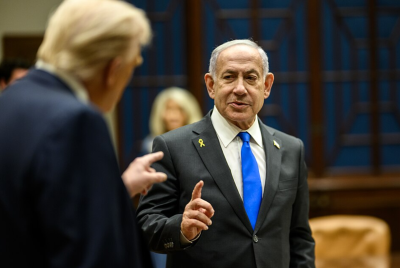
Israeli Prime Minister Benjamin Netanyahu backs President Donald Trump's two-week ceasefire with Iran but insists the deal does not cover Lebanon, where Israeli forces continue striking Hezbollah targets.
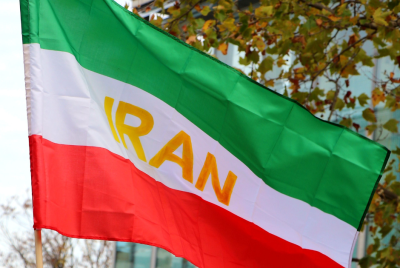
Netanyahu's office posted on X that Israel 'supports President Trump's decision to suspend strikes against Iran for two weeks subject to Iran immediately opening the straits and stopping all attacks on the US, Israel and countries in the region.'
Prime Minister’s Office:
— Prime Minister of Israel (@IsraeliPM) April 8, 2026
Israel supports President Trump's decision to suspend strikes against Iran for two weeks subject to Iran immediately opening the straits and stopping all attacks on the US, Israel and countries in the region.
The statement added explicitly that 'the two-week ceasefire does not include Lebanon.'
The United States has told Israel that it is committed to achieving these goals, shares by the US, Israel and Israel's regional allies, in the upcoming negotiations.
— Prime Minister of Israel (@IsraeliPM) April 8, 2026
The two-weeks ceasefire does not include Lebanon.
The clarification contradicts Pakistani Prime Minister Shehbaz Sharif, who announced on X that both parties had agreed to 'an immediate ceasefire everywhere including Lebanon and elsewhere.'
With the greatest humility, I am pleased to announce that the Islamic Republic of Iran and the United States of America, along with their allies, have agreed to an immediate ceasefire everywhere including Lebanon and elsewhere, EFFECTIVE IMMEDIATELY.
— Shehbaz Sharif (@CMShehbaz) April 7, 2026
I warmly welcome the…
Netanyahu's carve-out means Israel's military campaign against the Iran-backed militant group will proceed even as diplomatic talks begin.
Seven Bridges Destroyed to Block Hezbollah
The Israeli Defence Forces (IDF) announced they have struck seven bridge crossings over the Litani River to block Hezbollah supply lines into southern Lebanon. The IDF said Hezbollah had used these crossings 'to transfer weapons, rockets, and launchers to advance terror attacks against IDF troops.'
🎯 STRUCK: A key crossing used by Hezbollah to move operatives and weapons south of the Litani River.
— Israel Defense Forces (@IDF) April 7, 2026
Hezbollah used the crossing to transfer rockets, rocket launchers and other weapons to advance terrorist attacks against IDF troops. pic.twitter.com/h0yOFkSMfB
The strikes form part of Operation Roaring Lion, Israel's campaign to establish a buffer zone south of the Litani River.
Defence Minister Israel Katz and Netanyahu ordered the destruction of these crossings to prevent militants and arms from moving toward the Israeli border.
The military's 98th Division has completed deployment along what the IDF calls an 'anti-tank missile defence line' and continues ground operations in southern villages.
Lebanon's President Joseph Aoun condemned the bridge attacks as 'a dangerous escalation' and warned they amount to 'an attempt to sever geographical connectivity between the area south of the Litani and the rest of Lebanese territories.'
دان رئيس الجمهورية العماد جوزاف عون استهداف إسرائيل البنى التحتية والمنشآت الحيوية في جنوب لبنان وتدميرها، ولا سيما جسر القاسمية على نهر الليطاني وغيره من الجسور .
— Lebanese Presidency (@LBpresidency) March 22, 2026
وقال :" إنّ هذه الاعتداءات تشكل تصعيدًا خطيرًا وانتهاكًا صارخًا لسيادة لبنان، وتعتبر مقدمة لغزو بري طالما حذّر…
Oil Prices Plunge on Ceasefire Announcement
Global markets reacted sharply to news of the Trump-brokered pause. US crude oil tumbled from a high of $117 (£87.08) per barrel to below $96 (£71.45), a drop of roughly 15%. Brent crude fell 14.4% to $93.48 (£69.58). Analysts at Axios described the decline as the biggest one-day plunge in oil prices since the 1991 Gulf War.
The ceasefire is contingent on Iran reopening the Strait of Hormuz, a chokepoint handling roughly 20% of global seaborne oil trade.
Iranian Foreign Minister Abbas Araghchi confirmed that Tehran would allow 'safe passage' through the strait for two weeks 'via coordination with Iran's armed forces.'
Statement on behalf of the Supreme National Security Council of the Islamic Republic of Iran: pic.twitter.com/cEtBNCLnWT
— Seyed Abbas Araghchi (@araghchi) April 7, 2026
Islamabad Talks Set for Friday
Sharif invited delegations from both the US and Iran to Islamabad on Friday, 10 April 2026, to negotiate what he called 'a conclusive agreement to settle all disputes.' Vice President JD Vance is expected to lead the American delegation.
Iran's Supreme National Security Council confirmed the talks would proceed based on Tehran's 10-point proposal, which demands Iranian oversight of the Strait of Hormuz and the withdrawal of US combat forces from regional bases.
BREAKING: Iran says it has "forced" the US to accept its "10-point plan" which includes the following terms:
— The Kobeissi Letter (@KobeissiLetter) April 7, 2026
1. Commitment to non-aggression
2. Iran’s control over the Strait of Hormuz
3. Acceptance of Iran's uranium enrichment
4. Lifting of all primary sanctions
5. Lifting of…
The statement was issued on behalf of Supreme Leader Mojtaba Khamenei, who assumed power after his father, Ali Khamenei, was killed in US-Israeli strikes on 28 February.
Death Toll Crosses 3,600
The human cost of the conflict continues to rise. The US-based rights group HRANA puts total deaths at more than 3,600, including over 1,700 civilians, of which at least 254 were children.
The Lebanese Health Ministry reports more than 1,500 killed in Lebanon since late February. Twenty-three people have died in Israel, and 13 US service members have been killed.
The Islamic Resistance in Iraq, an umbrella group of Iran-backed militias, announced it would suspend operations across the region for two weeks following the ceasefire.
For those hoping the pause signals an end to regional hostilities, Netanyahu's exclusion of Lebanon delivers a sobering message. The Iran war may be on hold, but Israel's fight against Hezbollah continues unabated.
© Copyright IBTimes 2026. All rights reserved.
- Recommended For You