

Israel's Renewed War with Iran Adds to Fiscal Strain as Defense Spending Nears 8% of GDP
Civilian services face mounting pressure as military priorities claim a larger share of government resources
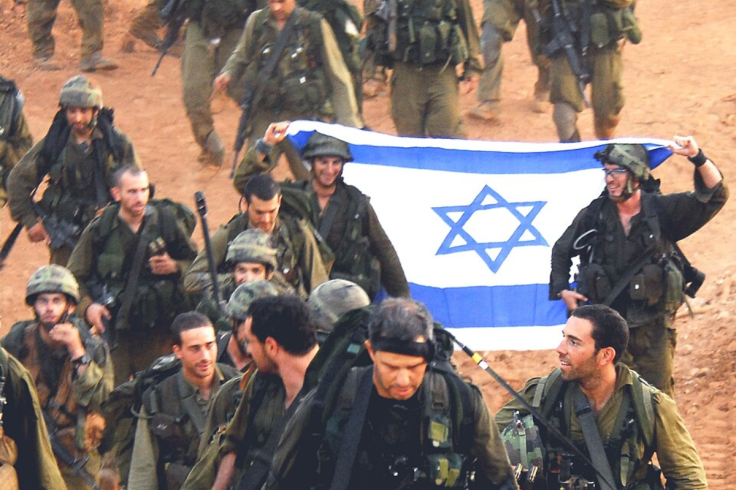
Israel's renewed confrontation with Iran is sharpening a budgetary dilemma that could outlast the fighting: how to maintain military readiness without allowing public services and investment to deteriorate. Defence expenditure is expected to approach 8% of gross domestic product (GDP) in 2026, almost twice its 2022 share, according to the Israel Democracy Institute (IDI).
The IDI estimates total defence spending at approximately 175 billion shekels in the 2026 budget, including the Ministry of Defence, other security-related expenditure, and a reserve for wartime needs. Defence is expected to account for about a quarter of state spending, compared with 16% in 2022.
Defence Spending Is Reshaping Civilian Priorities
Israel's civilian spending was already low by international standards before the war. The IDI estimates that civilian expenditure, excluding interest payments, is around 10 percentage points of GDP below the median for advanced OECD economies, equivalent to a funding gap of approximately 220 billion shekels in 2026.
The institute expects real civilian expenditure per person to fall by 3.3% between the 2025 and 2026 budgets. Excluding exceptional and reconstruction-related items, the decline is about 6%. Infrastructure, education, welfare, higher education, and employment programmes are among the areas facing reductions.
The consequences could extend beyond the current budget cycle. Reduced investment in transport, skills, and public services risks weakening productivity and limiting the economy's ability to generate future tax revenue. This could make it harder to finance a permanently higher security burden.
Debt Forecasts Depend on a Fragile Security Outlook
Israel's public debt rose from 60.5% of GDP before the war to 68.5% in 2025, according to the IDI. The Bank of Israel's October 2026 forecast projects a budget deficit of 4.4% of GDP in 2026 and 4.6% in 2027, with public debt reaching about 68% of GDP at the end of 2026.
The central bank's baseline assumes fighting remains at low intensity and defence spending does not exceed the reserve allocated in the state budget. It warns that further military expenditure without offsetting adjustments would widen the deficit and could add to inflationary pressure.
The International Monetary Fund (IMF) highlights the longer-term risk. Its July 2026 assessment projects public debt could reach 74% of GDP by 2031 without further fiscal adjustment. It expects heightened geopolitical tensions to keep defence spending elevated while civilian expenditure faces increasing pressure.
Israel Faces a Choice Over How to Finance Security
The IMF recommends gradual fiscal consolidation, prioritising revenue measures because civilian services and infrastructure are already relatively underfunded compared with advanced-economy peers. The IDI similarly argues that the government should review spending priorities, broaden the tax base, and protect investment that supports growth.
For policymakers, the challenge is how to distribute the cost. Higher taxes, reduced civilian allocations, and additional borrowing each carry economic and political consequences.
The Bank of Israel's forecast offers a route towards a more stable deficit, but depends on contained security conditions and defence spending staying within the budget provision. Renewed escalation could force the government to reconsider its plans.
For households, the consequences may emerge through strained public services, delayed infrastructure projects, and reduced support programmes.
Israel's security spending is becoming a test of whether it can sustain military preparedness without weakening the economic foundations needed to pay for it.
© Copyright IBTimes 2026. All rights reserved.