

US Intelligence Reveals Clearest Image Yet of China's Top-Secret Spaceplane Resembling X-37B
The DIA warns of China's expanding counterspace capabilities as questions remain over the spaceplane's identity and possible rendezvous activity
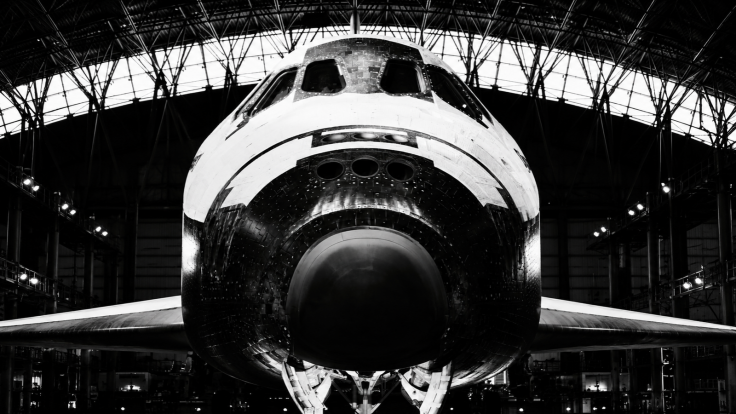
US intelligence has released the clearest image yet of China's experimental spaceplane in orbit, revealing a vehicle that closely resembles the US Space Force's X-37B, according to a new Defence Intelligence Agency (DIA) report.
The high-resolution photograph, taken in 2024 by a US-owned commercial satellite, was published on Monday in an unclassified DIA assessment of threats to the United States in space. A lower-resolution version had previously appeared in a 2024 presentation by a US Space Force official.
First Clear Look at China's Secretive Spaceplane
The picture shows a winged spacecraft with open payload bay doors, a dark underside and an object attached to its rear section. Vantor, the company formerly known as Maxar, which operates the imaging satellite, said the attached object was a separate satellite, with its structure and solar arrays visible.
The craft shares several visible design features with the X-37B. The image does not establish whether the similarities reflect shared design principles or direct copying.
The vehicle's identity is also unclear. Western reporting often refers to it as Shenlong. Chinese state media use the term Chongfu Shiyong Shiyan Hangtian Qi, meaning 'reusable experimental spacecraft'. The DIA identifies two Chinese spaceplane designs, Shenlong and Tengyun, but does not say which is pictured.
Four Mysterious Missions Since 2020
China has conducted four reported orbital spaceplane missions since 2020, lasting up to about nine months, according to the DIA. The fourth launched on 7 February 2026 and was still in orbit on 27 October. Public information does not show how many spacecraft China operates.
Unlike the X-37B, which has reached an altitude of more than 24,000 miles (about 38,600 kilometres) on one mission, China's spaceplane has so far stayed in low Earth orbit, a few hundred miles up.
The astrophysicist Jonathan McDowell, analysing open-source tracking data, found that the current mission released a smaller object in June and that the two came back together in July. Similar activity followed in August and September. This suggests a possible rendezvous or capture capability, though the data do not show what mechanism was used. Such technology can serve satellite servicing and debris removal, but may also have military uses. The purpose of these manoeuvres has not been established.
The image was captured by a Maxar satellite, now operated by Vantor. Neither the company nor the DIA has disclosed all the circumstances of the observation. Pointing Earth-imaging satellites at objects in space is known as non-Earth imaging (NEI).
DIA Warns on China's Growing Counterspace Tools
The DIA says China's military considers directed-energy weapons suitable for counterspace missions because they can potentially disrupt, degrade or damage satellites. It says China already has multiple ground-based lasers able to do so in low Earth orbit. By the late 2020s, it assesses, China may field more powerful ground-based systems and space-based systems capable of threatening satellites in higher orbits.
The assessment also discusses China's anti-satellite missile tests, a satellite-refuelling demonstration in geosynchronous orbit, tests of a robotic arm and a series of TJS satellites that have reportedly made close approaches to other spacecraft.
US intelligence officials have also accused Russia of pursuing a programme that could involve a nuclear weapon in orbit. Separately, Kosmos 2612, one of a group of small Russian satellites launched in April, approached ICEYE-X36, a US-registered commercial radar satellite, in October. The manoeuvre drew scrutiny from US officials and independent analysts. Estimates of the minimum distance varied, and the satellite's intentions have not been publicly established.
On 14 September, Air Force Secretary Troy Meink said the Space Force had deployed 'on-orbit space control weapons' intended to defend US forces against hostile action. He did not disclose details of the systems or their capabilities. Reports described the remarks as the first public acknowledgement of US weapons in orbit.
© Copyright IBTimes 2026. All rights reserved.