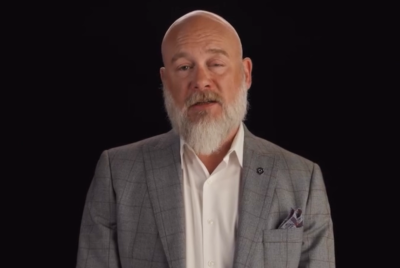
'It Might Save Or Destroy Us': Harvard's Avi Loeb Issues Stark Alien Warning If 3I/ATLAS Isn't A Comet
As 3I/ATLAS streaks through the solar system, Loeb claims we face a high-stakes cosmic moment: reject it as a mere comet — or risk underestimating a potential alien artefact.

It might save or destroy us, the interstellar visitor 3I/ATLAS is forcing humanity to confront a cosmic gamble of unprecedented magnitude.
In mere months, the interstellar object known as 3I/ATLAS has become the centrepiece of a fierce debate among scientists, with Avi Loeb of Harvard University at the forefront, warning that the object may not be a benign comet, but a deliberate probe from an alien intelligence. The implications, he asserts, could be existential.
Strange Path, Unlikely Coincidences
The case for 3I/ATLAS being an alien artefact rests first on its trajectory and dynamics. According to the July 2025 preprint paper by Loeb and colleagues titled Is the Interstellar Object 3I/ATLAS Alien Technology?, the object follows a path whose alignment with the ecliptic plane and its approaches to Venus, Mars, and Jupiter are so precise that the probability of a random interstellar object doing the same is less than 0.005 per cent.
Loeb underscores this as deeply suspicious: 'The near alignment ... offers various benefits to an extraterrestrial intelligence, since it allows a spacecraft to access Earth with relative impunity.'
Furthermore, the object's orbital mechanics raise the spectre of deliberate manoeuvring. Its perihelion, its closest approach to the Sun, resulted in a total eclipse from Earth's perspective, creating a window during which a hypothetical spacecraft could execute a 'reverse Solar Oberth manoeuvre,' a boost manoeuvre using the Sun's gravitational well to alter course or decelerate, unobserved by Earth.
If 3I/ATLAS were natural, such orbital coincidences would be astronomically improbable.
Observations Challenge Theories
Yet mounting observational data continues to make the natural-comet explanation compelling. Spectroscopic investigations, including a July 2025 study by Bin Yang et al., titled Spectroscopic Characterisation of Interstellar Object 3I/ATLAS: Water Ice in the Coma, revealed water ice and dust in the coma of 3I/ATLAS, with a spectral signature consistent with known cometary material.
Even more telling: in August 2025, the James Webb Space Telescope (JWST) detected a CO₂-dominated gas coma enveloping 3I/ATLAS, along with traces of H₂O, CO, OCS, water ice, and dust. The measured CO₂/H₂O ratio is far higher than typical Solar System comets, but still fits within cometary behaviour, albeit unusually heavy on carbon dioxide.
This chemical composition suggests the object formed in a region of its home system far colder than our own Kuiper Belt, allowing it to retain volatile ices that would otherwise sublimate.
Likewise, ultraviolet observations by the Neil Gehrels Swift Observatory showed OH emissions, a well-known indicator of water vapour and sublimation typical of comets.
Because of these findings, the natural comet hypothesis remains overwhelmingly accepted by the scientific community.
The Alien Probe Hypothesis
Loeb has taken pains to stress that he is not asserting 3I/ATLAS is alien technology, but that science must take the possibility seriously, given the stakes. On his blog, he writes that after discovery, his team felt 'the duty to consider a low probability event just because the implications are huge.'
He has drawn up a rough 'scale of likelihood' for alien origin, tentatively placing 3I/ATLAS at a '4' on a zero-to-ten scale, reflecting scepticism but warning that dismissing it out of hand would be irresponsible.
Part of Loeb's concern lies in the trajectories: according to the arXiv study, 3I/ATLAS passes close to multiple planets, including Jupiter, a potential staging area for smaller probes or a relay platform for further dispersal. This scenario evokes the 'Dark Forest' hypothesis, a solution to the Fermi Paradox which suggests that civilisations remain silent and hidden to avoid detection by predatory species.
In public interviews, Loeb has not shied away from speculation: he has wondered aloud whether the object might deploy smaller satellites, or even use the Sun's gravity for stealthy manoeuvres.
If such an object were indeed a technological artefact, benign, scientific, or hostile, humanity's approach could make the difference between a moment of discovery and a catastrophe.
A Cosmic Gamble
Should 3I/ATLAS turn out to be merely an eccentric comet, the debate still serves as a rigorous stress test for how science handles extraordinary claims. But if future data yield unexpected anomalies, especially consistent with artificial manipulation, ignoring them could represent the greatest oversight in human history.
On the other hand, rushing to proclaim alien contact without roadworthy evidence could undermine scientific credibility and sow unwarranted fear.
That delicate balance underpins Loeb's message: as long as the data remain ambiguous, prudence demands we treat 3I/ATLAS not as just another comet, but as a cosmic wildcard. Only through vigilant observation, rigorous scrutiny, and open-minded investigation can humanity hope to manage what could be its most consequential encounter yet.
May we prove wise enough, and brave enough, to see this through.
© Copyright IBTimes 2026. All rights reserved.
- MOST POPULAR IN Trending