

Jack Antonoff Says Ed Sheeran Should've Cancelled Tour Rather Than 'Let a F***ing Billionaire Tell You What to Do'
Antonoff's criticism puts stadium owners' power and the cost of taking a political stand under fresh scrutiny
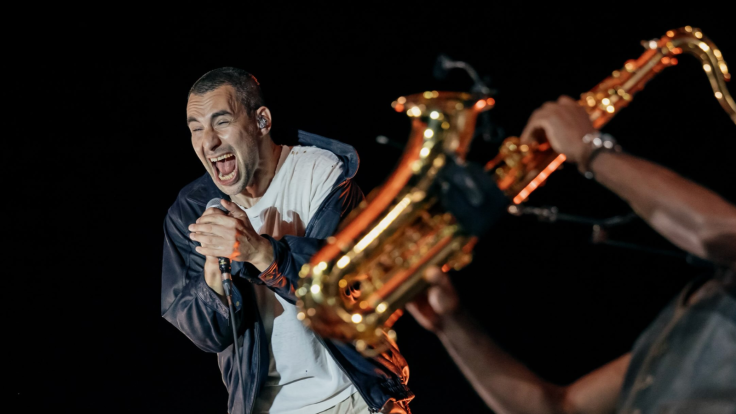
Jack Antonoff, the Grammy-winning songwriter and frontman of rock band Bleachers, has criticised Ed Sheeran for not taking a stronger stand after Macklemore was removed from the US leg of Sheeran's Loop Tour. Antonoff argued that Sheeran should have cancelled the shows rather than allow a billionaire venue owner to influence the line-up.
Antonoff said Sheeran could have performed for free outside the affected venues and raised money for Palestinians. His criticism centres on whether major artists should risk financial losses and disrupt their tours rather than accept restrictions linked to their political views.
Sheeran has maintained that the promoter made the final decision after venues said they would not host shows with Macklemore on the line-up. He has also said he tried to find a compromise.
Jack Antonoff Challenges Ed Sheeran's Response
Antonoff said Sheeran had missed an opportunity to demonstrate solidarity with Macklemore by refusing to accept the conditions that led to his removal. 'He missed a massive, beautiful opportunity there: just cancel the whole f***ing tour, then play for free outside each venue, raise a bunch of money, rather than let a f***ing billionaire tell you what to do,' Antonoff said.
He also argued that the dispute reflected a wider imbalance of power, saying billionaires routinely influence decisions that affect other people. His criticism raises questions about how much control musicians retain over their political expression when wealthy venue owners can influence where they perform.
Why Macklemore Was Removed From the Tour
Macklemore made pro-Palestinian remarks during performances at MetLife Stadium in New Jersey on 4 and 5 September 2026. During his sets, he expressed solidarity with Palestinians and defended criticism of Israel as distinct from hostility towards Jewish people.
On 14 September, tour promoter Messina Touring Group confirmed that Macklemore would not appear at the remaining US dates. The company said venues had indicated they would not allow concerts to take place with him on the line-up, creating a risk of cancellations that could affect fans and touring workers.
Macklemore alleged that Robert Kraft, the billionaire owner of the New England Patriots and Gillette Stadium in Foxborough, Massachusetts, had encouraged other stadium owners to bar him. Kraft confirmed that Macklemore would not perform at Gillette, citing the rapper's recent remarks and what Kraft described as a broader history of antisemitic rhetoric and imagery that had offended and hurt the Jewish community.
Kraft's stated rationale and Macklemore's account of the wider pressure are distinct claims. While Kraft confirmed his decision regarding Gillette Stadium, he did not publicly confirm Macklemore's allegation that he had rallied other stadium owners.
Sheeran Says the Promoter Made the Final Decision
Sheeran said venues had warned that they would withdraw the shows if Macklemore remained on the line-up. He said he spoke with venue representatives, including Kraft, and held discussions with promoters and activists in an attempt to reach a compromise.
'Macklemore coming off tour was the promoter's decision, it was not mine,' Sheeran said, adding that Macklemore's contract was with the promoter rather than with him. Sheeran also said cancelling the shows would have let down fans who had made plans, as well as touring crew members, musicians, and other support acts who relied on the work.
His response highlights the practical consequences of Antonoff's proposal, though it does not resolve the criticism that Sheeran could have taken a more public stand. Several acts withdrew from upcoming dates in solidarity with Macklemore, including Finneas, Aaron Rowe, Lukas Graham, and Irish backing band Beoga.
Donation Pledges Add Another Dimension
Macklemore pledged to donate $1 million (approximately £740,000) in net earnings from his tour appearances to organisations supporting Palestinians, and challenged Kraft to match the contribution.
Kraft later said Sheeran had asked him to commit $2 million (approximately £1.48 million) towards humanitarian aid in the region. Kraft's statement did not specify which organisations would receive the money or confirm whether he had agreed to make the donation.
The dispute raises a broader question about how much control artists retain over their political expression when promoters and venue owners can threaten the commercial viability of a tour. Antonoff argues that artists should be prepared to walk away, while Sheeran says he tried to preserve the shows and find a resolution. Their disagreement highlights the tension between taking a public stand and protecting the people whose livelihoods depend on live music.
© Copyright IBTimes 2026. All rights reserved.