JD Vance Branded 'Puppet' After Campaigning For Viktor Orbán And Attacking EU 'Interference'
The US Vice-President sparks a diplomatic firestorm by backing the Hungarian strongman days before a knife-edge election, while branding Brussels 'disgraceful'
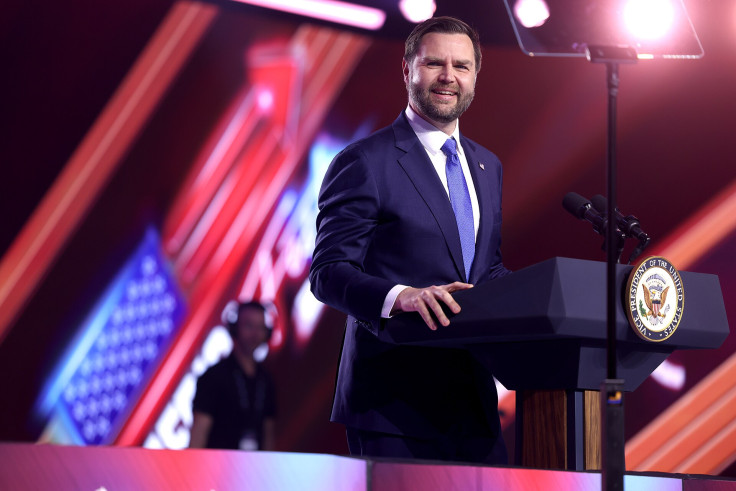
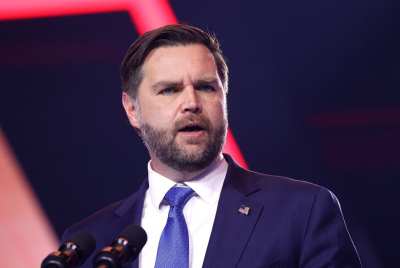
JD Vance has ignited an international diplomatic crisis after travelling to Budapest to actively campaign for Viktor Orbán.
The US Vice-President stood beside the Hungarian Prime Minister just five days before a pivotal national election to urge voters to 'stand with' the incumbent leader.
In a move that has stunned European diplomats, Vance used his platform to label the European Union a 'disgraceful' source of foreign election interference. The intervention comes as Orbán faces his most significant political challenge in decades from opposition leader Péter Magyar, who currently leads in several major opinion polls.
Critics have slammed the visit as a violation of traditional diplomatic neutrality. While Vance offered a brief nod to democracy by stating the US would work with any winner, his presence at an Orbán rally served as a blatant political assist.
Hungarian Foreign Minister Péter Szijjártó hailed the arrival as the start of a 'new golden age' in US-Hungary relations, cementing the alliance between the Trump administration and Budapest's right-wing government.
A Visit That Crossed Into Campaigning
Days before Hungarians vote in an election that could end Viktor Orbán's 16-year hold on power, the US vice-president stood beside him in Budapest and made his purpose plain. Vance said he was there 'to help him in this campaign cycle', before adding the more diplomatic line that the United States would 'work with whoever wins this election'.
At a rally, Vance urged voters to 'stand with Viktor Orbán, because he stands for you'. For a sitting US vice-president, it did not read as diplomacy - it read as intervention, according to the EU.
The timing sharpens the effect as Orbán faces his most serious electoral challenge in years, with opposition leader Péter Magyar leading in most opinion polls. Vance's presence looks less like a routine visit and more like a last-minute political assist.
Hungary's foreign minister, Péter Szijjártó, welcomed the visit as the start of a 'new golden age' in relations, pointing to Orbán's longstanding ties with Donald Trump. Yet that framing glosses over the discomfort it creates across Europe, where leaders have deliberately avoided stepping into Hungary's domestic contest.
The EU Cast As The Enemy
Vance did not limit himself to endorsing Orbán. He used the platform to launch a sweeping attack on the EU, accusing it of 'one of the worst examples of foreign election interference that I have ever seen or ever even read about... because they hate this guy'.
The allegation nevertheless mirrors Orbán's own campaign narrative, which positions Brussels as an overreaching force intent on undermining Hungarian sovereignty.
Later, Vance sharpened the message, claiming 'interference that's come from the bureaucracy in Brussels has been truly disgraceful'. He told supporters they should make decisions 'with no outside forces pressuring you', before advising that 'bureaucrats in Brussels... should not be listened to'.
European leaders have kept their distance, even as frustration with Orbán grows. His veto on billions of euros in funding for Ukraine has strained relations, prompting German Chancellor Friedrich Merz to describe it as 'a gross act of disloyalty'. Yet even critics within the EU have resisted entering Hungary's campaign arena. Vance has not.
Online Backlash Turns Personal
The reaction online has been immediate and unusually visceral. A viral post from the account Cats on a Couch delivered a blunt attack, asking, 'What in the ever-loving f-ck are you doing in Hungary right now?' It accused Vance of acting as a 'PR puppet for Viktor Orbán' while crises unfolded elsewhere.
The post continued, describing him as 'not a diplomat, you're not a statesman... you're a glorified errand boy', and questioned why he was 'not in Washington... not even in the same hemisphere as the crisis'. It ended with a call for him to invoke the 25th Amendment against Trump.
Others echoed the tone, if not always the language. One commenter dismissed Vance as 'the yorkie in Trump's purse', while another wrote that 'Vance and Congress are now complicit in war crimes'. A more sardonic remark referenced 'remarkably thicc velvet upholstery' in a nod to Hungary's imperial past.
'Americans are perishing due to lack of health care, jobs, food, education, division housing. There is nothing 1st about this America except the rise of billionaires and cowards,' replied another user.
The volume and intensity of these reactions reveal the perception that Vance's role has slipped from representation into alignment with leaders often criticised for democratic backsliding.
Orbán's Record Under Scrutiny
Orbán's standing within Europe has long been contentious. The European Parliament has labelled Hungary a 'hybrid regime of electoral autocracy', while Transparency International ranks it as the most corrupt country in the EU. Billions in EU funding remain frozen over rule-of-law concerns.
Recent controversies have deepened that scrutiny. Leaked conversations involving Szijjártó suggested close communication with Russian officials during EU deliberations, including efforts to influence sanctions policy. He has defended the exchanges as 'normal diplomacy', though critics see them as evidence of a government operating out of step with its allies.
Energy policy adds another layer as Hungary continues to rely heavily on Russian oil and gas, even as other EU states attempt to reduce dependence. Disruptions to supply routes have forced Budapest to draw on reserves and seek alternatives, exposing vulnerabilities that run counter to the narrative of strategic independence.
Orbán has also built his campaign around hostility to Ukraine and its president, Volodymyr Zelensky, reinforcing divisions within the EU at a time when unity has been central to its response to Russia.
An Alliance With Clear Edges
The relationship between Trump and Orbán is not new. Orbán was the only EU leader to back Trump's 2016 campaign and remained a vocal supporter through his return to office in 2024. In October last year, he travelled to Washington to secure an exemption from US sanctions on Russian oil giants Rosneft and Lukoil.
Trump has made clear that the arrangement was personal, suggesting any successor would need to renegotiate. During Vance's visit, he joined an Orbán rally by phone, calling him 'a fantastic man' and praising their 'tremendous relationship'. That endorsement underscores what the visit represents. It is an extension of a political alliance that now operates across borders.
As the polls close in Hungary, the global community is watching to see if Vance's intervention will be enough to save Orbán's 16-year reign. Whether Péter Magyar can overcome this last-minute high-profile interference remains the central question of the election. For now, the rift between Washington and the rest of Europe is wider than ever.
© Copyright IBTimes 2026. All rights reserved.
- Recommended For You