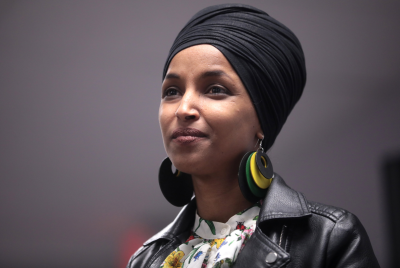
Social Media Post Falsely Claims Ilhan Omar Deportation to Somaliland After Vance's 'Legal Remedies' Threats
The rapid spread of misinformation highlights the challenges of verifying online content.

A social media post, dubious in origin, was enough to send parts of the US media into overdrive. Within hours, a fictional diplomatic clash involving Ilhan Omar had been reported as fact.
It began with a post on X from an account styling itself as @RepOfSomaliland. Responding to fresh accusations from US vice-president JD Vance, the account appeared to endorse the idea of deporting Minnesota congresswoman Ilhan Omar, writing, 'Deportation? Please you're just sending the princess back to her kingdom. Extradition? Say the word ...'
Deportation? Please you’re just sending the princess back to her kingdom.
— REPUBLIC OF SOMALILAND (@RepOfSomaliland) March 28, 2026
Extradition? Say the word … https://t.co/nV3uHojqqT
Several prominent outlets, including Fox News, the New York Post, Sinclair Broadcast Group's National News Desk, and the Independent, treated the post as if it reflected Somaliland's government's position.
Somaliland's foreign ministry had already made clear, months earlier, that such accounts do not speak for the state. In December, officials warned they were identifying social media profiles that are not official Government of Somaliland channels, stressing they were unauthorised. By Monday, the ministry was again urging caution, advising that statements should be taken only from 'official and authorised channels' to ensure accuracy.
Acknowledging Their Erratum
Fox News later amended its report, acknowledging the account was not a verified government outlet. The revision changes the framing to describe the source as a 'Pro-Somaliland account' rather than an official voice.
But the original claim had circulated widely, feeding into a narrative that Omar, a Somali-born US citizen and long-time political target, was facing extraordinary legal jeopardy.
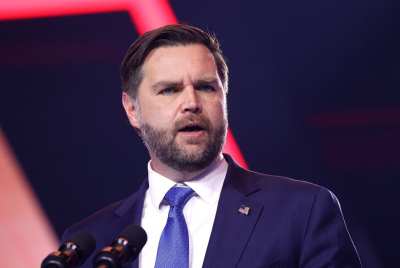
The viral post did not emerge in isolation. It followed remarks by JD Vance in an interview with conservative influencer Benny Johnson for his podcast, 'The Benny Show', on 28 March, in which the vice-president alleged that Omar had 'definitely committed immigration fraud against the United States of America'.
He went further, describing discussions with White House immigration adviser Stephen Miller about possible next steps.
'We're trying to figure out what the legal remedies are,' Vance said, outlining a process of investigation and case-building 'to get some justice for the American people'.
Pressed on whether those alleged offences could justify deportation or denaturalisation, Vance did not offer a direct legal pathway. Omar's office was unequivocal in response. Her chief of staff, Connor McNutt, dismissed the claims as 'a ridiculous lie and desperate attempt to distract', adding a pointed reminder that Vance has previously admitted a willingness to 'create stories' to redirect attention.
The exchange illustrates how quickly political rhetoric can spill into the information ecosystem, where it is amplified, distorted and, at times, entirely fabricated.
A Familiar Pattern Of Misinformation
For Omar, this is not new territory. She has repeatedly been the subject of viral claims tied, loosely or otherwise, to her Somali heritage. In early 2024, a mistranslated clip of a speech she delivered in Minneapolis spread widely, with critics falsely accusing her of declaring herself 'Somalian first'.
Each episode follows a similar arc. A fragment of content is taken out of context or misrepresented, gains traction online, and is then legitimised through repetition.
What cannot be ignored is how often these narratives intersect with identity. Omar, who arrived in the US as a refugee at the age of 12 and became a citizen at 17, has long been a lightning rod for political attacks that blur the line between policy disagreement and personal targeting.
The backdrop to this latest incident is a sharp escalation in language from senior political figures. Days before Vance's interview, Donald Trump described Somalia as a 'crooked, disgusting country', before boasting that he would get Minnesota 'back from Somalia'.
The Minnesota chapter of the Council on American-Islamic Relations condemned the rhetoric, with executive director Jaylani Hussein warning that portraying an entire people as intellectually inferior 'is not just political rhetoric – it is dehumanisation.'
Omar herself has spoken about the tangible risks. In a December interview, she pointed to threats against her safety, noting that individuals had been imprisoned for plotting violence against her. Her concern, she said, extends beyond her own security to 'anyone who looks like me in Minneapolis'.
Those fears are not abstract. In January, during a town hall meeting in Minneapolis, a man sprayed her with liquid from a syringe. Federal prosecutors later charged Anthony Kazmierczak, 55, with assault.
© Copyright IBTimes 2026. All rights reserved.
- Recommended For You