

'Kennedy Curse' Questioned After Kyle Kennedy Dies at 42 as Evidence Casts Doubt on Family's Tragic Reputation
Cause of death is pending, and no reliable statistical comparison shows the Kennedys die young at an unusual rate
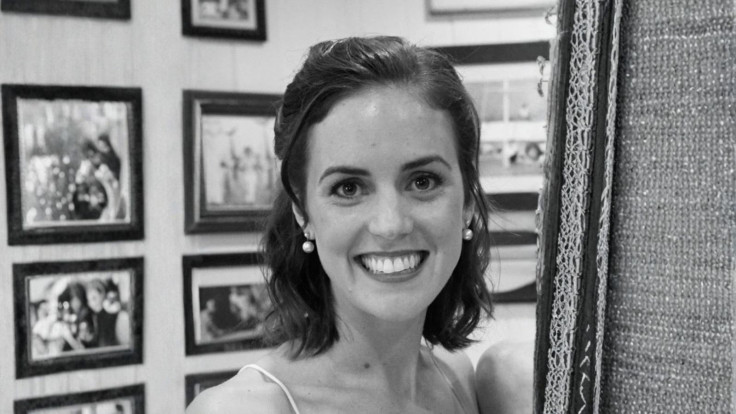
Kyle Kennedy's death at 42 has reignited debate over the so-called Kennedy curse, but the prominent American family's history of assassinations, fatal accidents and premature deaths does not establish an unusually high risk of dying young.
The granddaughter of Robert F. Kennedy and Ethel Kennedy died at her home in Westwood, Massachusetts, on 21 September 2026. According to a death certificate obtained by People, the cause of death remains pending and the manner of death is under investigation.
Her death has renewed scrutiny of a narrative surrounding one of America's most prominent political families. No established statistical analysis demonstrates that the Kennedys experience an exceptional rate of premature death compared with comparable families.
A Family Marked by Tragedy
Joseph P. Kennedy Jr. died aged 29 during a military aviation mission in the Second World War, while his sister Kathleen died aged 28 in a plane crash in France.
President John F. Kennedy was assassinated in 1963, aged 46. His brother Robert F. Kennedy was assassinated in 1968, aged 42, while campaigning for the Democratic presidential nomination.
Other losses reinforced the family's tragic reputation. David Kennedy died of a drug overdose in 1984, aged 28, and Michael Kennedy died in a skiing accident in 1997, aged 39.
In 1999, John F. Kennedy Jr., his wife Carolyn Bessette Kennedy and her sister Lauren Bessette died in a plane crash. Saoirse Kennedy Hill died aged 22 in 2019, while Maeve Kennedy McKean and her eight-year-old son, Gideon, drowned in the Chesapeake Bay in 2020.
Do the Statistics Support a Curse?
US mortality figures provide context but cannot establish whether the Kennedy family's experience is statistically unusual. According to the National Center for Health Statistics, the age-adjusted US death rate from unintentional injuries was 62.3 per 100,000 people in 2023, making accidents the third leading cause of death.
Those figures show that accidents affect the wider population. They do not show whether such deaths occurred disproportionately within the Kennedy family.
A meaningful comparison would require a defined group of relatives, consistent criteria for premature death, and adjustments for age, family size, historical period and exposure to risks such as political violence and private aviation.
Larry Sabato, a political scientist at the University of Virginia, pointed to the family's exceptional public profile in comments to AFP, republished by NDTV. 'Not every family has three senators, one president, two candidates' for president, he said.
Kennedy biographer Thomas Maier also rejected the curse explanation in the same AFP report, published in 2013. He called the word 'curse' 'false and simple-minded language' for reckless behaviour by particular individuals within the family or a kind of 'pseudo-secular religiosity'.
How the Kennedy Curse Took Hold
The phrase gained prominence in 1969 following the Chappaquiddick incident, in which Mary Jo Kopechne died after a car driven by Edward Kennedy went off a bridge and entered the water.
In a televised address, Kennedy wondered 'whether some awful curse did actually hang over all the Kennedys'. The remark helped establish the phrase in American political culture.
A Narrative, Not a Proven Pattern
Kyle Kennedy worked in early childhood education and became an advocate for people with disabilities after a spinal cord injury in 2020 left her with long-term paralysis.
Whether that injury contributed to her death remains unknown.
The Kennedy family's losses are real, but their recurrence does not prove a curse or an unusually high death rate. Without comparative statistical evidence, the theory remains a cultural narrative rather than an established conclusion.
© Copyright IBTimes 2026. All rights reserved.