

Man Sues New York Times for $50M Over Gaza 'Genocide' Coverage, Says He 'Cried Himself To Sleep'
Man seeks $50 million, claiming the newspaper's Gaza coverage caused severe emotional distress.
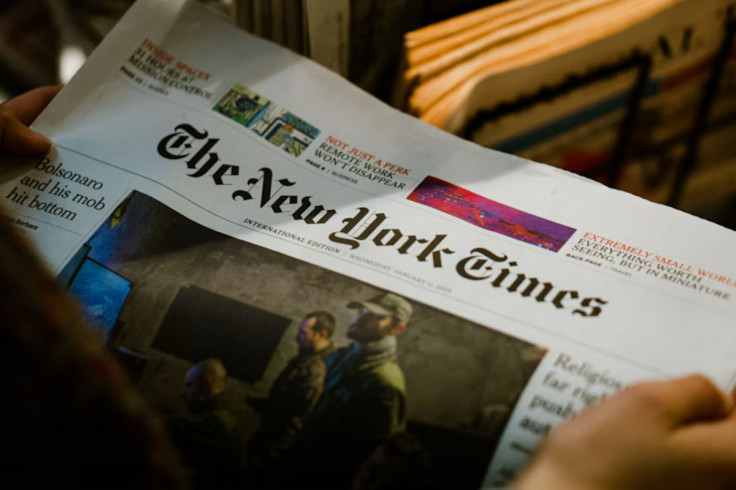
A Manhattan man is suing The New York Times for $50 million (£37.4 million), claiming the newspaper's editorial restrictions on the word 'genocide' in its Gaza coverage caused him such severe emotional distress that he repeatedly cried himself to sleep.
Timothy Murphy alleges that the newspaper deliberately misled readers about the Israel-Hamas war by discouraging journalists from using terms including 'genocide' and 'ethnic cleansing'. According to the lawsuit, filed in Manhattan Supreme Court in April 2026, the coverage left him struggling with depression, anxiety and insomnia.
Why Timothy Murphy Is Suing The New York Times
The dispute centres on a November 2023 internal memo written by Times international editor Philip Pan and standards editor Susan Wessling. First reported by The Intercept in April 2024, the guidance instructed journalists to limit their use of 'genocide' and 'ethnic cleansing' and avoid 'occupied territory' when describing Palestinian land.
The memo explained that genocide has a specific definition under international law and should generally be used within those legal parameters. It also urged journalists to apply a high standard when quoting accusations of genocide. Murphy, however, argues that the newspaper should use what he considers the conventional definition, describing it as the systematic and widespread extermination or attempted extermination of a national, racial, religious or ethnic group.
'The New York Times — in order to deceive the public about Israel's genocide — forbade (among other words and phrases) the use of the word genocide,' the complaint states. 'Forbidding the use of the word genocide serves no purpose other than to hide genocide.'
Murphy accuses the newspaper of concealing genocide against Palestinians and promoting anti-Palestinian 'propaganda'. However, the memo's quoted wording does not explicitly prohibit the term. The Times previously defended its guidance as standard editorial practice intended to ensure accuracy, consistency and nuance.
Murphy Claims He Cried Himself to Sleep and Felt 'Gaslit'
The lawsuit alleges that Murphy's distress over the newspaper's reporting affected his mental and physical wellbeing. 'Plaintiff cried himself to sleep on numerous occasions and was wrought by insomnia on others. Plaintiff had compromised health through stress and a profound feeling of helplessness,' the complaint states.
It further claims that Murphy began questioning his own judgement because of what he described as 'gaslighting and naked hypocrisy'. According to the filing, his growing obsession with uncovering the truth contributed to heightened depression and anxiety.
Alongside the $50 million in damages, Murphy wants warning labels placed above Gaza-related articles he considers censored or misleading. Comparing the proposed notices to tobacco health warnings, he suggests wording such as 'WARNING: PROPAGANDA' or 'WARNING: MISINFORMATION'.
The New York Post reported on 6 November 2026 that a spokesperson for The New York Times had not immediately responded to its request for comment. Murphy's allegations remain unproven, and the lawsuit does not establish that the newspaper caused his reported health problems.
© Copyright IBTimes 2026. All rights reserved.