NASA Reveals 153,000mph Comet 3I/ATLAS Is Spewing 'Pristine Ices' As It Exits—What Does It Mean?
3I/ATLAS at 153,000mph captivates scientists and the internet.
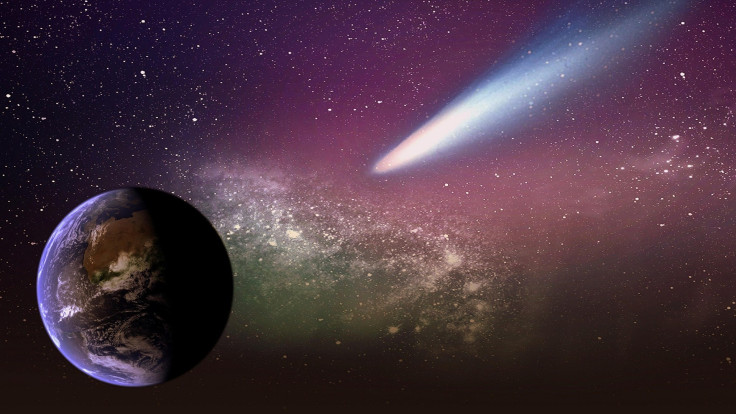
3I/ATLAS is back in the viral headlines, as it was for a fleeting moment in late 2025 and early 2026, when humanity's gaze turned once again to a visitor from the depths of space. This amazing interstellar comet raced through our solar system at astonishing speeds, exceeding 153,000 miles per hour as it neared and then passed its closest point to the Sun before heading back into the darkness between the stars.
Its journey was caught by a bunch of powerful observatories, including NASA's SPHEREx space telescope, which newly recorded unusual activity as the comet exited our solar system. To scientists, this event was more than a rare happening. The comet's brightening and outgassing revealed ancient, pristine ices and complex molecules that have remained unchanged for billions of years.
3I/ATLAS and the Alien Theories Around It
The story of 3I/ATLAS starts on 1 July 2025, when the Asteroid Terrestrial-impact Last Alert System (ATLAS) first detected this strange cosmic visitor. Its hyperbolic trajectory confirmed that it was not bound to our Sun, meaning it had come from another star system entirely, the third such object ever confirmed after ʻOumuamua in 2017 and 2I/Borisov in 2019.
Now, even before detailed observations could be made, the comet's incredible speed and origin stirred imaginations. Travelling at well over 130,000 miles per hour, which is faster at times than many spacecraft, 3I/ATLAS seemed to defy the ordinary. Social media was filled with speculation, going from the harmless to the outlandish. Some commentators openly wondered if such an object could be more than a simple comet, pointing to its unusual trajectory and activity as possible evidence of something artificial or engineered, yes, aliens coming to Earth on a comet.
However, mainstream scientists were fast to reject these more sensational ideas. According to NASA and astronomers worldwide, 3I/ATLAS behaved as a natural comet, showing typical cometary features such as a coma, a nebulous envelope of gas and dust driven off by solar heating, and thought to comprise ice and rocky materials formed around another star. While some early polarimetric and composition studies suggested 3I/ATLAS may differ from usual solar system comets in its structure and chemical makeup, these differences are seen as intriguing windows into alien environments rather than evidence of anything engineered.
What NASA Is Saying Now and What It Means
Now, the newest happening in 3I/ATLAS's journey came as the comet was already on its way out of the solar system. In December 2025, NASA's SPHEREx space telescope caught new infrared images showing the comet unexpectedly brightening instead of fading after perihelion. This brightening occurred because heat from the Sun finally penetrated below the comet's outer crust, warming and releasing pristine ices that had been preserved since before the object left its home star system.
NASA scientists explain that 3I/ATLAS had spent eons travelling through the near-absolute-zero vacuum of space, bombarded by cosmic radiation that likely hardened its outer surface. As it exited the solar system, deeper layers of ancient ice began to sublimate, ejecting water vapour, carbon dioxide, methane, methanol, and other organic compounds into space. Moreover, these materials, seen in the comet's coma and dust tail, give a rare chemical snapshot of matter from outside our own stellar neighbourhood.
Also, to researchers, this activity is a scientific goldmine because it allows direct comparison between the building blocks of comets formed around other stars and those native to our solar system. If the composition of 3I/ATLAS differs a lot from that of usual solar system comets, it could reveal variations in how protoplanetary discs evolve in different stellar environments. Understanding such differences might show how planets and potentially habitable worlds form across the galaxy.
© Copyright IBTimes 2026. All rights reserved.
- MOST POPULAR IN Trending