

Navi Pillay Wins 2026 Nobel Peace Prize: 10 Things To Know About the Former ICC Judge
Former ICC judge Navi Pillay has won the 2026 Nobel Peace Prize for her lifelong work promoting peace, human rights and international law
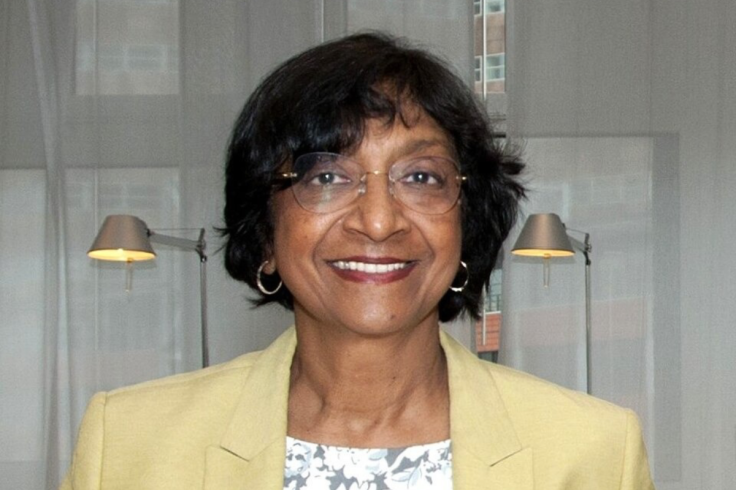
Navi Pillay has been awarded the 2026 Nobel Peace Prize for a lifetime of work defending international law from apartheid-era South Africa to the United Nations, the Norwegian Nobel Committee announced in Oslo on Friday, 9 October.
The 85-year-old South African jurist and former International Criminal Court judge was selected at a time when the committee says the global system of legal rules and institutions is under 'tremendous pressure' from resurgent power politics.
The committee said the prize underlined the importance of preserving an organised international order. It warned that international law was under 'tremendous pressure' and that its institutions were under attack, describing a shift towards power politics at the expense of legal frameworks and global respect for justice.
'Whenever might overtakes right, it undermines stability, trust and peaceful co-existence,' the citation said.
Pillay is best known internationally for her judicial work at the International Criminal Court in The Hague and the International Criminal Tribunal for Rwanda. She also served as the United Nations High Commissioner for Human Rights and chaired the UN Commission of Inquiry on the Occupied Palestinian Territory.
Who Is Navi Pillay?
Pillay was born in Durban, in South Africa's then-Natal province, into a family of Indian Tamil origin. Her career began in a country where racial segregation shaped nearly every aspect of public life, and she went on to become a pioneering figure in South African law.
In 1967, she became the first woman to establish a law practice in Natal. She later became the first non-white woman to serve on South Africa's High Court, according to the Nobel Committee's account of her career.
The committee drew a direct line between that early work and her later international role. It said a 'common thread' ran from her defence of Nelson Mandela and others who opposed apartheid to her service as a judge in some of the most consequential international court cases of recent times.
Pillay's work has often placed her at the centre of politically charged disputes. As High Commissioner for Human Rights from 2008 to 2014, she was responsible for representing the UN's human rights agenda at a time of wars, protests and growing scrutiny of state conduct.
The Nobel Committee said she had held states and national leaders accountable, brought hope to victims of violence and conflict, and demonstrated a firm moral compass throughout her long career.
Why the 2026 Nobel Peace Prize Matters
The award arrives at a contentious moment for international justice. The Hague-based International Criminal Court has faced an escalating campaign from US President Donald Trump, who last month urged countries to leave the institution.
Washington has already imposed targeted sanctions on several ICC prosecutors and judges. According to the source report, the US administration was also considering wider sanctions in retaliation for the court's targeting of Israeli leaders.
The Nobel Committee was not directly criticising Trump by selecting Pillay, according to Haakon Gjerloew, acting director of the Peace Research Institute Oslo. He said the decision was more broadly a promotion of an international legal world order.
'Of course, he might react to someone who has been part of the ICC, but it's not a direct attack on Trump,' Gjerloew said.
That distinction matters. Pillay's prize is not simply a reward for a single report or courtroom ruling. It recognises a career built around the idea that even powerful governments should answer to law, a proposition that remains fiercely contested in practice.
Her Role in the Gaza Inquiry
One reason Pillay's name carries such weight is her chairmanship of the UN Commission of Inquiry on the Occupied Palestinian Territory. Last year, the commission concluded that Israel had committed genocide in Gaza.
Israel dismissed the report as 'scandalous'. The finding remains disputed, and the Nobel announcement is likely to renew attention on both the inquiry and the broader legal arguments surrounding the conflict.
It would be misleading to present the prize as an endorsement of every conclusion in that report. The Nobel Committee's citation focused on Pillay's wider contribution to peace and international law, rather than setting out a case-by-case judgment on the Gaza inquiry.
The timing is notable. At a moment when international institutions face political pressure, the committee has chosen a jurist whose work depends on the system it says is under strain.
What the Award Means
The 2026 Nobel Peace Prize is worth 12 million Swedish crowns, or about $1.2 million. It is due to be presented in Oslo on 10 December, the anniversary of the death of Alfred Nobel, the Swedish industrialist whose 1895 will established the awards.
Pillay is the fifth Nobel laureate announced this week, following awards for literature, chemistry, physics and medicine. Venezuelan opposition leader Maria Corina Machado won the peace prize in 2025.
Pillay built her reputation by insisting that law should constrain power, even when that argument was unpopular or politically inconvenient. The Nobel Committee has now given that argument its most visible platform.
Whether it changes the behaviour of the governments and institutions she has challenged is another question entirely.
© Copyright IBTimes 2026. All rights reserved.