

Mamdani's 'Tax the Rich' Agenda Scores Major Court Victory as Appeals Judges Clear Tax on Luxury Second Homes
Brooklyn judges find that homeowners showed no injury from city tax notices
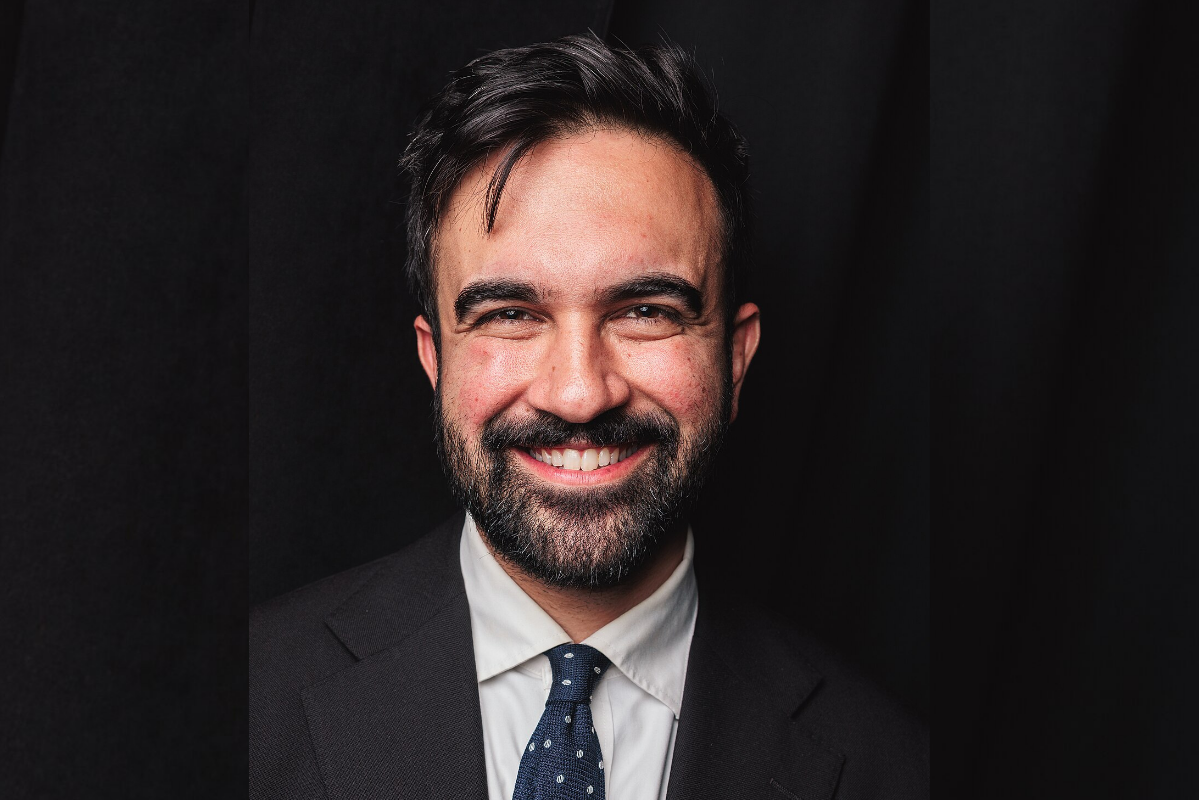
Mayor Zohran Mamdani's push to make wealthy property owners pay more won a major court victory on Wednesday, 4 November, when a state appeals panel cleared New York City to continue collecting its surcharge on luxury second homes.
Four justices of the Appellate Division, Second Department, in Brooklyn unanimously overturned the 29 September ruling by Staten Island Supreme Court Justice Wayne Ozzi and dismissed the case. The panel found the seven homeowners lacked standing because they had shown no concrete injury.
The homeowners, represented by former First Deputy Mayor Randy Mastro, sued in August after the Department of Finance posted about 900,000 properties and mailed notices to roughly 17,000 owners who might owe the pied-à-terre tax. They argued the city made full-time residents prove their residency instead of checking its own records first. They did not challenge the law itself.
Ozzi twice ordered a halt, but both orders were stayed pending appeal. In August, newer income-tax data cleared 1,210 owners.
Judges Compare Tax Notices to Debt Collection Letters
A notice is not a harm, the panel wrote, 'as the notice instead serves an informational purpose.' It added, 'By legal analogy, the receipt of debt collection letters, standing alone, does not rise to the level of an injury-in-fact.'
Confusion over the published list was 'too generalized, tenuous, and ephemeral' to count as an injury, the judges said. In creating an exemption process, they wrote, lawmakers 'must have anticipated that the list of notice recipients would not be exact or flawless.' The court did not rule on whether the department acted arbitrarily.
In a statement, Mamdani said the court had 'rejected an attempt by the ultrawealthy to avoid paying their fair share.' Mastro said in a statement that the judges 'took the procedural offramp of standing to avoid addressing the merits of this case.'
How the Second-Home Tax Came About
Mamdani had sought a broad tax increase on the state's wealthiest residents to help close the city's budget gap. Governor Kathy Hochul, who warned such increases could drive the rich away, agreed instead to the levy, signing it on 28 May. It took effect on 1 July.
One- to three-family homes worth $5 million (£3.7 million) or more that are not a primary residence face annual rates of 0.8% to 1.3%. Until June 2028, co-op and condominium units worth $1 million (about £741,000) or more are also covered, at higher rates of 4% to 6.5%.
Hochul projected at least $500 million (£371 million) a year. Before the law passed, City Comptroller Mark Levine's office estimated $340 million to $380 million (£252 million to £282 million).
Constitutional Challenges Remain
Two other lawsuits target the tax itself. Former US Commerce Secretary Wilbur Ross, his wife Hilary Geary Ross, and casino developer Steve Wynn sued the state on 28 September in Suffolk County Supreme Court. They argue the surcharge discriminates against nonresidents and breaches the state's cap on real estate tax revenue. According to their complaint, the Rosses were billed $83,531.52 (about £61,900) and Wynn $183,094.69 (about £135,700).
Mastro represents the plaintiffs in the other suit, filed on 29 September by a group of homeowners and the corporation that owns the Montclair, an Upper East Side co-op.
Arguments in the Ross and Wynn case are scheduled for 1 December.
© Copyright IBTimes 2026. All rights reserved.