

North Korea Says FBI's Binance Heist Claim Is 'Absurd Rhetoric' After $6.3B Crypto Theft
North Korea has called the FBI's Binance crypto heist allegation 'absurd rhetoric' as the exchange works to restore customer confidence after a $6.3 billion theft
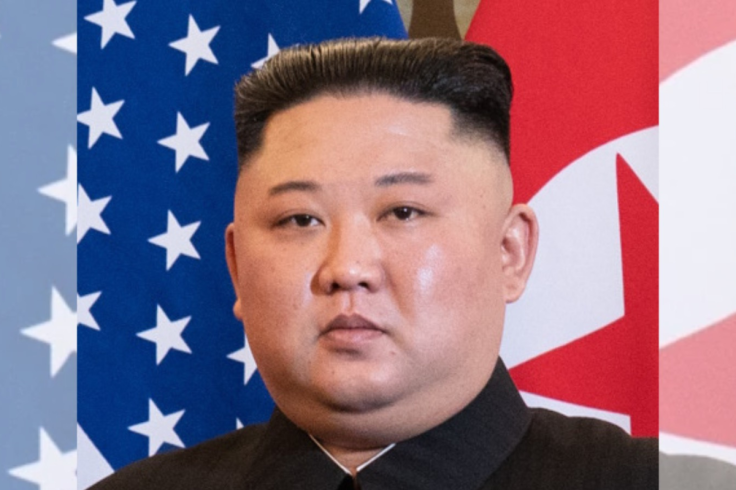
North Korea has angrily rejected a claim by the FBI that a state-linked hacking group stole about $6.3 billion (€5.42 billion and £4.79 billion) in cryptocurrency from Binance, describing the accusation as 'absurd rhetoric' and a 'grave political provocation'.
Kim Yo Jong, the influential sister of North Korean leader Kim Jong Un, issued the denial on Tuesday, 3 November, as the world's largest cryptocurrency exchange worked to restore customer confidence after what could be the largest cryptocurrency theft on record.
The FBI said on Saturday, 31 October, that North Korea was responsible for the attack, identifying the operation as TraderTraitor, a North Korean state-linked hacking group.
Kim Yo Jong responded in a statement carried by the country's official Korean Central News Agency (KCNA), accusing Washington of trying to portray North Korea as a 'cyber criminal state'.
Kim Yo Jong's Rejection
'The US assertion is absurd rhetoric and nothing new,' Kim said, according to KCNA. She described the allegation as 'a grave political provocation', accusing Washington of misleading international public opinion by suggesting that cybercrimes around the world were North Korea's doing.
Kim said North Korea had 'issues to reconsider' in light of what she described as Washington's hostile attitude, but did not specify what measures the country might consider. Pyongyang has also not publicly responded to President Donald Trump's earlier overtures to resume summit diplomacy.
The FBI's announcement came as Binance was still dealing with the consequences of the breach, which led the exchange to suspend customer withdrawals for about 48 hours.
Binance Tries To Steady Nerves
Binance said customers had withdrawn a net $4.72 billion (€4.06 billion and £3.59 billion) since withdrawals resumed, according to figures reported on Monday, 2 November. The exchange later said deposits were exceeding withdrawals, indicating that customer activity was beginning to stabilise.
Binance reopened withdrawals for additional assets after initially suspending them following the hack. The exchange also launched a community appreciation campaign running until 21 November.
The promotion includes trading fee rebates, a share of a 20 million USDC reward pool for eligible users who reach at least $10,000 (€8,600 and £7,600) in cumulative trading volume, and annual percentage rates of up to 10 per cent on certain eligible yield products.
Binance said net outflows since withdrawals resumed amounted to approximately 3 per cent of the assets held on its platform. Analysts described the figure as relatively contained, suggesting that customer confidence had not suffered a substantial immediate decline.
'The relatively contained price reaction suggests a degree of maturity and resilience,' said Maksym Repa, head of DeFi at Lombard, a Bitcoin finance protocol backed by Franklin Templeton. He said investors appeared to distinguish between a security failure at a centralised exchange and a problem with the Bitcoin network itself.
Why North Korea Is Under Scrutiny
The FBI's attribution followed assessments by blockchain analytics firms investigating the stolen funds. Chainalysis said it had a high degree of confidence that North Korea was responsible for the attack. Binance said it was cooperating with the FBI and the US Secret Service.
North Korea has repeatedly denied involvement in cryptocurrency theft and other cybercrimes. However, cybersecurity experts say stolen digital assets have become an important source of revenue for the heavily sanctioned country, with proceeds believed to help fund its weapons programmes, including nuclear and ballistic missile development.
Chainalysis estimated that North Korea-linked attacks accounted for approximately 89 per cent of reported global cryptocurrency hacking losses in 2026, compared with 15 per cent in 2021. The figures reflect losses reported through 29 October and should be treated as year-to-date estimates rather than final annual totals.
Crackdown Risks for North Korea's Crypto Lifeline
Lim Eul-chul, a professor at Kyungnam University's Institute for Far Eastern Studies, warned that additional US measures targeting cryptocurrency wallets, laundering networks and exchanges could disrupt an important source of revenue for North Korea.
Chainalysis senior manager Alec Zebrick described the pattern as 'big game hunting', with attackers targeting larger exchanges where the operations may be more complex but the potential rewards are greater.
Chainalysis estimated that the average loss per suspected North Korea-linked hack rose from $50.65 million (€43.56 million and £38.49 million) in 2021 to $185.65 million (€159.66 million and £141.09 million) in 2026, based on reported incidents so far this year.
Binance said it had set aside more than $6.34 billion (€5.45 billion and £4.82 billion) in company funds to cover the financial impact of the attack. The exchange also reported that approximately $3 billion (€2.58 billion and £2.28 billion) in affected assets had been frozen or located with the help of industry partners.
These figures describe different aspects of the recovery effort and should not be interpreted as confirmation that the remaining funds had been permanently lost.
The investigation remains ongoing. The FBI has publicly attributed the theft to North Korea's TraderTraitor operation, while Pyongyang continues to deny responsibility. The competing positions leave the attribution at the centre of an unfolding international dispute.
© Copyright IBTimes 2026. All rights reserved.