

Elon Musk Warns 'Everyday Is Zeroday' as Rumours Swirl on News of a Massive $6.3 Billion Binance Hack
World's largest cryptocurrency exchange freezes $3 billion in assets and halts customer withdrawals as blockchain investigators point to North Korean cyber syndicate
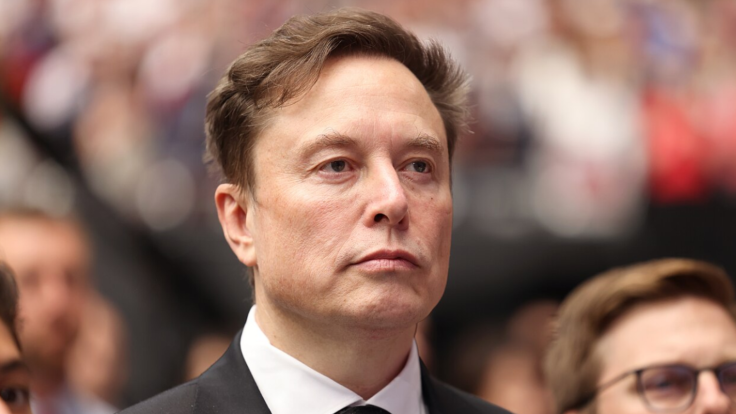
Elon Musk sounded an ominous warning on Thursday, 29 October, as the global digital asset ecosystem confronted an unprecedented £4.69 billion ($6.3 billion / €5.62 billion) security breach at cryptocurrency exchange giant Binance.
Reacting to abnormal wallet drainage on social media platform X, the billionaire technologist posted a cryptic three-word verdict, 'Everyday is Zeroday', highlighting the acute vulnerabilities confronting centralised trading architecture.
By Friday, 30 October 2026, Binance confirmed that suspicious capital outflows had reached billions across multiple operational nodes, forcing administrators to freeze £2.23 billion ($3 billion / €2.68 billion) in affected tokens on-chain and abruptly halt customer withdrawal services.
The enterprise, co-directed by chief executive Richard Teng, insisted that client funds remain secured through internal balance-sheet reserves and dedicated safety funds, whilst admitting that initial theories regarding an isolated laptop compromise had broadened into a complex multi-stage digital penetration.
The incident represents the largest recorded cryptocurrency theft in history according to analytics firm TRM Labs, which linked the capital movements to North Korean state-sponsored cyber syndicate TraderTraitor, sending shockwaves through financial markets as leveraged positions unravelled worldwide.
Musk had shared an earlier estimate from The Kobeissi Letter of $5.7 billion (€5.09 billion, £4.25 billion) in suspicious outflows.
Everyday is Zeroday https://t.co/6eIeFNc4jZ
— Elon Musk (@elonmusk) October 29, 2026
Elon Musk's 'Zeroday' Remark Leaves the Binance Hack's Cause Unanswered
Musk supplied no explanation beyond his three-word post. In cybersecurity, a zero-day vulnerability is a security flaw exploited before its developer can address it. His remark did not establish that such a flaw had enabled the Binance incident.
Binance initially said a DevOps engineer's laptop might have been compromised. According to its official statement, an attacker may then have reached a service container and submitted unauthorised withdrawal transactions. The exchange said, 'We have found no evidence of any wallet private key leak.'
Its account subsequently changed in an important respect. Binance said investigators had discovered additional points of breach and were tracing a more complicated attack path. The suspected laptop remained a possible entry point, not a settled explanation.
Binance co-chief executive Richard Teng said the incident could not be reduced to one engineer's permissions or a single action. 'Our investigation has not attributed responsibility to any individual,' he wrote. That distinction matters while the company's technical investigation remains open.
Blockchain intelligence firm TRM Labs separately attributed the attack to TraderTraitor, a North Korean hacking group. It cited blockchain transactions and other intelligence, describing the incident as the largest cryptocurrency theft on record. Binance has not publicly confirmed that attribution, and its inquiry has not established responsibility.
Binance Hack Forces Withdrawal Pause as Assets Are Frozen
For customers, the immediate questions concern access to funds and Binance's promise to compensate losses. The exchange said user assets were safe and pledged to use its Secure Asset Fund for Users and company funds. It has not published a completed independent accounting of reimbursements.
Binance initially suspended deposits and withdrawals during security checks. In a later service update on Friday, it said deposits were operating normally, while withdrawals remained paused. It expected withdrawal services to resume within approximately 48 hours, but did not guarantee a reopening time.

The exchange said it had revoked an affected address authorisation and was working with law enforcement and blockchain investigators. TRM Labs identified Tether and Circle among stablecoin issuers restricting funds linked to the suspicious transactions. Such freezes can prevent some tokens from moving, although they do not mean customers have received the money back.
The frozen totals also require care. TRM's calculations reflect its own tracing methodology and reporting cutoff, while Binance's approximately $3 billion figure is its stated verified aggregate. Neither figure, taken alone, measures the final loss.
Crypto Selling Adds Pressure as Binance Investigates
Cryptocurrency prices fell as the incident came to light. An early market snapshot showed BNB down 7.11 per cent over 24 hours, bitcoin down 3.27 per cent and ether down 4.05 per cent. Those figures are historical, and the breach cannot be shown to account for every price move.
Contemporaneous market reporting also cited the liquidation of approximately $628 million (€560.6 million, £467.7 million) in leveraged positions within one hour.
Liquidations occur when borrowing-backed trades are forcibly closed after collateral falls below required levels. The number captures a period of market turbulence, not an independently established cost of the attack.
Binance has promised a detailed technical post-mortem and updated proof of reserves after remediation.
Investigators have yet to establish the full attack path or how much of the affected cryptocurrency can be recovered. For customers, the immediate uncertainty remains about when unrestricted withdrawals will resume.
© Copyright IBTimes 2026. All rights reserved.