

Northern Lights Could Dazzle Britain Again After Eerie Halloween Spectacle
Bright green auroras were reported in Scotland and Northern Ireland, with northern Scotland offering another chance to see them before activity fades
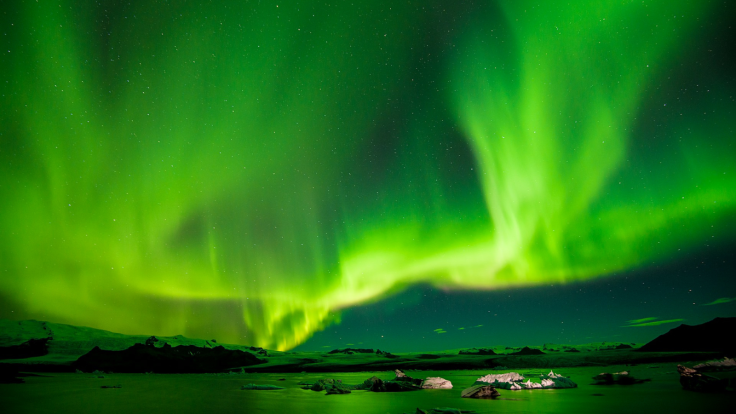
Skywatchers were treated to another display of the Northern Lights as they lit up parts of the UK on Halloween night. While the spectacle was less intense than some of the major auroral events seen in recent years, it still drew attention from observers hoping for a glimpse of the phenomenon.
The Met Office says weaker displays may linger before activity settles down. Clear skies offered the best opportunity for viewing as solar activity gradually eased.
Northern Lights on Halloween Night
One of the standout sightings came from Nairn in the Highlands, where a bright green glow filled the sky. Social media reports also pointed to colourful bands over parts of Scotland and Northern Ireland as clouds cleared.
The aurora borealis put on its show on Saturday, 31 October 2026, after a boost in solar wind reached Earth. The Met Office said its satellite imagery had shown no Earth-directed coronal mass ejections, so this was a gentler solar nudge than the dramatic storms of recent years. Forecasters linked the boost to fast solar wind streaming from a coronal hole, a dark patch on the Sun's outer atmosphere that releases little radiation but lets plenty of particles escape.
A Met Office spokesperson had said sightings were likely across northern Scotland, with a smaller chance across the rest of Scotland and perhaps northern England, wherever skies stayed clear. The aurora is usually easiest to spot in the northern parts of the UK, closest to the Arctic region, which is why Scotland tends to get the best views.
The timing helped. UK clocks went back on 25 October, so darkness now arrives about an hour earlier, giving skywatchers a longer window to look up.
Could the Aurora Borealis Be Seen Tonight?
Sunday night brought another chance, mainly for northern Scotland. The Met Office space weather team also kept a chance of minor geomagnetic storms in its forecast for the day, with solar winds still elevated.
Other reports said Northern Ireland and northern England could also catch a glimpse. However, a weather front moving into the far north threatened to bring cloud and hide the view in places.
Activity was forecast to become 'less intense' from Monday night onwards. The Met Office expects auroral activity to drop towards background levels after Monday night. If anything shows, northern Scotland under clear skies offers the best view.
What Causes the Northern Lights?
The Sun constantly streams out tiny charged particles, known as the solar wind. Eruptions and fast streams can make that flow stronger.
Earth's magnetic field steers these particles towards the poles. There they collide into gases high in the atmosphere and release energy as light.
The colours depend on the gas involved. Oxygen gives the familiar green and, much higher up, a rare red, while nitrogen produces blue and purple shades.
The northern display is the aurora borealis, and its southern counterpart is the aurora australis. The Met Office publishes forecasts for both.
When Could the UK See the Aurora Again?
No fresh sighting has been forecast yet. However, the Met Office says sightings can happen several times a year, especially in the darker months, and the equinox periods in spring and autumn often give the best odds.
Those hoping to catch the next display should face north and seek out locations away from street lights. Dark spots with a clear northern horizon work best. Auroras often appear low on the northern horizon and can change in brightness and movement. Checking both the Met Office space weather forecast and local cloud cover before heading out is advisable, as thick cloud can hide even a strong display.
© Copyright IBTimes 2026. All rights reserved.