

Republicans Spent $133M Trying To Engineer a Redistricting Advantage That Could Net Them Just One Seat
GOP strategists have lowered expectations as Democratic map changes, weaker support among Latino voters and a tougher political climate threaten planned gains
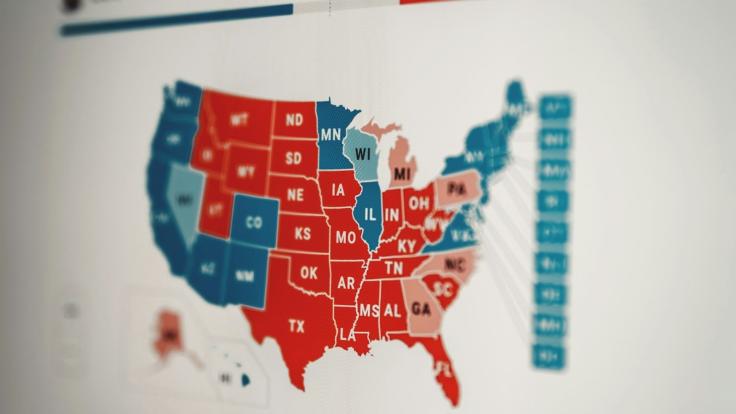
Republicans who redrew congressional maps across the country to protect their House majority now fear the effort could gain them as little as one seat, according to Axios.
The party has spent about £100 million ($133 million) on television advertising in 15 newly drawn districts that were meant to be easy wins, according to AdImpact data reported by Axios. Senior Republican strategists privately expect to win between seven and 12 of those seats, down from early hopes of a net gain of about 10.
With Democrats redrawing maps of their own, one scenario would leave Republicans with a net gain of just one seat across the whole redistricting fight.
From 16 Targeted Seats to 15
Early in the summer, Republicans believed they had created 16 GOP-friendly seats through mid-decade redistricting: five in Texas, four in Florida, two in Ohio and one each in Alabama, Louisiana, Missouri, North Carolina and Tennessee, Axios reported.
Missouri dropped off that list in September. The Missouri Supreme Court ruled on 3 September that a citizen referendum petition against the state's 2025 map was valid and that the map 'never went into effect'.
On 25 September, the US Supreme Court unanimously held that 'the 2022 map, not the 2025 map, must be used in the 2026 congressional election', the Missouri Independent reported. The redrawn map had targeted Democratic Representative Emanuel Cleaver's Kansas City seat by extending it into rural, Republican-leaning counties along the Missouri River.
Cleaver won about 60 per cent of the vote in each of the past two elections under the 2022 boundaries.
That left 15 redrawn districts. According to AdImpact figures cited by Axios, Republicans have spent $133 million (about £100 million) on television advertising in those seats, which the party expected to win comfortably when the lines were drawn.
The political climate has since turned against them. Republicans no longer seriously expect redistricting to save their House majority, as they did a year ago, Axios reported, citing a tougher environment of rising prices, the war with Iran and falling approval ratings for Trump. A Washington Post-ABC News-Ipsos poll gave Democrats an eight-point lead in the national congressional vote.
Texas and Florida Falter
The biggest slippage has come in Texas and Florida, where Republicans have lost support among Latino voters. In Texas, Republican strategists now expect to win between two and four of the five targeted seats. Representative Tom Emmer of Minnesota, the House majority whip, told Axios this month: 'Texas, I'd be surprised if we got all five.'
Republicans are confident about TX-9 in Houston and TX-32 in Dallas. But the main GOP House super PAC has pulled out of TX-28, the seat held by Democratic Representative Henry Cuellar, a move Axios described as effectively conceding it.
In TX-34, Democratic Representative Vicente Gonzalez holds a small lead over Republican Eric Flores in a New York Times/Siena poll, according to Axios. TX-35 is too close to call, with both parties spending about $6 million (£4.5 million) there.
Florida is expected to deliver two, possibly three, of its four new seats. 'Florida, I'd be shocked if we got all four,' Emmer said. In Ohio, Republicans could fail to win either of their two targeted seats and have already conceded one as part of their midterm triage, according to Axios.
North Carolina's new seat is considered a toss-up. Taken together, the projections suggest the party will fall well short of the 16 seats it hoped to create when the summer began.
Democrats Fight Back
Republicans remain confident of three pickups in the South. Their legislatures in Alabama, Louisiana and Tennessee redrew maps after the Supreme Court's Voting Rights Act decision in Louisiana v. Callais.
In that 6-3 ruling on 29 April, written by Justice Samuel Alito, the court held that Louisiana's replacement map, which included a second majority-Black district, was an 'unconstitutional racial gerrymander' and that the Voting Rights Act did not require the state to draw it, Ballotpedia reported.
In their worst-case scenario, Republicans gain about seven seats from redistricting in Republican-led states.
Democrats have redrawn maps of their own. In California, where voters approved a new map through the Proposition 50 ballot measure in November 2025, Governor Gavin Newsom's plan added four solidly Democratic seats and one more competitive seat, and Democrats are confident of winning all five, Axios reported. Their main super PAC has already stopped spending in one of them.
In Utah, District Judge Dianna Gibson rejected the legislature's map in November 2025, ruling that it unfairly favoured Republicans, and selected a plan that places nearly all of Democratic-leaning Salt Lake County in a single district, KSL reported. That gives Democrats a potential pickup.
If Republicans gain seven seats and Democrats gain six, the entire redistricting war would net Republicans just one seat. In a strong Democratic wave, Axios noted, Republicans could even lose seats that Trump won by double digits.
Republicans would likely blame Trump rather than the maps if that happens, according to the outlet. Trump pushed Republican-led states to redraw their districts in the middle of the decade, a step that is usually taken only after the census. Texas moved first in 2025, prompting Newsom to answer with California's own redraw.
Voters will cast their ballots on 3 November, the first electoral test of both parties' redistricting strategies.
© Copyright IBTimes 2026. All rights reserved.