

Trump Delays Release of IRS Tax-Cut Data Weeks Before Midterms as White House Sells Voters on the Law
IRS tax-cut data stays hidden 19 days before the midterms
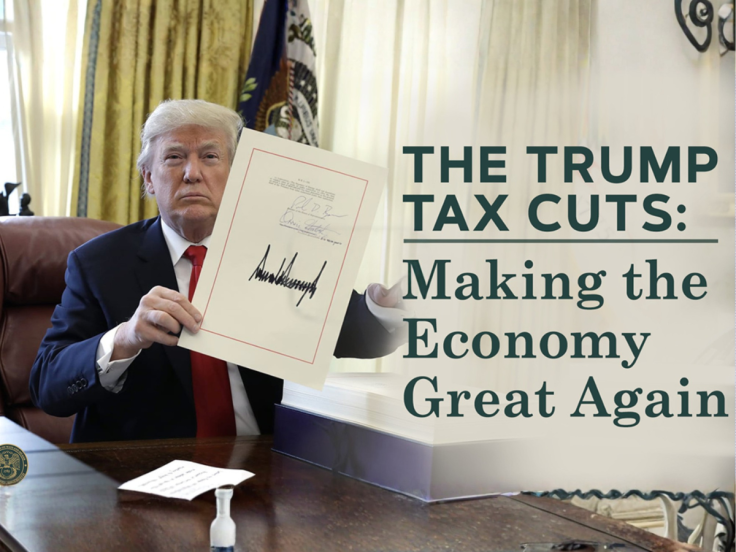
The Trump administration has delayed releasing detailed Internal Revenue Service data showing how the 2025 Republican tax law changed what households across the income scale paid, holding back a routine annual report even as it promotes the law 19 days before the midterm elections.
The breakdown was due in July, with an update scheduled for September. Neither appeared, and the report now sits on the IRS website marked pending. The agency says it is waiting for the Treasury Department, under Secretary Scott Bessent, to clear the figures for release.
The hold-up stands against a loud sales effort everywhere else. Since late September, a government advertising campaign drawing on a $20 million (£14.8 million) Department of Homeland Security allocation has promoted President Donald Trump and his agenda on television, including a spot touting the 'largest tax cuts in history.' Republican campaign committees have built much of their midterm message around the same legislation.
What the administration has not shown is the data that would put numbers to those claims. The withheld figures would give the first detailed account of the One Big Beautiful Bill Act, the tax and spending measure Trump signed on 4 July 2025, logging which deductions people in each income bracket claimed, how much more they reported earning, and how many still owed money at filing. They would also capture early take-up of the law's new write-offs for tipped wages and overtime pay, the provisions Republicans have pushed to the front of their pitch.
To critics, the timing is the tell. Nina Olson, the former national taxpayer advocate who now runs the Center for Taxpayer Rights, trained her criticism on Frank Bisignano, the first chief executive the IRS has ever had and the official overseeing its daily operations.
'I think they are hiding stuff that doesn't line up with all the crowing the CEO has been doing,' Olson said, referring to his public praise for the tax breaks alongside Republican lawmakers.
Not everyone reads it that way, and even who controls the clock is disputed. Barry Johnson, a former senior IRS official, said the agency, not Treasury, decides when the release goes out.
A less pointed explanation is also on the table: the law's thicket of new carve-outs and exemptions may simply have slowed the task of compiling the numbers.
What the Delayed Numbers Could Reveal
An earlier independent forecast had already set an uncomfortable baseline. The nonpartisan Congressional Budget Office, in its distributional analysis of the law through 2034, estimated that the poorest tenth of households would be worse off by about $1,200 (£888) a year, mainly through cuts to Medicaid and food assistance. The richest tenth would gain roughly $13,600 (£10,100) from the tax reductions, with middle earners ahead on balance but by far less than those at the top.
The real filing data would test that projection against what people actually claimed. It could also show how far the IRS, its workforce thinned by staff cuts, is still auditing wealthy households and large companies.
Republicans reject the gloomier estimates. House Ways and Means Chairman Jason Smith said the budget office has 'a troubled track record of getting its estimates incorrect.'
Detailed returns have embarrassed the party in power before. After the 2017 Trump tax cuts, the first full year of data showed fewer people claiming charitable giving deductions, cutting against the sales pitch.
A Wider Pattern of Missing Data
The tax-cut breakdown is not the only IRS release running late. The agency has also held back its periodic estimate of the tax gap, the shortfall between what is owed and what is actually collected. That figure last appeared in October 2024, and the IRS says it is reworking its methodology before publishing again.
Earlier in the year, the administration leaned the other way, promoting weekly top-line filing statistics as proof the cuts were working. The report now on hold is far more revealing, tracking the uptake of individual provisions and how the burden shifted between income groups. Its mid-July data usually covers about 95 percent of taxpayers, 87 percent of income, and 82 percent of taxes paid.
Pressed on the delay, a Trump administration official said in a written statement that the 'priority is to release accurate and reliable data' following major changes to the tax code.
The figures remain unpublished, leaving open whether they will surface before polling day or only after voters have decided which party controls Congress.
© Copyright IBTimes 2026. All rights reserved.