Men's Jewellery Sales Are Surging as the Industry Scrambles to Catch Up
Exploring the growing trend of men's jewellery and its impact on the luxury fashion industry
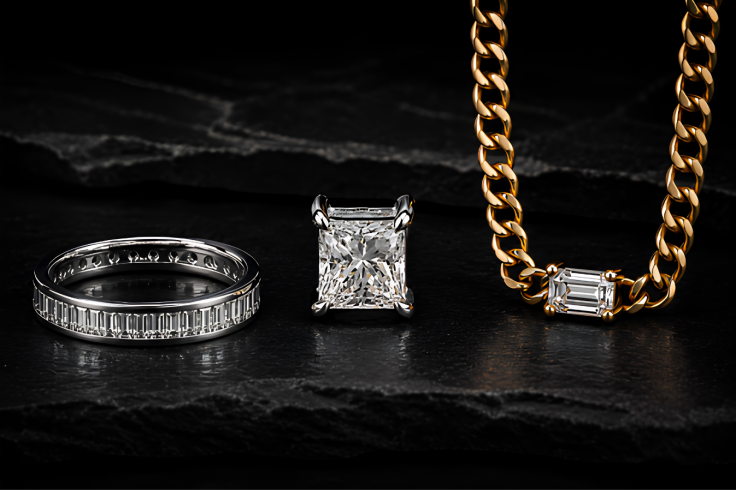
For years, the jewellery industry largely viewed men as gift buyers rather than jewellery consumers themselves. Beyond watches and wedding bands, the category remained commercially underdeveloped, often treated as a niche segment with limited mainstream demand.
That assumption is rapidly unravelling.
From diamond rings and pearl necklaces to stacked silver chains and tennis bracelets, men's jewellery has entered the centre of contemporary fashion culture. What was once confined to musicians, athletes and subcultures is now increasingly visible across everyday menswear, particularly among younger consumers reshaping luxury spending habits.
The commercial impact is becoming difficult for the industry to ignore. Polaris Market Research estimates the global men's jewellery market reached $48.56 billion in 2024 and projects steady growth over the next decade. Analysts increasingly point to Gen Z consumers as a key force behind that expansion, driven by changing attitudes toward masculinity, self-expression and daily styling habits.
In the UK, jewellery retailers are also seeing broader shifts in consumer behaviour. According to Mintel, younger shoppers are purchasing jewellery more frequently for personal wear rather than waiting for milestone occasions such as weddings or anniversaries. That behavioural change has widened the customer base for categories traditionally dominated by women.
The influence of celebrity culture has accelerated the shift. Harry Styles wearing pearls at the Met Gala, Timothée Chalamet appearing in diamond Cartier pieces during film premieres, and musicians such as Bad Bunny embracing layered jewellery have helped normalise accessories as part of modern male fashion rather than statements of rebellion.
Fashion houses have responded accordingly. Luxury brands including Tiffany & Co., Cartier and Louis Vuitton have significantly expanded their men's jewellery offerings in recent years, while independent designers report growing interest in signet rings, gemstone pendants and diamond-set pieces aimed at male buyers.
Social media platforms have amplified the trend even further. On TikTok and Instagram, jewellery styling content aimed at men now attracts millions of views, particularly around minimalist layering, mixed metals and "quiet luxury" aesthetics. For Gen Z consumers, jewellery increasingly functions less as a formal luxury purchase and more as part of everyday identity building.
That shift is also influencing relationship jewellery. Men's engagement rings, once considered unusual in mainstream retail, are becoming more visible as younger couples move away from traditional gender expectations surrounding proposals and wedding jewellery. Retailers across the UK and US have reported rising demand for diamond bands and contemporary engagement styles designed specifically for men.
Affordability has also expanded access to the category. The rise of lab grown diamonds has lowered entry prices for diamond jewellery, allowing younger consumers to experiment with pieces that may previously have been financially out of reach. Industry analysts say this has contributed to stronger interest in everyday diamond rings, bracelets and pendants among male shoppers seeking luxury without the traditional price barrier.
Several broader cultural shifts appear to be driving the market:
- Greater celebrity visibility of men wearing jewellery
- Gen Z embracing accessories as part of everyday fashion
- Loosening gender norms across luxury and fashion industries
- Growth of self-purchasing behaviour among younger consumers
- Increased accessibility through silver and lab-grown diamonds
- Social media transforming jewellery into a daily styling category
Importantly, the trend no longer appears temporary or purely aesthetic. Analysts increasingly describe men's jewellery as one of the few areas of the luxury sector benefiting from genuine cultural momentum rather than seasonal hype.
For an industry that once marketed almost exclusively to women, the rise of male jewellery consumers represents more than a passing fashion cycle. It signals a structural shift in how modern luxury is being worn, purchased and understood.
© Copyright IBTimes 2025. All rights reserved.
- Recommended For You