Kevin O'Leary Calls Four-Day Workweek 'Stupid' in Blunt Rant: 'We Should Kick Their A**'
O'Leary says fixed schedules are outdated in modern, project-driven work, but for many workers, the four-day week offers meaningful change backed by data
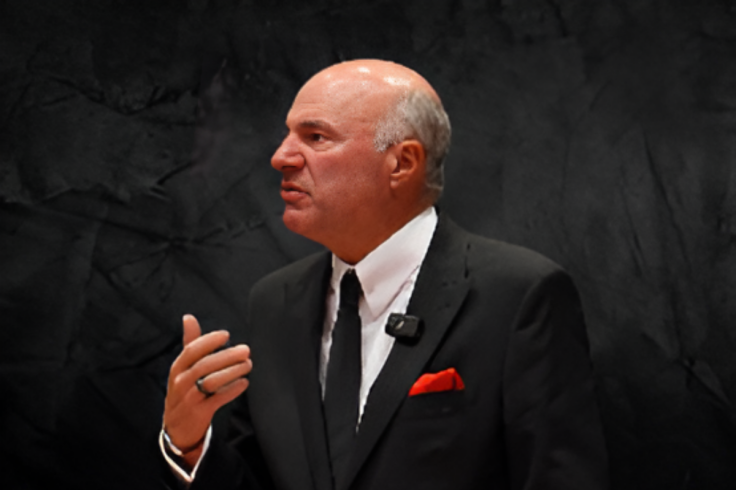
Shark Tank investor Kevin O'Leary, whose estimated fortune stands at $400 million (£316 million), has branded the growing push for a four-day workweek 'the stupidest idea I have ever heard,' arguing that the traditional concept of a set working week is already dead in the post-pandemic digital economy.
The 71-year-old Canadian businessman, widely known as 'Mr. Wonderful,' made the remarks during an appearance on the Fox News programme Outnumbered, as Fortune first detailed. Asked about mounting support for a shortened workweek — particularly in France, where working hours are already capped at 35 per week — O'Leary did not hold back.
'I think we should let the French go to a two-day workweek and then kick their a** internationally,' he said.
That's the stupidest idea I have ever heard. I think we should let the French go to a two-day work week and then kick their ass internationally. There's no such thing as a work week anymore anyways on a digital economy. I look at my staff, 40% of them work remotely all around the… pic.twitter.com/jElB5lzLBK
— Kevin O'Leary aka Mr. Wonderful (@kevinolearytv) June 1, 2025
O'Leary, who co-founded software firm SoftKey in the 1980s before selling it to Mattel in a stock deal valued at roughly $3.9 billion (£3.1 billion) in 1999, has built his public profile on blunt takes. His latest target is a movement gaining traction across governments and boardrooms worldwide.
'No Such Thing as a Workweek Anymore'
Despite rejecting the four-day model, O'Leary acknowledged that the traditional nine-to-five, five-day schedule has become obsolete. He told Fox News that 40% of his own staff work remotely across multiple time zones and that he does not monitor when they log on or off.
'There's no such thing as a workweek anymore anyway on a digital economy, post-pandemic,' he said.
Kevin O’Leary is pushing back hard against the idea of a four day workweek. In a recent post on X, he called the concept “the stupidest idea I have ever heard” and said the modern workplace no longer operates on fixed weekly schedules.
— Benzinga (@Benzinga) December 18, 2025
O’Leary argued that remote work has already… pic.twitter.com/YZpbe9tnKV
What matters, in his view, is deliverables. If a project needs to land by a certain date, the hours or days spent on it are beside the point. That framing positions O'Leary not as a defender of the old Monday-to-Friday grind but as someone who believes the entire debate over how many days people work is outdated.
Research Paints a Different Picture
O'Leary's stance runs counter to a growing body of workplace research. A Gallup poll found that 77% of American workers said a four-day, 40-hour workweek would positively affect their wellbeing, with 46% describing the potential impact as 'extremely positive'.
Separate research coordinated by the non-profit 4 Day Week Global and led by Boston College economist Juliet Schor examined 245 businesses and non-profit organisations that piloted a four-day schedule over three years, reaching some 8,700 workers. Nearly 70% of employees in those trials said they experienced reduced burnout, while over 40% pointed to improved mental health, as Entrepreneur noted.
At performance coaching firm Exos, which employs more than 3,500 people, a four-day model produced a 24% rise in productivity and halved burnout among staff.
CEOs Are Already Exploring Shorter Weeks
O'Leary may be dismissive, but a significant share of chief executives are at least open to the concept. A 2024 KPMG survey of 100 chief executives at US companies with revenues above $500 million (£395 million) found that 30% were considering organisation-wide schedule changes, including a shift to a four-day or four-and-a-half-day week.
Tokyo's Metropolitan Government has already begun allowing its employees to work four days a week to address Japan's population decline. Governor Yuriko Koike said at Fortune's Most Powerful Women International summit in 2025 that flexible systems 'allow both women and men to choose a work style that reflects their circumstances.'
Atom Bank in the UK already operates a permanent four-day schedule. Iceland adopted a shortened workweek in 2019, and both Australia and France have run pilot programmes.
A Pattern of Pushback From Mr Wonderful
O'Leary's position fits a broader pattern. He attacked Australia's 'right to disconnect' legislation in 2024, which gives employees the legal right to ignore work-related messages outside contracted hours. He called that policy 'dumb' during a separate Fox News appearance.
His argument centres on the idea that modern work is project-driven and borderless, making fixed schedules a relic. But for millions of workers contending with chronic burnout, the four-day week represents a structural change that the data, so far, appears to support.
© Copyright IBTimes 2026. All rights reserved.
- Recommended For You