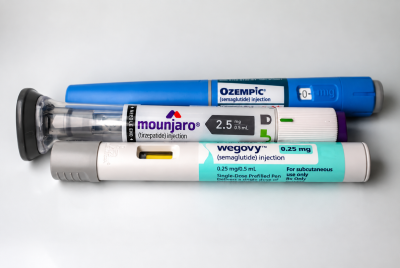
AI Uncovers Ozempic Side Effects Missed in Clinical Trials After Scanning Reddit Posts
Researchers have turned to the unfiltered world of social media to track patient experiences, identifying patterns in weight-loss drugs that traditional clinical studies might be overlooking.

A pioneering study conducted by researchers at the University of Pennsylvania has used artificial intelligence to identify potential side effects of GLP-1 medications that may not be fully captured in traditional clinical trials.
By analysing more than 400,000 Reddit posts from nearly 70,000 users, the AI medical research team has highlighted symptoms, such as fatigue and temperature sensitivity, that patients are discussing in online communities but are less frequently documented in formal medical records.
The findings, published in the journal Nature Health, suggest that while Ozempic side effects such as nausea and digestive discomfort are well recognised, there is a wealth of real-world data hidden in social media discussions. Researchers emphasise that this analysis does not prove causation—meaning these drugs are not confirmed to be the direct cause of these specific symptoms—but rather that these patient-reported patterns warrant further scientific investigation.
What AI uncovered does not prove new risks, but it does raise important questions about how side effects are tracked in the real world.
By analyzing over 400,000 Reddit posts, researchers discovered that users of popular GLP-1 weight-loss drugs frequently discussed unexpected symptoms like menstrual irregularities, chills, and hot flashes. The findings suggest AI could turn social media inhttps://t.co/s6Rj0Afy3M
— Michael W. Deem (@Michael_W_Deem) May 24, 2026
What The Study Found In GLP-1 Drug Discussions
Researchers from the University of Pennsylvania School of Engineering and Applied Science analysed Reddit posts from users over more than five years. The focus was on widely used GLP-1 medications, including semaglutide and tirzepatide, which are commonly prescribed for obesity and type 2 diabetes.
The study found that many Ozempic side effects reported on Reddit aligned with known clinical outcomes, particularly gastrointestinal issues such as nausea and digestive discomfort. However, AI also flagged less commonly emphasised symptoms in formal documentation.
These included reports of fatigue, temperature-related changes such as chills and hot flashes, and reproductive-related symptoms like menstrual irregularities. Around 44 per cent of users in the dataset mentioned at least one side effect, showing how frequently patients discuss medication experiences in online communities.
Importantly, researchers emphasised that these signals do not confirm causation. They represent patterns in discussion, not verified medical outcomes.
The weirdest GLP-1 side effect yet? The bizarre way weight loss drugs are messing with people's hearing https://t.co/YCsWmrXLpu pic.twitter.com/E2mYqMy2Qa
— New York Post (@nypost) May 27, 2026
Reddit As A Real-Time Health Data Source
Reddit has increasingly become a valuable dataset for researchers studying public health trends. In this case, it served as a large-scale repository of patient-reported experiences, which are often shared informally rather than in clinical settings.
This is where Reddit data used for medical research becomes particularly relevant.
Unlike clinical trials, which follow strict protocols and limited sample sizes, Reddit captures spontaneous, unfiltered conversations from thousands of users.
The study, published in Nature Health, shows how AI can process this kind of unstructured data and translate it into medically relevant categories using standardised systems like MedDRA, which is used to classify adverse events in clinical research.
AI scans 400,000 Reddit posts and finds hidden Ozempic side effects
— Aurelius Health Group (@Aurelius_Health) May 26, 2026
Researchers at the University of Pennsylvania used artificial intelligence to analyse social media posts and identified side effects that patients are discussing online that are not fully reflected in clinical… pic.twitter.com/HbksbQTg6R
Why AI Is Changing How Side Effects Are Detected
The rise of large language models has significantly changed how researchers approach pharmacovigilance. In this study, AI tools helped identify and organise mentions of symptoms across massive datasets that would be difficult to analyse manually.
This approach strengthens AI analysis of drug side effects in social media, especially when patients describe symptoms in inconsistent or non-medical language. By standardising these reports, researchers can identify potential patterns that may otherwise go unnoticed.
Key contributors to the study include Sharath Chandra Guntuku and Lyle Ungar, who specialise in computational social science, as well as lead author Neil Sehgal. Senior researcher Jena Shaw Tronieri from the Centre for Weight and Eating Disorders also contributed clinical insight into how GLP-1 drugs interact with the body's hormonal and metabolic systems.
Their collective work highlights how unreported drug side effects discovered by AI may serve as early signals for further scientific investigation, rather than immediate clinical conclusions.
What This Means For Patients And Clinicians
For patients using semaglutide or tirzepatide, the findings do not suggest new confirmed risks, but they do reinforce the importance of monitoring real-world experiences. Some symptoms, particularly fatigue and temperature sensitivity, may not always be emphasised in standard prescribing information. This is part of a broader conversation about the hidden side effects of GLP-1 medications, especially as their popularity continues to grow globally for weight management.
Clinicians may also benefit from understanding how patients discuss their experiences outside clinical environments. These conversations often reveal concerns that are not always raised during brief medical consultations.
What Comes Next
As GLP-1 drugs like semaglutide and tirzepatide surge into mainstream use, the gap between controlled clinical trials and real-world patient experience is becoming harder to ignore.
What this AI-driven analysis of hundreds of thousands of Reddit posts suggests is not a definitive verdict on hidden dangers, but something arguably more important: a rapidly emerging feedback loop in which patients are documenting their own symptoms in real time, long before formal systems catch up.
If these digital signals continue to prove useful, the future of drug safety may no longer rely solely on slow, rigid reporting structures, but on a constantly updating stream of lived experience, where platforms like Reddit quietly become the earliest warning system in modern medicine.
For clinicians, the takeaway is clear: online conversations may provide crucial context for symptoms patients are hesitant or unable to raise during short medical consultations.
© Copyright IBTimes 2026. All rights reserved.
- Recommended For You