Transportation Secretary Sean Duffy Urges Summer Road Trips Even As Americans Face Surging Fuel Costs – 'We're in a Good Place'
Transportation Secretary claims US is in a 'good place' despite the Iran war driving a 52% surge in petrol costs and a blockade in the Strait of Hormuz

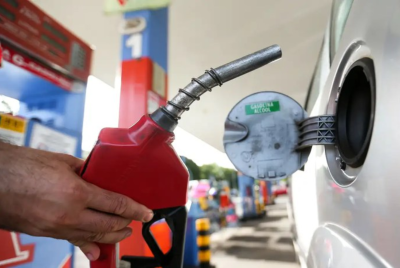
Transportation Secretary Sean Duffy has sparked debate by urging Americans to embrace summer road trips despite soaring petrol prices.
During a high-profile Philadelphia energy briefing, Duffy claimed the nation remains in a 'good place' even as the US gas prices surge in 2026, trends show little sign of permanent relief.
The Secretary noted that crude oil had recently dipped below $100 a barrel, a figure he used to justify his upbeat travel advice. However, the reality for drivers is stark: the national average for regular fuel is currently $4.55 per gallon, with prices in California exceeding $6.16.
The disconnect between the Department of Transportation's messaging and household budgets is widening. While Duffy encourages families to 'see your country', the Strait of Hormuz oil disruption continues to throttle global supplies. This vital maritime artery has been effectively closed since early March 2026, forcing a radical shift in how the global oil market volatility affects local pumps. For many, the cost of a two-day trip has doubled from previous seasons, leaving families questioning the Secretary's optimistic outlook.
Officials Encourage Travel Amid Rising Costs
Duffy told reporters that the country remains stable on the energy front, saying, 'You saw yesterday, energy prices came down below $100 a barrel... we're in a good place.'
He also encouraged Americans to make the most of the season, adding, 'We want to encourage all Americans to take a road trip, whether it be two hours or two days, to see your country.'
His comments come as policymakers seek to balance optimism in energy markets with public frustration over elevated fuel costs in the United States.
"As Gas Prices Soar, Transportation Secretrary Encourages Summer Road Trips" - HuffPost #SmartNews DUFFY DIPSHIT https://t.co/lqhg3zLrcO
— George Leroy Tirebiter (@GeorgeLerofim) May 8, 2026
US Gas Prices Surge as Global Supply Tightens
Despite official reassurance, the surge in US gas prices has become a defining issue for consumers. The national average has remained significantly higher than pre-conflict levels, with some states experiencing extreme spikes.
In California, prices have reportedly exceeded six dollars per gallon, while other regions such as Texas and Kansas remain lower but still above four dollars. The variation reflects regional taxes, distribution costs, and refinery access, but the overall trend points upward.
A key driver behind the increase is ongoing geopolitical instability, particularly the conflict involving the United States, Israel, and Iran. The disruption has affected global supply routes, including the strategically vital Strait of Hormuz.
The closure or restriction of this passage has been widely cited as a major factor in rising crude oil prices, feeding into broader oil prices, and Middle East conflict pressures that continue to ripple through global markets.
With gas at $4.55 a gallon, Transportation Secretary Sean Duffy says "we're in a good place" for fuel prices, and urges Americans to drive this summer, saying "we encourage all Americans to take a road trip" pic.twitter.com/74XETh9lxD
— Aaron Rupar (@atrupar) May 7, 2026
Political Dispute Over Gas Price Reality
Fuel costs have also become a political battleground, with sharply different narratives emerging from Washington and opposition lawmakers.
Former President Donald Trump claimed that energy prices are falling, stating, 'gas prices are way down.' He further suggested, 'when the war is over, gas will fall down at levels that you've never seen before.'
However, critics point to rising pump prices as evidence of the opposite trend. Democratic Senator Adam Schiff challenged the administration's messaging, saying in a video posted to X, 'gas prices are up 52 per cent since the Iran war began. Oil is trading at about at $100 right now. The president says, 'Well, he's just fine if it goes up to $200.'
These conflicting statements highlight the tension surrounding Trump's gas price claims and the differing interpretations of energy data across political lines.
TRANSPORTATION SEC DUFFY: “We’re in a good place for fuel prices, and I encourage all Americans to take a road trip this summer.”
— Stew Peters (@realstewpeters) May 7, 2026
It’s unreal how out-of-touch these people are. Gas is over $4.50 a gallon. Americans can’t afford road trips. pic.twitter.com/hkGAhVkBHU
Air Travel Also Feels the Pressure
The impact of energy costs is not limited to driving. Airlines are also facing higher operational expenses, particularly due to jet fuel prices, which are closely tied to global oil markets.
Former New Hampshire Governor Chris Sununu, speaking in his role as CEO of Airlines for America, noted that airfare has increased significantly. He said passengers are adjusting their behaviour, adding that travellers are increasingly 'using their rewards and their loyalty programs. They're redeeming all their points on their credit cards.'
This trend reflects growing concerns around airfare increases in summer travel, as vacation costs rise across multiple transport sectors.
Consumers Adjusting to Higher Travel Costs
Despite rising expenses, travel demand remains strong. Officials and industry reports suggest that many Americans are still planning road trips, even if budgets are tighter than in previous years.
A senior Trump official highlighted consumer activity in economic terms, saying, 'credit card spending is through the roof. They're spending more on gasoline, but they're spending more on everything else, too,' according to National Economic Council Director Kevin Hassett. This perspective suggests that while costs are rising, spending behaviour remains active, even as households adapt to inflationary pressure.
The administration remains firm in its belief that the energy market is stabilising. By focusing on the 'Freedom 250 Acela' rail initiatives and promoting regional travel, officials hope to maintain the tourism industry's momentum. Yet, as long as the Strait of Hormuz oil disruption remains unresolved, the 'good place' Duffy describes may exist only in the halls of Washington.
© Copyright IBTimes 2026. All rights reserved.
- Recommended For You