Russia's Facility 1335 Nuclear Bunker in Urals Linked to Cold War 'Dead Hand' in New Investigation
Tender records reveal vast quantities of construction materials and communications equipment sent to Facility 1335, though experts disagree over whether the Soviet-era system was reactivated
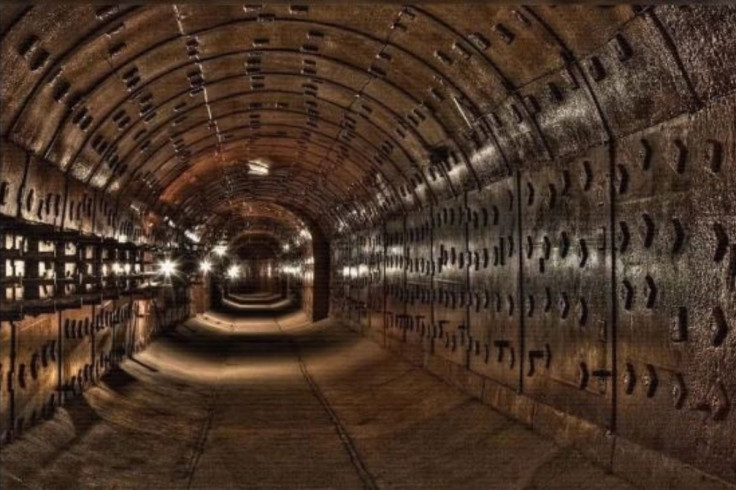
A vast underground command complex buried beneath Russia's Ural Mountains has been extensively expanded and modernised, with a new investigation linking the secretive Facility 1335 to the Soviet-era nuclear command system known in the West as 'Dead Hand'.
Investigators found evidence of enormous quantities of construction materials, specialised ventilation systems and communications infrastructure being sent to the site.
The investigation by Danish outlet Danwatch, The Sunday Times and the Dossier Center examined nearly 2.5 million Russian military procurement tenders, identifying thousands associated with Facility 1335, also called Object 1335, between 2018 and August 2024.
The facility lies inside Mount Kosvinsky in Russia's Sverdlovsk region and has long been associated with the country's strategic nuclear command infrastructure.
The findings have renewed scrutiny of Perimeter, the Cold War system designed to preserve Russia's ability to order a retaliatory nuclear strike if its leadership and conventional communications were destroyed.
However, experts disagree over whether the construction indicates that 'Dead Hand' has been reactivated, or instead represents continued modernisation of a system that, according to one expert, was never deactivated.
Documents Reveal Massive Expansion Beneath the Urals
The scale of the work is one of the investigation's strongest findings. According to Danwatch's investigation, procurement records show at least 22,000 tonnes of steel, 56,500 tonnes of cement, 600 kilometres of cable, 30 transformers and 182 ventilation units were ordered for Facility 1335.
The records also include 21 electrical substations, 95 heavy machines and 648 rock-drilling components. Some ventilation and filtration equipment was designed to protect against chemical, biological and radioactive contamination, according to the investigation.
Satellite imagery examined by the investigators showed extensive excavation and work on what appeared to be six new entrances into the mountain.
Former soldiers who served with the unit guarding the complex described it as extremely large. One told investigators that the underground distances were substantial enough for buses to operate inside the tunnel network, although the interior remains highly classified.
Why Facility 1335 Is Being Linked to 'Dead Hand'
Perimeter was developed during the Cold War as a backup nuclear command-and-control mechanism. Rather than being simply a weapon, it was intended to ensure that launch orders could still reach surviving strategic forces after a devastating attack had damaged conventional communications.
Historical accounts support the existence of Perimeter. Former Soviet officer Valery Yarynich, who worked on the system, previously described its development to Wired, while research published by SIPRI has also described Perimeter as a semi-automated retaliation system deployed by the Soviet Union in 1985.
The new investigation adds more recent evidence. Retired Major General V. G. Khalin, who participated in Perimeter's development, wrote that its automation system had been upgraded with capabilities including mobile command posts and space-based communications.
Other Russian military writings cited by investigators said Facility 1335 entered combat duty in 2023.
Experts Dispute Whether 'Dead Hand' Was Reactivated
The significance of those findings remains contested. Stanford nuclear security expert Jeffrey Lewis told Danwatch that the 'simplest explanation' was that Russia was probably returning Dead Hand to operation, pointing to Facility 1335's known connection with the Strategic Missile Forces.
But nuclear weapons researcher Pavel Podvig challenged the idea that Perimeter had been newly revived. Speaking to the media, Podvig said Facility 1335 had indeed been built and upgraded, but argued it was incorrect to say Perimeter had been reactivated because, in his view, it had never been deactivated.
Podvig also disputes portrayals of Perimeter as a completely autonomous 'doomsday machine'. His account describes it primarily as a backup communications system using command missiles to transmit authorised launch instructions if ordinary channels have been destroyed, with Podvig arguing that human involvement remains in the chain.
That distinction matters. The procurement records provide substantial evidence that Russia has invested heavily in a hardened nuclear command facility beneath Mount Kosvinsky.
What remains classified, and therefore cannot be independently established from the documents, is precisely how Facility 1335 operates today and what degree of automation the modern Perimeter system has.
© Copyright IBTimes 2026. All rights reserved.
- Recommended For You